
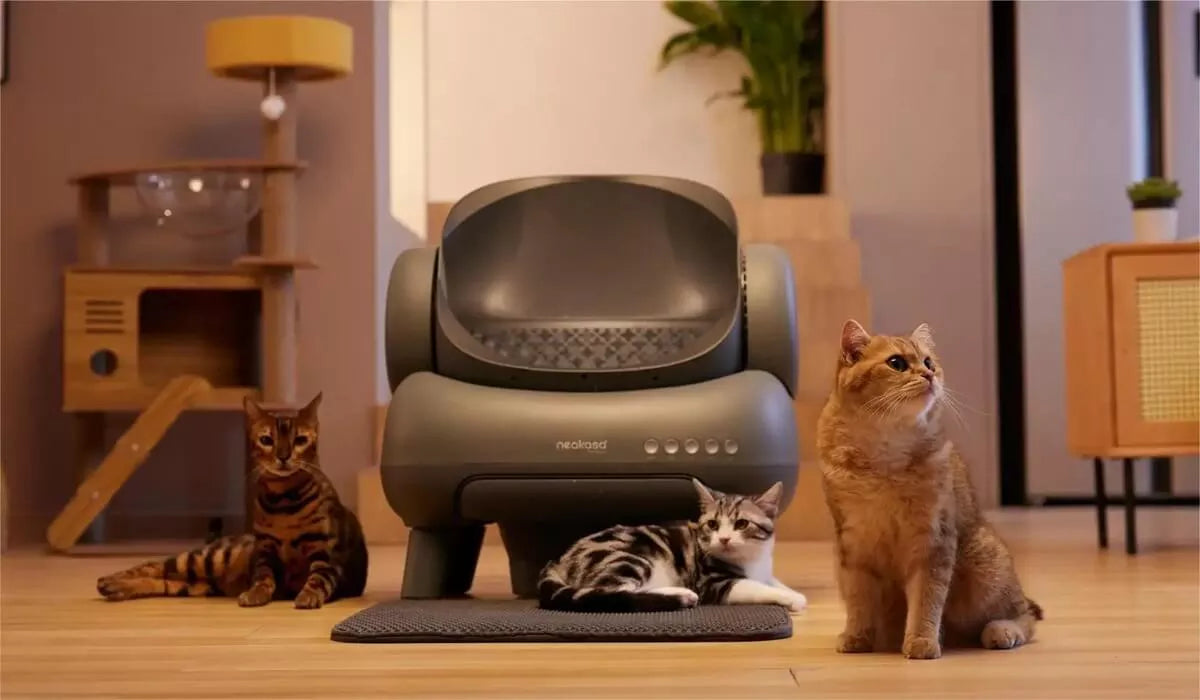
Finding the best litter box for multiple cats is far more about managing territory, cleaning load, and low-stress access than it is about buying the largest plastic tub you can find. In practice, the single most common mistake owners make is assuming one oversized box is enough for several cats. It rarely is.
A well-designed multi-cat setup gives every cat a safe, clean option, prevents odor from taking hold, and makes daily scooping fast enough that you actually stick with the routine. If you are starting fresh or replacing a cracked, failing pan, this guide will help you choose a box that holds up under heavy use and respects how cats actually behave. You can also read our guide on best rated cat litter box.
Credit: www.businessinsider.com
An oversized, open pan with low sides is often the safest starting point for a multi-cat household.
Before buying anything that looks sturdy but cracks within months, it also helps to understand how litter box habits connect to broader feline behavior. Our guide to managing unwanted marking and spraying explains what happens when cats feel insecure in their territory, and it pairs well with this article.
Why Most Multi-Cat Litter Box Setups Fail
A litter box is not just a bathroom. In a home with multiple cats, it is a shared resource that can create stress, conflict, and quiet avoidance. When cats stop using the box, owners often assume the cat is being stubborn or spiteful. In reality, the problem is usually the setup itself: too small, too dirty, too enclosed, too hard to enter, or placed where one cat can block the exit. You can also read our guide on flea and tick collar cat.
By 2026, the most practical multi-cat arrangements focus on three priorities: capacity, accessibility, and placement that reduces ambush risk. More cats do produce more waste, but they also bring different preferences. One cat may avoid covered boxes entirely. Another may refuse heavily scented litter. A senior cat with stiff joints may hesitate at a tall lip. The goal is to provide enough varied options that no cat has to wait, compete, or force itself into a space it dislikes.
If your household includes cats with different confidence levels, you may also notice that stress shows up in grooming habits. A quick read on keeping a cat's skin and coat clean without adding stress offers practical help for cats that need gentle upkeep during transitions. You can also read our guide on flea and tick meds for dogs and cats.
How Many Litter Boxes Do Multiple Cats Need?
The standard guidance remains the most reliable: provide one litter box per cat, plus one extra. That means two cats need three boxes, three cats need four, and four cats need five.
This is not an arbitrary rule. Cats may comfortably share beds, perches, and sometimes even food bowls, but many are far less relaxed about sharing toilets. Waste odor, limited space, and the vulnerability of squatting make the litter box a high-stakes location. When boxes are scarce, one confident cat can monopolize access without any visible fighting. You can also read our guide on how to introduce my cat to a new kitten.
| Cats in Home | Ideal Number of Boxes | Practical Fallback If Space Is Tight |
|---|---|---|
| 2 cats | 3 boxes | 2 extra-large boxes in separate rooms |
| 3 cats | 4 boxes | 3 large boxes on different floors or walls |
| 4 cats | 5 boxes | 3 extra-large boxes plus twice-daily scooping |
| 5+ cats | 6+ boxes | Multiple stations with clear territorial zones |
If you cannot reach the ideal number, compensate aggressively with larger boxes, better placement, and more frequent cleaning. What you should not do is place two small boxes side by side for four cats and hope for the best. That arrangement often produces urine outside the box, subtle bullying, and one or more cats that simply stop going indoors.
If you are introducing a new cat or kitten, setting up the introduction properly should include additional litter stations from day one. A newcomer needs safe, easily accessible options that do not force it through another cat's core territory. You can also read our guide on what sort of nutrition is needed for a sick cat.
What Makes the Best Litter Box for Multiple Cats?
Interior Size: Bigger Than You Think
Size is the first and most important filter. A litter box should allow a cat to enter, turn fully around, dig, squat, and cover waste without pressing against the walls or hood. A practical rule is to choose a box at least one and a half times the cat's body length, measured from nose to the base of the tail.
Most average adult cats do well with boxes around 22 to 26 inches long. Large breeds and heavily built cats often need 30 inches or more. For multiple cats, larger is almost always the safer choice, because a box that feels roomy when clean may feel cramped after one cat has already used it. You can also read our guide on cat grooming how to keep your cat clean and comfortable.
If you have a particularly large cat or a busy household, compare your options against extra-large litter box designs built for bigger bodies. Interior floor space matters more than exterior footprint, so check usable length rather than overall dimensions.
Entry Height and Aging Cats
A very common mistake is choosing a box that is easy for humans to look at but physically difficult for cats to enter. Kittens, short-legged cats, and seniors may struggle with tall entry points or deeply recessed pans. A box with an entrance around 4 inches or lower is usually much easier for cats with limited mobility. You can also read our guide on best automatic cat feeders for arthritic cats low entry.
For arthritic cats, lowering the barrier to entry often has an outsized effect. The same principle applies elsewhere: a cat that hesitates at the litter box may also avoid high-sided feeding areas or furniture it can no longer reach comfortably.
Material and Long-Term Durability
Multi-cat households are brutal on litter boxes. Constant scooping, litter scraping, and washing wear down plastic quickly. The best boxes use thick, dense plastic with smooth interior walls and a solid, non-warping base. Flimsy boxes may flex under weight, crack at the corners, or develop scratches that trap bacteria and odor. You can also read our guide on best automatic cat feeders for cats that steal food.
Once a box is deeply scratched, it becomes almost impossible to keep fresh no matter how often you clean it. In practice, replacing a heavily scored box is often more effective than buying stronger deodorizers or washing more aggressively. Dull plastic, visible scoring, and urine staining that does not rinse away are all signs it is time to retire the box.
For households considering a covered or disguised option, think carefully about whether the added structure creates more upkeep than it saves. A well-chosen litter box enclosure or cabinet can look tidy, but it must preserve easy access and airflow. You can also read our guide on best automatic cat feeders for bonded pair cats.
Cleanability: The One-Minute Test
The best litter box for multiple cats is ultimately the one you will actually clean. Smooth corners, removable hoods, simple waste drawers, and minimal seams make a big difference. Textured floors, tight hinges, and hidden crevices trap urine and bacteria, making odor harder to control.
A useful test is simple: can you scoop the entire box in under a minute? Can you empty and wash it without fighting the design? If the answer is no, the box will create more daily friction than it removes. You can also read our guide on how to introduce new kitten to cat.
Odor Control Without Trapping Cats
Effective odor control is not about adding a lid. It comes from enough litter depth, unscented or lightly scented litter, good ventilation, frequent scooping, and a box large enough that waste is not concentrated in one small patch.
Covered boxes can contain smell, but they can also trap it inside the hood. For cats with sensitive noses, a covered pan that is not scooped frequently becomes the worst-smelling option in the house. Carbon filters and vented hoods help, but they are supplements, not replacements for routine scooping.
Privacy Versus Escape Routes
Some cats genuinely prefer enclosed boxes because they feel sheltered. Others hate being boxed into a small space, especially if another cat can wait outside the single entrance. In multi-cat homes, escape routes matter as much as privacy.
A box shoved into a dead-end closet may look private, but it can become an ambush point. A better setup gives the cat enclosure without entrapment. Wide entries, open space around the box, and at least two directions to exit all reduce the chance of one cat controlling access.
Credit: www.businessinsider.com
A covered box can limit scatter, but it still needs strong ventilation and diligent scooping.
Top Picks by Category for Multi-Cat Households
There is no single perfect model, and chasing one usually leads to disappointment. It is far more useful to match the box type to your household's dominant need.
| Category | Best For | What to Prioritize | Honest Trade-Off |
|---|---|---|---|
| Extra-large open pan | Overall multi-cat use | Roomy base, low lip, easy scooping | More litter tracking |
| High-sided or covered box | Odor and scatter control | Large interior, ventilation, wide entry | Can trap smell if dirty |
| Self-cleaning box | Busy owners | Reliable sensors, quiet cycle, large drawer | Needs acclimation and maintenance |
| Pellet-and-pad system | Low dust and simple urine cleanup | XL size, absorbent pads, cat acceptance | Pads saturate quickly with many cats |
| Low-entry box | Seniors and kittens | Easy access, shallow lip, stable base | May track more litter |
| Sifting box | Manual sorting preference | Durable trays, easy lift system | Bulky and slower to clean |
Extra-Large Open Pan: Best Overall Choice
An extra-large open pan is the safest first choice for most multi-cat homes. It is easy to enter, fast to scoop, and does not trap odor under a hood. Cats can see their surroundings while using it, which lowers stress in homes where one cat may shadow another.
The main downside is tracking. Without walls or a lid, litter scatters more easily. Reduce this with a deep litter mat, a low-dust litter, and a pan with high back walls rather than an enclosed top. In practice, a simple open pan cleaned twice daily often outperforms a fancy covered box cleaned half as often.
High-Sided or Covered Box: Best for Scatter and Odor
High-sided and covered boxes are useful when cats dig vigorously or when odor and scatter are visible problems. They keep litter inside the pan and can make a room look more organized. Some cats also prefer the sheltered feeling.
The risk is that a covered box becomes unpleasant quickly. A too-small hood forces the cat to crouch against the walls. A poorly vented hood traps ammonia, which is a strong deterrent. Choose a covered box only if it is genuinely large, easy to open for cleaning, and maintained on a strict schedule. If your cat hesitates at the entrance or starts perching on the edge, the covered style may not be right.
Self-Cleaning Litter Box: Best for Busy Households
Self-cleaning litter boxes can reduce the daily burden of scooping, which is a genuine advantage in homes with several cats. They rake or sift waste into a sealed drawer, keeping the main litter area fresher between manual cleanings.
They are not automatic solutions, though. Many cats need gradual introduction, and some are frightened by the motion or noise. Waste drawers still need emptying. Sensors need wiping. The mechanism can jam if clumps are too thick or if the box is overloaded. In a four-cat home, one self-cleaning unit is rarely enough. Most households do better with two units or a combination of automated and simple manual boxes. For a closer look at whether an automatic system fits your routine, see our notes on self-cleaning litter box maintenance and cat acceptance.
Pellet-and-Pad Systems: Best for Low Dust and Simple Urine Cleanup
Pellet-and-pad systems separate urine from solid waste. Urine passes through non-clumping pellets onto an absorbent pad below, while solid waste stays on top for scooping. These systems appeal to owners who want less dust and a simpler way to manage urine.
In multi-cat homes, size is the deciding factor. A small system saturates within a day, so an XL version is essential. The system only works if every cat accepts the pellet texture, which can feel unfamiliar underfoot. Pad costs also climb quickly in busy households. If you go this route, check pad capacity claims carefully and expect to replace pads more often than the packaging implies.
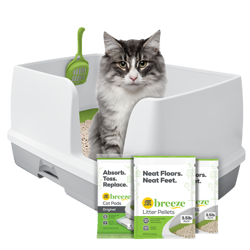
Credit: www.purina.com
Pellet-and-pad systems simplify urine cleanup, but busy households need XL capacity and frequent pad changes.
Low-Entry Box: Best for Seniors, Kittens, and Short-Legged Cats
Low-entry boxes are not a luxury. A senior cat with stiff hips may avoid a box with a tall lip even if it is clean and spacious. Kittens may lack the coordination to climb over high walls. Short-legged breeds face the same obstacle every single visit.
The best low-entry boxes still provide enough interior room to turn comfortably. They may track more litter, so pair them with a heavy mat and a low-tracking formula. If a cat starts missing the box but continues to enter the room, accessibility is the first thing to check.
How to Judge a Multi-Cat Litter Box Quickly
Reviews and comparisons can mislead you. A box with thousands of five-star ratings from single-cat homes may still fail under multi-cat conditions. The key is to evaluate how the model performs when used heavily, continuously, and by cats with different confidence levels.
Focus on these details:
- Interior length and width, not just exterior footprint
- Entry height from the floor to the opening
- Smooth interior walls with minimal seams
- Easy-access waste drawer or removable pan
- Filter replacement cost and availability
- Noise level on self-cleaning models
- Compatibility with unscented clumping or pellet litter
- Return policy if a cat refuses to use it
Customer feedback often reveals patterns. Praise for odor control and easy cleaning is meaningful. Repeated complaints about cracked plastic, weak drawer rails, frightened cats, or pads that saturate too fast are warning signs. In multi-cat homes, durability complaints matter more than cosmetic ones.
| Feature | Good Sign | Warning Sign |
|---|---|---|
| Size | "Fits two cats comfortably" | "Too small for large cat" |
| Cleaning | "Smooth corners, fast scooping" | "Waste gets stuck under lip" |
| Odor | "Stays fresh with daily scooping" | "Smells even after cleaning" |
| Durability | "Thick plastic, no warping" | "Cracked within months" |
| Cat Acceptance | "Cats used it quickly" | "Cats avoid the covered entry" |
For cats that are still learning or that have developed avoidance habits, you may need to step back and work on basic litter box training foundations before expecting a new box to solve everything.
Choosing the Right Litter for Multiple Cats
The box and the litter work as one system. Even the best box fails quickly if the cats dislike the litter inside it.
Most cats prefer unscented, fine-textured litter that feels soft and sand-like under their paws. Heavy perfumes may smell pleasant to humans but can drive cats away from the box entirely. Clumping litter is popular because it makes daily scooping fast, which is especially valuable in multi-cat homes. Look for low-dust formulas that reduce respiratory irritation and keep the surrounding floor cleaner.
A good starting depth is 2 to 3 inches. Too little litter makes digging and covering difficult. Too much can make entry harder for kittens and seniors. If you switch litter types, transition slowly over 7 to 10 days by layering small amounts of the new litter into the old. Sudden changes are a leading cause of sudden avoidance.
Diet also affects litter box odor and stool consistency. If you notice persistent loose stools or unusually strong ammonia smell, the issue may start in the bowl rather than the pan. Some owners find that higher-quality wet food choices lead to smaller, firmer, and less odorous waste, which makes any litter box easier to maintain.
Placement: Where to Put Litter Boxes for Multiple Cats
Placement matters as much as the box itself. In multi-cat homes, litter boxes should never be clustered in one corner. Two boxes placed side by side can function like one large box if a single confident cat decides to guard the area. Separate locations create genuine choice.
Good placement usually means:
- Quiet areas away from washing machines, furnaces, and loud appliances
- Easy access for kittens, seniors, and cats with limited mobility
- At least one box on each floor of a multi-level home
- Locations well away from food and water bowls
- Open escape routes, not dead-end closets or narrow hallways
- Separate zones for cats that do not get along
Cats that guard food often guard pathways and doorways as well. Separating feeding and toileting areas helps lower the chance of one cat controlling the entire route between them. If you notice one cat blocking access to the kitchen or main hallway, adjusting the location of shared resources can reduce that pressure quickly.
Food and litter should never sit close together. Cats have a strong instinct to keep elimination separate from eating and drinking. Place boxes in a different room or at least several feet away from feeding stations whenever possible.
Cleaning Schedule That Actually Controls Odor
With multiple cats, odor control depends on routine more than any product. A box scooped daily is manageable. A box left for several days becomes a strong deterrent, no matter how expensive the litter or how elaborate the filter.
A practical multi-cat schedule looks like this:
- Scoop solid waste and urine clumps at least once daily.
- In homes with three or more cats, scoop twice daily when possible.
- Top off litter to maintain a 2- to 3-inch depth.
- Fully change clumping litter about once a week, more often for heavy use.
- Wash the empty box with mild detergent and warm water.
- Rinse thoroughly so no soap residue remains.
- Dry the box completely before adding fresh litter.
- Replace boxes that are scratched, warped, or stained.
Baking soda can help mild odor if cats tolerate it, but unscented litter and frequent scooping are more reliable. Activated charcoal filters support covered boxes, but they do not replace cleaning.
Because cat feces can carry Toxoplasma, follow public health guidance from the CDC and wash hands thoroughly after scooping. Pregnant women and immunocompromised people should take extra precautions or avoid handling litter entirely.
Health and Stress Signals to Watch
Litter box problems are not always behavioral. Sudden changes in urination or defecation habits can signal illness. If a cat urinates outside the box, strains, vocalizes, visits the box repeatedly without producing urine, or shows blood in the urine, it needs prompt attention.
Never assume that a cat is "protesting" a dirty box when the change is sudden. Urinary tract disease, constipation, arthritis, and stress-related conditions can all look like litter box avoidance. The American Veterinary Medical Association provides reliable guidance on when a litter box problem warrants a veterinary visit.
Behavioral signs also matter. Watch for:
- One cat waiting outside the box entrance
- A cat bolting away after using the box
- Urine or stool just outside the box rather than far away
- Scratching the wall or floor beside the box without entering
- Perching on the edge instead of stepping inside
- Multiple cats using the same box while avoiding others
When tension appears, separate the resources physically and reintroduce the cats to shared spaces slowly. A new cat, a rearranged room, or a shift in household routine can disrupt previously stable habits, even among cats that have lived together for years.
Maintenance Mistakes That Ruin Even the Best Litter Box
Even a well-chosen box fails when maintenance slips. The most common mistakes are predictable, and almost all are avoidable.
- Using too few boxes for the number of cats
- Placing all boxes in one guarded area
- Relying on scented litter to mask odor instead of scooping more often
- Letting waste build up inside a covered box
- Using harsh cleaners that leave a strong chemical residue
- Moving the box suddenly without giving cats time to adjust
- Ignoring bullying or access problems
- Keeping a scratched box far too long
A clean, accessible, well-placed box prevents many problems before they start. In multi-cat homes, prevention is always easier than retraining cats after avoidance habits form.
If your cat has developed a habit of going in the wrong place, retraining after a lapse walks through the reset process without making the problem worse. It is worth reviewing before you buy yet another box hoping to fix a behavioral issue with hardware.
Frequently Asked Questions
Is It Okay for Two Cats to Share a Litter Box?
Two cats can sometimes share a litter box, but it is not the ideal setup. Cats may tolerate sharing when they are closely bonded, the box is very large, and it is cleaned multiple times per day. Even then, stress can build quietly. One cat may stop using the box not because it is dirty, but because the other cat uses it at the wrong time or blocks the path to it.
The safer approach is to provide more than one option. For two cats, three boxes is the ideal recommendation. If space is limited, use two extra-large boxes in separate locations rather than one shared pan. Daily scooping becomes even more important when cats share, because odor and waste buildup quickly make a shared box unappealing.
Do Vets Recommend Enclosed Litter Boxes?
There is no universal rule that enclosed litter boxes are better for all cats. Some cats prefer covered boxes because they feel sheltered, and some owners prefer them because they contain scatter and reduce visible mess. Enclosed boxes can also help with odor when well ventilated and cleaned frequently.
However, enclosed boxes trap smell inside the hood when cleaning lapses, which deters cats with sensitive noses. They can feel confining to large cats or easily startled cats. If another cat can wait outside the single exit, the box may create anxiety instead of privacy. Choose an enclosed box only if it is large enough for the cat to turn and stand comfortably, well ventilated, and monitored for willing use.
Can Four Cats Use Two Litter Boxes?
Four cats using two litter boxes is not a good long-term arrangement. It sharply increases the risk of odor, territorial tension, and accidents outside the box. The ideal setup for four cats is five boxes. If that is not possible, aim for at least three extra-large pans placed in separate zones where no single cat can guard all of them.
If you must manage with fewer boxes, scoop at least twice daily and watch for subtle stress signals. Even when two boxes appear to work at first, problems often emerge when routine changes, a cat ages, or waste buildup makes one box less attractive.
Where Should You Put Litter Boxes for Two Cats?
Litter boxes for two cats should go in quiet, accessible areas where the cats feel safe. Avoid placing them next to washing machines, furnaces, or other appliances that can startle a cat with sudden noise. Keep them well away from food and water bowls.
If the cats are social, they may still prefer separate box locations. Placing two boxes side by side can work, but it does not always provide true choice if one cat controls the area. A better plan is to place boxes in different quiet areas, ideally on different floors. Each box should have an easy escape route, not a trapped corner where one cat can block the other.
How Often Should You Completely Change Litter?
The full change schedule depends on litter type and household size. Clumping litter can often be changed completely about once a week when scooped daily. Non-clumping litter needs more frequent full changes because urine saturates the material instead of forming removable clumps. Pellet-and-pad systems depend on pad capacity, and in multi-cat homes pads often need changing more often than the packaging suggests.
The best indicator is the condition of the box. If the litter smells after scooping, if clumps break apart, or if cats begin avoiding the box, change it sooner. Wash the empty box during each full change to remove residue that daily scooping cannot reach.
What Size Litter Box Is Best for Multiple Cats?
The best size is larger than most owners expect. A cat should be able to enter, turn around, dig, squat, and cover waste without pressing against the sides. As a general guide, the box should be at least one and a half times the cat's body length from nose to the base of the tail. Most average adult cats need boxes around 22 to 26 inches long, while large cats need 30 inches or more.
For multiple cats, interior space matters more than exterior appearance. A box may look large but have a small usable area because of thick walls, hood supports, or awkward corners. Choose a roomy base, smooth interior, and an entry height every cat can manage comfortably.
Conclusion
The best litter box for multiple cats is not a single magic product. It is a system that gives every cat safe access, enough room, and a clean place to go. Start with the right number of boxes, choose sizes that truly fit adult cats, and place them in separate low-stress locations. Then commit to a cleaning routine that prevents odor before it becomes a problem.
In multi-cat homes, simple designs often win. Extra-large open pans, low-entry boxes for seniors, well-ventilated covered boxes, and carefully chosen self-cleaning systems can all work, but only when matched to the cats' ages, mobility, and social dynamics. Watch how your cats use the boxes, adjust placement when one cat feels trapped, and replace worn plastic promptly.
When the setup is right, litter box problems often decline before you ever need to troubleshoot behavior. If you want a deeper look at training routines that reinforce good box habits in a busy household, our step-by-step litter training guide is a practical next read.