

If you’ve ever groaned at the thought of scooping clumpy, odorous litter at the end of a long day, you’re not alone: the average cat owner spends 10 to 15 minutes daily on litter box maintenance, adding up to more than 60 hours a year on a chore most people dread. Self-cleaning cat litter boxes eliminate that hassle, automatically sifting and sealing waste so you can spend more time playing with your feline friend and less time handling dirty litter. Updated for 2026, this guide covers everything you need to know about how these devices work, how to choose the right model for your household, setup and training tips, maintenance best practices, and honest pros and cons to help you decide if a self-cleaning box is the right upgrade for your home.
What Are Self-Cleaning Cat Litter Boxes?
Self-cleaning cat litter boxes are automated pet hygiene systems that remove waste without manual scooping, using sensors to detect when a cat exits the box before triggering a cleaning cycle. Unlike traditional litter boxes that require daily scooping to prevent odor and bacterial buildup, these devices separate clumped waste from clean litter and deposit it into a sealed, airtight compartment, only requiring you to empty the waste drawer every few days to a week. They are designed for busy cat owners, multi-cat households, people with limited mobility, frequent travelers, or anyone who wants to reduce litter box odor and maintenance. Most models work with standard clumping clay or silica gel litter, though specialized self-flushing systems connect directly to home plumbing to wash waste away with minimal litter use. You can also read our guide on cat litter box self cleaning.
Key Benefits of Self-Cleaning Litter Boxes
Self-cleaning litter boxes deliver tangible benefits for both cats and their owners, going beyond simple convenience to improve household hygiene and pet welfare.
Time and Labor Savings
Traditional litter boxes require daily scooping, a repetitive chore that adds up to hours of work each month. Self-cleaning boxes automate this process entirely, cutting daily maintenance time to just a weekly or biweekly waste drawer emptying. This is a game-changer for busy professionals, frequent travelers, or people with mobility limitations that make bending and scooping difficult. You’ll never have to rush home to scoop a soiled box before it gets too smelly, or coordinate litter box duty around your schedule again. You can also read our guide on what sort of nutrition is needed for a sick cat.
Improved Hygiene for Cats and Humans
Traditional litter boxes have significant bacterial and parasitic buildup if not scooped daily, per the AVMA’s litter box care guidelines, which note that inconsistent cleaning increases the risk of infection for both pets and humans. A dirty litter box is the top cause of inappropriate elimination in cats, as fastidious felines avoid using soiled litter, which can lead to urinary tract infections, stress, and accidents around the house. For humans, regular exposure to waste increases risk of exposure to pathogens like Toxoplasma gondii, which is especially dangerous for pregnant people, young children, and immunocompromised individuals. Self-cleaning boxes remove waste immediately, drastically reducing pathogen buildup and keeping both your cat and your family healthier.
Superior Odor Control
Ammonia from cat urine is the primary cause of persistent litter box odor, which builds up quickly in traditional boxes if not scooped multiple times a day. Self-cleaning boxes seal waste in an airtight compartment immediately after elimination, preventing ammonia from escaping into your home. Many models also include built-in carbon filters or deodorizers for an extra layer of odor control, so you won’t have to worry about your home smelling like a litter box when you have guests over. If you struggle with persistent litter box odors, high-performance odor-control focused litter box options can make a noticeable difference in your home’s air quality. You can also read our guide on cat self cleaning litter box.

Entry-level self-cleaning litter box with a simple raking mechanism suitable for small to medium cats
Credit: www.amazon.ca
How Do Self-Cleaning Litter Boxes Work?
All self-cleaning litter boxes follow the same core workflow: detect when a cat has exited, sift waste from clean litter, and seal waste in a separate compartment. The exact mechanism varies by model, with three primary designs on the market in 2026.
Core Cleaning Mechanisms
- Raking systems: The most common and affordable option, a motorized rake sifts through litter after your cat exits, separating clumps from clean litter and depositing waste into a sealed drawer below. These are low-maintenance and work well with most clumping litters.
- Rotating drum systems: The entire litter chamber rotates gently to tumble litter through a fine screen, sifting clumps into a separate waste compartment. These tend to be quieter than raking models and work well with finer litters, but are less common and often more expensive.
- Self-flushing systems: The premium, low-waste option, these connect directly to your home’s water line and plumbing, washing waste away like a standard toilet. Some models use minimal litter or no litter at all, eliminating the need to purchase litter entirely for eco-conscious owners.
All systems use sensors (infrared motion, weight, or timer-based) to trigger cleaning only after your cat has left the box, to avoid startling them mid-use. You can also read our guide on easy clean cat litter box.
Power and Operation Requirements
Most self-cleaning litter boxes plug into a standard 120V household outlet, using just 10-15 watts of power (less than a standard lightbulb) so energy costs are negligible. Some premium models include a backup battery to keep the system running during short power outages, so you don’t come home to a full waste drawer or a broken cleaning cycle. Cordless, battery-powered models are available for small spaces or RVs, but they require more frequent charging and have smaller waste capacities.
Litter Compatibility
Not all cat litter works with self-cleaning boxes. Most models are designed for clumping clay or silica gel litter, which forms solid clumps that the rake or screen can easily sift. Non-clumping litter, crystal litter, and most biodegradable litters may not form proper clumps, jam the mechanism, or damage sensors over time. Using the wrong litter can also lead to poor cleaning performance and excess mess. For the best results, always use litter formulated for automatic systems to avoid damage and ensure optimal performance.
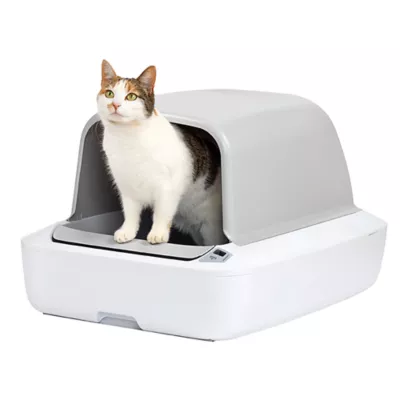
Enclosed self-cleaning model with a privacy hood to contain odors and provide cats with a sense of security
Credit: www.petsmart.ca
How to Choose the Right Self-Cleaning Litter Box
With dozens of models on the market, narrowing down your options can feel overwhelming. Focus on these key factors to find a box that fits your cat’s needs, your household, and your budget.
Match the Box to Your Cat’s Size and Household Needs
Measure your cat from the tip of their nose to the base of their tail, then add 2-3 inches to get the minimum interior dimension of the box – cats need enough room to turn around and dig without feeling cramped. Most standard models have a weight limit of 20 lbs, so large breed cats like Maine Coons or Norwegian Forest Cats will need an extra-large model designed for bigger pets. For multi-cat households, follow the golden rule of 1 litter box per cat plus 1 extra, and choose a model with a large waste drawer to reduce how often you need to empty it. For homes with 3 or more cats, high-capacity multi-cat compatible boxes reduce the need for frequent waste drawer emptying and accommodate multiple pets’ elimination schedules.
Evaluate Key Features
Prioritize features that match your specific needs:
- Noise level: Lower-quality raking systems can be loud enough to scare skittish cats, so look for models labeled "quiet operation" if you have a nervous feline.
- Waste drawer capacity: Small drawers hold 3-5 days of waste for a single cat, while large drawers can hold 10+ days, ideal for busy owners or multi-cat homes.
- Smart features: Mid to high-end models include app connectivity that alerts you when the waste drawer is full, tracks your cat’s elimination frequency (to flag potential health issues like UTIs early), and lets you adjust cleaning cycles remotely.
- Odor control: Sealed waste compartments, replaceable carbon filters, and built-in deodorizers make a big difference in long-term odor control, especially for smaller homes. If odor is your top priority, check out our picks for the odor-control focused litter box options.
Budget and Long-Term Costs
Entry-level raking models start at $80-$150, with basic features and small waste drawers. Mid-range models cost $150-$400, with larger capacities, quieter operation, better odor control, and optional app connectivity. Premium self-flushing and smart models cost $400+, with features like health tracking, automatic waste disposal, and compatibility with multiple litter types. Keep in mind long-term costs: most models require replacement waste drawers/trays ($10-$30 each), carbon filters ($5-$15 each), and occasional part replacements (rake, sensors) every 1-3 years. Even with these costs, most owners save money on litter over time, as self-cleaning boxes use 30-50% less litter than traditional boxes.
Installation and Setup for Success
Proper installation and gradual training will ensure your cat adopts the new box quickly, avoiding accidents and stress for both you and your pet.
Optimal Placement Guidelines
Choose a quiet, low-traffic area of your home where your cat has privacy – a corner of a laundry room, bathroom, or spare room works well. Avoid placing the box near your cat’s food and water bowls, as felines prefer to eliminate in a separate area from where they eat. Ensure the surface is flat and stable to avoid wobbling, which can scare your cat or interfere with the cleaning mechanism. Keep the box away from direct sunlight and high-humidity areas (like near showers or heaters), as excess heat and moisture can warp the plastic and damage sensors. Most models need to be within 6 feet of a power outlet, so avoid using extension cords if possible.
Step-by-Step Setup Process
Follow these steps for a smooth, mess-free setup:
- Assemble the box per the manufacturer’s instructions, ensuring the rake, sensors, and waste compartment are properly seated.
- Add 2-3 inches of the recommended litter type (check the manual for compatibility) to the base.
- Plug in the unit and run a test cleaning cycle (most have a manual test button) to confirm the rake moves properly and sensors trigger correctly.
- Add a small amount of your cat’s old litter to the new box to familiarize them with the scent.
Training Your Cat to Use the New Box
Most cats adapt to a self-cleaning litter box within 1-2 weeks with gradual introduction. Start by placing the new box in the same spot as your old litter box for the first week. If your cat is skittish around noise, disable the auto-cleaning cycle for the first 3-5 days so they can get used to the box without being startled by sudden movement or sound. Reward your cat with treats or playtime when they use the new box to reinforce positive behavior. If they avoid it, try moving it to a more private spot, or adding a litter attractant. For cats that are resistant to change, positive reinforcement training techniques for cats can help ease the transition to a new litter box setup.
Common Setup Mistakes to Avoid
Don’t place the box in a high-traffic area like a hallway or living room, as cats won’t feel safe using it. Don’t use too much or too little litter: too much can jam the rake, too little won’t form proper clumps. Don’t skip the test cycle before letting your cat use it, as a misaligned rake or broken sensor can lead to messes and frustration.
Maintenance and Troubleshooting
Self-cleaning litter boxes require far less maintenance than traditional boxes, but consistent upkeep will extend their lifespan and ensure optimal performance.
Routine Maintenance Schedule
- Daily: Check that the waste drawer isn’t full, and wipe down the entrance mat if there’s litter tracking.
- Weekly: Empty the waste drawer, replace carbon filters if your model uses them, and wipe the rake and sensors with a dry or slightly damp cloth (no harsh ammonia-based cleaners, which leave a scent cats hate and can damage plastic components).
- Monthly: Disassemble the box per the manufacturer’s instructions to deep clean the interior, waste compartment, and mechanism with mild soap and warm water.
- Every 3-6 months: Replace wearable parts like the rake, sensor, or waste drawer seals as recommended by the brand to avoid mechanical failures.
Common Issues and Easy Fixes
Even with proper care, small issues may pop up:
- Rake jams: Usually caused by large, hard clumps, non-compatible litter, or debris stuck in the rake. Turn off and unplug the unit, remove the jammed material, and reset the system to resume normal operation.
- Sensors not triggering: Wipe the sensor with a dry cloth to remove dust or litter buildup, and ensure it’s properly aligned per the manual.
- Unusual noises: Usually caused by litter buildup on the rake or gears; clean the mechanism thoroughly. If noise persists, contact customer support, as it may indicate a motor issue.
- Cat avoiding the box: Check that the litter depth is correct (2-3 inches), the box is clean, and the cleaning cycle isn’t too loud. Try placing the box in a more private spot, or using a litter attractant for a few weeks.
Self-flushing self-cleaning litter box that hooks directly to a home water line for hands-free waste disposal
Credit: www.canadiantire.ca

Are Self-Cleaning Litter Boxes Worth the Investment?
Self-cleaning litter boxes have clear pros and cons, and they aren’t the right fit for every household. Here’s an honest breakdown to help you decide.
Pros
- Eliminates daily scooping, saving 60+ hours per year for the average cat owner.
- Reduces odor and bacterial buildup for a cleaner, healthier home.
- Improves cat welfare by providing a consistently clean litter area, reducing risk of inappropriate elimination and urinary tract infections.
- Ideal for busy professionals, frequent travelers, and people with mobility limitations.
- Reduces litter waste over time, as most models use 30-50% less litter than traditional boxes.
- Some smart models track elimination frequency and weight to flag early signs of health issues like UTIs or kidney disease.
Cons
- Higher upfront cost, with most models starting at $80 and premium options costing $500+.
- Requires compatible clumping litter, which is an ongoing cost.
- Occasional maintenance to clear jams, clean sensors, and replace parts.
- Some lower-quality models have loud cleaning cycles that can scare skittish cats, leading to litter box avoidance.
- Mechanical failures are rare but possible, so a good warranty is recommended.
- They are not 100% maintenance-free, as they still require monthly deep cleaning.
Who Should (and Shouldn’t) Buy One
Self-cleaning litter boxes are ideal for busy cat owners, frequent travelers, multi-cat households, people with mobility limitations, and anyone struggling with persistent litter box odor. They are not ideal for cats that are extremely skittish around noise or new objects, owners on a very tight budget, cats that only use non-clumping litter, or renters who cannot install a water line for self-flushing models.
Frequently Asked Questions
How often do I need to empty the waste drawer?
For a single adult cat, most models have waste drawers that hold 7-10 days of waste. Multi-cat households may need to empty the drawer every 3-5 days. Many smart models send alerts to your phone when the drawer is full, so you don’t have to guess or check it daily.
Can self-cleaning litter boxes work for kittens or small cats?
Most models have a minimum weight limit of 5 lbs, as the sensor needs to detect a cat’s presence to trigger the cleaning cycle (to avoid cleaning while a cat is inside). For kittens under 5 lbs, you can disable the auto-cleaning feature until they reach the minimum weight, or use a traditional litter box until they’re large enough. Always check the manufacturer’s weight limit before purchasing for a small or young cat.
Do self-cleaning litter boxes really reduce odor?
Yes, when used correctly. Waste is sealed in an airtight compartment immediately after elimination, preventing ammonia buildup, which is the primary cause of litter box odor. Models with carbon filters add an extra layer of odor control. To keep odors at bay, empty the waste drawer regularly and deep clean the entire unit every 1-2 months.
What is the average lifespan of a self-cleaning litter box?
Most models last 3-5 years with proper maintenance. High-end models with durable build quality can last up to 7 years. Most manufacturers offer 1-3 year warranties to cover defects or mechanical failures, so be sure to register your product after purchase.
Is a self-cleaning cat litter box worth it?
For most cat owners, yes. The time saved from daily scooping (an average of 10 minutes per day, or 60+ hours per year) often outweighs the upfront cost, especially for busy households, frequent travelers, or people with limited mobility. The improved hygiene and odor control are also major benefits for both cats and owners. That said, if you have a very skittish cat that hates unexpected noises, or are on an extremely tight budget, a high-quality traditional litter box may be a better fit for now.
What is the best self-cleaning litter box for cats?
The best model depends on your cat’s size, your household needs, and your budget. For most single-cat households, the Litter-Robot 4 is a top pick for its reliability, large waste drawer, and quiet operation. For multi-cat homes, high-capacity models from our curated guide to top-rated self-cleaning models are ideal. For eco-conscious owners, self-flushing models that use minimal litter are a great low-waste option.
Do vets recommend self-cleaning litter boxes?
Many veterinarians recommend self-cleaning litter boxes for their ability to maintain consistent hygiene, which reduces the risk of bacterial infections and inappropriate elimination in cats. The sealed waste compartments also minimize human exposure to pathogens like Toxoplasma gondii, which is especially important for immunocompromised individuals or pregnant people. Vets always advise gradual introduction for cats that are nervous around new objects or loud noises, to avoid causing stress that could lead to litter box avoidance.
What are the disadvantages of an automatic litter box?
The main downsides are the higher upfront cost, the need for compatible clumping litter, and occasional maintenance to clear jams or clean sensors. Some lower-quality models have loud cleaning cycles that can scare skittish cats, leading to litter box avoidance. Mechanical failures are rare but possible, so it’s worth purchasing from a brand with a good warranty. They also still require occasional deep cleaning, so they are not 100% maintenance-free. Compatibility with all cat behaviors isn’t guaranteed, so some cats may never adjust to the automatic movement and noise.
Final Tips for Hassle-Free Use
To get the most out of your self-cleaning litter box:
- Always use the litter type recommended by the manufacturer to avoid jams and damage.
- Empty the waste drawer as soon as it’s full to prevent odors and overflow.
- Deep clean the entire unit every 1-2 months to keep sensors and the rake working properly.
- Monitor your cat’s usage: if they start avoiding the box, check for jams, loud noises, or discomfort with the setup.
- Keep a backup traditional litter box on hand during the first 2-3 weeks of transition, in case your cat needs time to adjust.
Conclusion
Self-cleaning cat litter boxes are a game-changing upgrade for most cat owners, eliminating the daily chore of scooping, reducing household odor, and providing a cleaner, healthier space for your feline friend. While they require a higher upfront investment and occasional maintenance, the time saved, improved hygiene, and reduced stress make them a worthwhile purchase for busy households, multi-cat families, and anyone tired of dealing with messy, smelly litter boxes. When choosing a model, prioritize your cat’s size and temperament, your household’s needs, and your budget to find the perfect fit. If you’re ready to make the switch, check out our curated guide to top-rated self-cleaning models to find the best option for your home and your cat.