
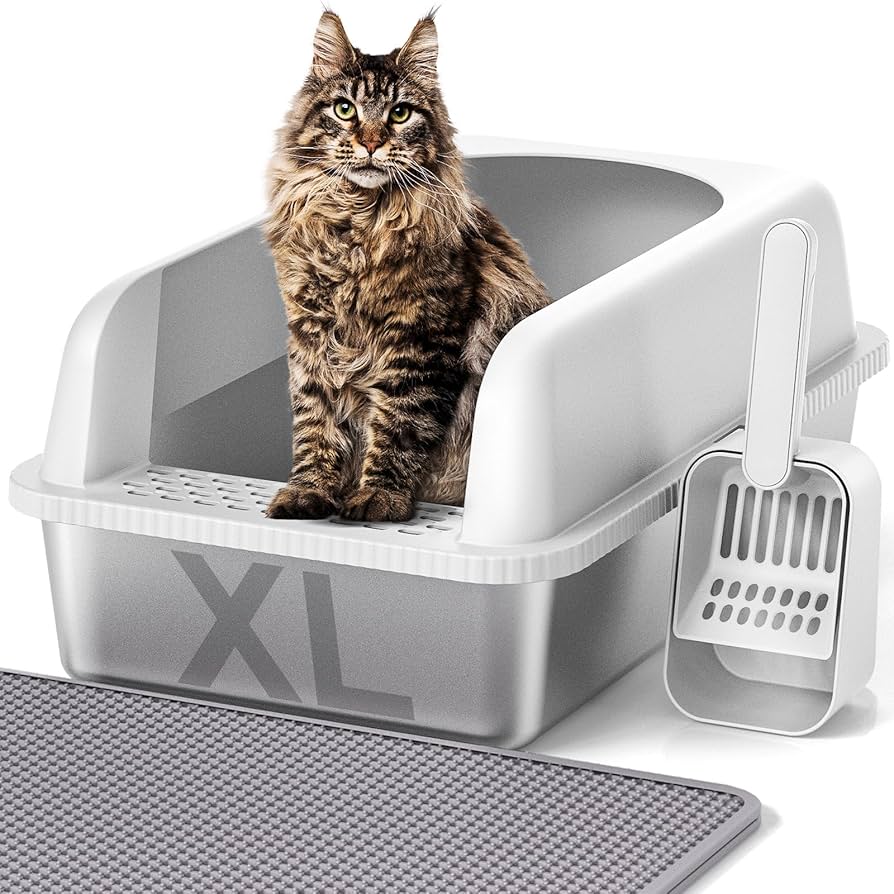
A litter box is not just another piece of pet gear. It is the single most decisive factor in whether your cat feels safe, comfortable, and confident using the bathroom indoors—and whether your home stays free of odor, scattered litter, and unwanted accidents. The right setup reduces daily maintenance and helps you catch early signs of urinary or digestive trouble before they become serious.
After evaluating dozens of models across traditional, covered, top-entry, and self-cleaning categories, this guide narrows down the boxes that consistently perform well in real homes. You will find specific recommendations by budget and lifestyle, practical maintenance schedules, and honest trade-offs so you can choose a box your cat will actually use. You can also read our guide on top rated cat litter box.
Why the Right Litter Box Matters More Than You Think
Cats are fastidious by nature. In the wild, they instinctively avoid eliminating near sleeping or eating areas. Indoors, that instinct means a cramped, dirty, or awkwardly placed litter box can quickly trigger house-soiling. Once a cat begins avoiding the box and using carpet, laundry, or corners instead, reversing the habit takes time and patience.
A wrong-sized box can also worsen mobility issues in older cats. Arthritis makes stepping over high walls painful. A hooded box can trap odors for you but feel suffocating to your cat. Poor ventilation increases ammonia concentration, which irritates feline respiratory systems. You can also read our guide on cat travel box with litter tray.
From a practical standpoint, the best rated cat litter box is rarely the most expensive one. It is the box that matches your cat’s size, age, and behavioral preferences while fitting into your cleaning routine. If you are also working through behavioral or training challenges, our guide on how to train cats to use a litter box offers step-by-step advice for building reliable habits.
Factors to Consider When Choosing a Litter Box
Size and Space
The most common mistake owners make is buying a box that is too small. A practical guideline is that the box should be at least one and a half times the length of your cat from nose to base of tail. For most adult cats, that means a minimum of 22 to 24 inches in length and at least 16 to 18 inches in width. Large breeds such as Maine Coons, Ragdolls, or Savannahs may need 28 inches or more. You can also read our guide on best automatic cat feeders for cats on prescription diets.
Consider ceiling height for covered boxes. A tall cat needs enough vertical room to stand and turn without brushing against the hood. If your cat frequently pees over the edge, the box is likely too short rather than simply too dirty.
In tight living spaces, an oversized box can feel impossible, but a cramped alternative will eventually cost you more in accidents and stress. For large or long-bodied cats, switching to an appropriately sized litter box can resolve recurring over-the-edge urination almost immediately. You can also read our guide on how to introduce my cat to a new kitten.
Material and Durability
Most litter boxes are molded from polypropylene because it resists moisture and is relatively inexpensive. However, material thickness varies significantly. Thin, flexible plastic develops micro-scratches quickly, and those scratches trap bacteria and odor even after washing.
Look for thick-walled construction, ideally with a smooth, slightly glossy interior surface. Avoid boxes with painted or textured coatings, which can flake under scooping pressure. Some manufacturers now incorporate antimicrobial additives into the plastic itself, which helps limit bacterial growth between cleanings but does not replace regular washing.
In practice, a heavy-duty plastic box may cost only a few dollars more than a flimsy one, but it will look and smell cleaner after six months of daily use.
Ease of Cleaning
Scooping is something you will do every single day. Design details matter more than you expect.
Rounded interior corners prevent urine and litter from packing into tight angles. Deep, smooth sidewalls make it easier to scrape clumps without flinging litter onto the floor. Avoid boxes with internal ridges, textured bottoms, or removable grates unless you are willing to scrub them separately each week.
Some boxes claim to be dishwasher-safe, but hand washing with warm water and mild dish soap remains the most reliable method. Avoid harsh chemicals such as bleach or ammonia-based cleaners; they can react with urine residue and leave behind odors that deter your cat.
Odor Control Features
Odor control depends more on cleaning frequency than on any built-in feature. That said, certain designs help between scooping sessions.
Covered boxes with carbon filters reduce the immediate spread of odor, but they also trap ammonia closer to your cat’s nose. If you choose a hooded box, scoop it at least once daily and consider one with wide ventilation slots. Self-cleaning models offer the strongest passive odor control because they remove waste into a sealed compartment within minutes.
For open boxes, the most effective upgrade is a high-quality clumping litter and a consistent scooping schedule. A self-cleaning option can help enormously if your schedule is unpredictable.
Price and Budget
A basic open pan costs under $20 and can work well if you scoop often. A premium self-cleaning unit can range from $200 to over $700. Before choosing, consider the total cost of ownership rather than the sticker price.
Some automated boxes require proprietary waste trays, special litter, or replacement filters. Those recurring costs add up fast. A traditional high-sided box with standard clumping litter often remains the most economical long-term setup for a single healthy cat.
Your Cat’s Health and Age
Kittens need boxes with low entry points, typically 3 to 4 inches high. Senior cats and cats with arthritis or hip issues need the same consideration. A low-entry cutout on a high-sided box offers the best combination: easy access plus tall walls to contain scatter.
Overweight cats benefit from extra width and a sturdy floor that does not flex under their weight. Cats recovering from surgery or dealing with chronic pain may avoid hooded boxes or top-entry designs that require jumping. For trusted behavioral and medical guidance, the Cornell Feline Health Center provides detailed advice on feline elimination problems.
Number of Cats
The standard rule is still one box per cat plus one extra. Many owners resist this, but multi-cat homes are exactly where territorial guarding and ambush behavior around boxes become most common.
Place boxes in different rooms, not lined up in a single laundry area. A dominant cat can block access to grouped boxes. If space is limited, at minimum provide separate boxes on different floors or at opposite ends of the home. For new additions or rescued cats adjusting to indoor life, our guide on litter training a stray walks through the initial settling-in process.
Types of Litter Boxes Compared
| Type | Pros | Cons | Best For |
|---|---|---|---|
| Open pan | Inexpensive, easy to clean, allows full visibility | Litter scatter, strongest odor escape, no privacy | Kittens, seniors, cats that dislike enclosed spaces |
| Covered or hooded | Contains odor and scatter, provides privacy | Traps ammonia, harder to clean, some cats feel cornered | Owners prioritizing smell control, timid cats |
| Top-entry | Excellent tracking reduction, sleek profile | Requires jumping, difficult for seniors, awkward for large cats | Active single cats, owners who hate scattered litter |
| Self-cleaning | Automates scooping, seals waste, strong odor control | High cost, mechanical failures, noise, needs power | Busy owners, multi-cat homes, people with mobility limits |
| Disposable | No scooping, easy to discard | Expensive over time, creates waste | Travel, temporary isolation, post-surgery recovery |
Self-Cleaning Litter Boxes: Are They Worth It?
For many owners, a self-cleaning litter box is the single best quality-of-life upgrade. But the category has real trade-offs that reviews often soften.
How Self-Cleaning Mechanisms Work
Most automated boxes use a weight or motion sensor that activates several minutes after your cat exits. A rotating globe or rake then sifts clumped waste into a sealed drawer or tray. Some models also use app connectivity to log usage and alert you when the waste compartment is full.
The key detail is timing. If the cleaning cycle starts too soon, it can startle a cat mid-use or disrupt a second cat approaching the box. Better models use a longer delay and stop immediately if a cat re-enters.
Pros and Cons
Pros
- Dramatically reduces the time spent scooping each day
- Seals waste quickly, which lowers odor levels
- Encourages consistency even on busy days
- Some models track usage frequency, which can reveal early health changes
Cons
- Upfront cost is substantial
- Moving parts can jam or fail, and sensor errors happen
- Some cats refuse to use them due to noise or motion
- Many require proprietary litter or replacement trays
In practice, self-cleaning boxes work best when introduced gradually. Run the cleaning cycle manually only when your cat is in another room for the first week. If your cat remains wary, a covered or high-sided traditional box may be a safer choice. If you are considering an automated setup, our guide to self-cleaning litter boxes compares the practical differences between major mechanisms.
Eco-Friendly Litter Box Options
Sustainability in the litter box category comes in two forms: materials and ongoing supplies.
Sustainable Materials
Several manufacturers now use recycled post-consumer plastics in their box shells. These units perform as well as virgin plastic and help divert material from landfills. When comparing eco-friendly boxes, look for labels such as “100% recycled PP” or clear statements about the percentage of recycled content. Avoid vague “eco-friendly” claims without specifics.
Biodegradable Liners and Trays
Traditional plastic liners can take centuries to break down. Plant-based liners made from cornstarch or similar materials offer a better option, though many require industrial composting to degrade fully. If your municipal composting program does not accept them, they may still end up in landfill, so research local disposal options first.
For disposable boxes used during travel or illness recovery, fully compostable single-use trays are a pragmatic compromise. The Environmental Protection Agency offers general guidance on reducing and reusing materials that applies to household pet waste product choices.
Budget-Friendly Picks Under $50
A dependable litter box does not require a triple-digit price. These models consistently receive strong feedback for build quality and practical design.
- IRIS Top Entry Cat Litter Box — The grooved lid catches litter as your cat exits, significantly reducing tracking. The modern shape fits into small spaces, though jumping may be difficult for senior cats.
- Van Ness Enclosed Cat Litter Pan — A hooded design with a replaceable charcoal filter. It contains scatter well but needs daily scooping to avoid trapping ammonia.
- Nature’s Miracle High-Sided Litter Box — Tall walls prevent over-the-edge urination and scatter. The antimicrobial surface helps between cleanings, and the open design appeals to cats that dislike hoods.
- Petmate Clean Step Litter Dome — The stepped entry path wipes litter from paws before your cat exits. This design works well for tracking but requires a larger floor footprint.
Luxury and Smart Litter Boxes
Premium models add furniture-style enclosures, app connectivity, and automated odor control. The value depends almost entirely on your lifestyle.
App-connected boxes log each visit, track weight when the cat steps in, and alert you to waste drawer levels or irregular usage patterns. For a cat with a history of urinary blockages or diabetes, this data can be genuinely useful in spotting early warning signs.
High-end enclosures double as side tables or cabinets, which helps when a litter box must live in a visible part of the home. The trade-off is that enclosed furniture boxes often reduce ventilation and require more frequent cleaning.
If you use technology to monitor your cat’s health, pairing a smart litter box with consistent feeding and hydration tracking gives you a fuller picture. For dietary management, our article on wet food nutrition for cats explains how moisture intake affects urinary health and litter box habits.
How to Transition Your Cat to a New Litter Box
Cats resist sudden change. A brand-new box sitting where the old one used to be is enough to trigger refusal in sensitive cats.
Follow this sequence for the best success rate:
- Place the new box next to the existing one.
- Fill the new box with the same litter type your cat already uses.
- Let the old box get slightly less clean than usual while keeping the new one pristine.
- Once your cat uses the new box consistently for several days, remove the old one.
- If refusal persists beyond a week, reassess the style. Some cats dislike covered boxes; others feel exposed in open pans.
If you are transitioning a newly adopted or previously outdoor cat, the process is the same but often requires more patience. Our guide on litter box training for adopted cats covers the additional steps for cats unfamiliar with indoor elimination.
Litter Box Maintenance That Actually Works
Cleaning Schedule
- Scoop daily. This is non-negotiable. Even self-cleaning boxes need waste drawer emptying every few days.
- Deep clean weekly. Empty all litter, scrub with warm water and mild dish soap, rinse thoroughly, and dry before refilling.
- Replace the box every one to two years. Scratches harbor bacteria and odor regardless of how well you clean.
Extending Box Life
Rotating between two boxes lengthens the lifespan of each. A non-stick litter box spray reduces the chance of clumps cementing to the bottom. If you use a liner, make sure it lies flat; wrinkles trap urine and invite tearing.
Common Issues and Solutions
| Problem | Likely Cause | Fix |
|---|---|---|
| Cat stops using the box | Dirty box, new location, medical issue | Scoop more often, move the box back, schedule a vet visit |
| Litter scattered everywhere | Low sides, deep digging, too much litter | Reduce litter depth, switch to high-sided or top-entry |
| Odor despite frequent cleaning | Old scratched plastic, poor ventilation | Replace the box, add ventilation, upgrade litter |
| Cat pees over the edge | Box too small, cat standing tall | Choose a larger box with higher walls |
If your cat scratches carpets or rugs near the box, the behavior often signals stress or dissatisfaction with the litter surface. Redirecting the behavior with appropriate posts and pads helps, and our guide on training a cat not to scratch carpet outlines a humane, effective approach.
The Best Rated Cat Litter Boxes by Use Case
Rather than crowning a single winner, these picks reflect what performs best in specific real-world situations.
- Best Overall Traditional Box: Nature’s Miracle High-Sided Litter Box — open, easy to clean, tall walls, and suitable for nearly all cats.
- Best for Small Apartments: IRIS Top Entry Cat Litter Box — compact footprint and excellent tracking control.
- Best Self-Cleaning for Multi-Cat Homes: Litter-Robot 4 — reliable rotation, large waste drawer, and app monitoring.
- Best Furniture-Style Option: A well-ventilated enclosed cabinet with a removable interior pan — hides the box without compromising air quality.
- Best Budget Pick: Van Ness Enclosed Cat Litter Pan — solid odor containment at a low price.
- Best for Seniors or Kittens: A low-entry open pan with high back walls — easy access without feeling enclosed.
For households where the box itself is part of a larger training or behavioral challenge, our guide on teaching cats to use litter provides a complete framework for building reliable habits.

A high-sided open box balances easy entry for cats with excellent scatter control for owners.
Frequently Asked Questions
What is the most recommended cat litter box by veterinarians?
Veterinary behaviorists typically recommend large, open, low-entry boxes with smooth, easily cleaned surfaces. Open boxes provide better air circulation and allow owners to monitor urine output and stool quality. High-sided open pans offer the best balance for most cats.
Is a self-cleaning litter box worth the money?
For owners with demanding schedules, mobility limitations, or multiple cats, the time savings and consistent odor control often justify the cost. For a single healthy cat and an owner who scoops daily, a high-quality traditional box remains perfectly effective. Buy from a retailer with a generous trial period in case your cat refuses the automated mechanism.
How often should I replace the litter box entirely?
Plan to replace plastic boxes every one to two years. Replace sooner if you notice persistent odor after deep cleaning, visible scratches or discoloration, or if the plastic becomes brittle.
Can I use a covered box for a senior cat?
Only if the entrance is low and wide enough for comfortable stepping. Many senior cats prefer open boxes because they do not feel trapped and can see their surroundings. If odor control is the goal, increase scooping frequency rather than adding a hood.
What litter works best with self-cleaning boxes?
Most self-cleaning boxes require hard-clumping clay litter. Lightweight litter, non-clumping formulas, or large crystal granules can interfere with rakes and rotating drums. Always check the manufacturer’s litter compatibility list before filling an automated box.
Conclusion
The best rated cat litter box for 2025 is the one your cat willingly uses every time. Start by getting the size right, then match the style to your cat’s personality and physical abilities. Add features such as self-cleaning, app tracking, or furniture styling only after the fundamentals are in place.
A thoughtful setup reduces daily chore time, keeps your home smelling clean, and gives you a simple early-warning system for changes in your cat’s health. If you are upgrading from a box that is too small, difficult to clean, or poorly ventilated, making the switch now will improve your cat’s comfort immediately. Most cats adapt within a week when the new box respects their instincts and preferences.