
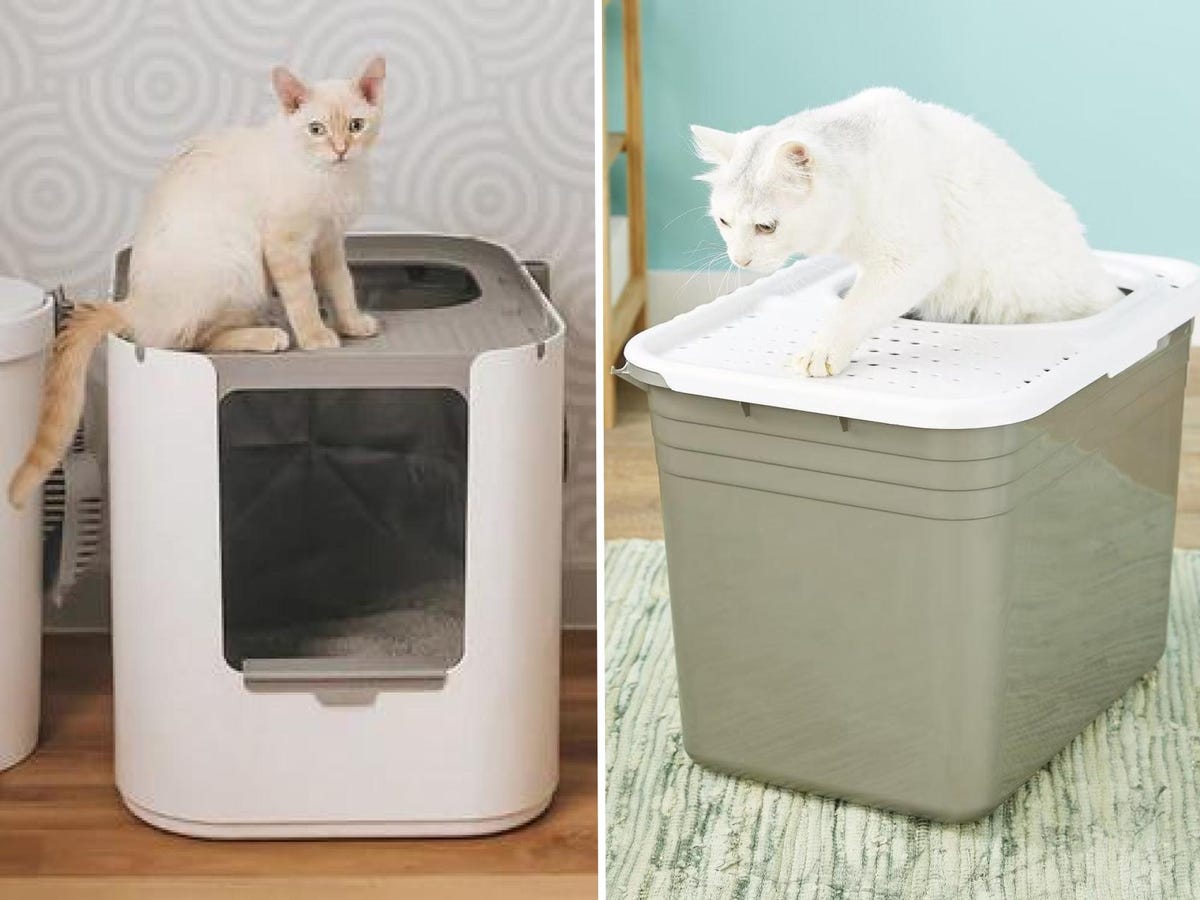
Your litter box setup is one of the biggest factors in whether your cat eliminates consistently — or starts using the corner of the living room. A box that is too small, too dirty, too hard to enter, or placed in a stressful spot can create long-term behavior problems. The good news is that most litter box issues improve quickly once the setup matches your cat’s size, age, and household dynamics.
This guide covers six dependable options in 2026, what to look for before you buy, common setup mistakes, and maintenance routines that keep odor and mess under control. Rather than ranking every box on the same scale, each pick here solves a specific problem: large breeds, multi-cat homes, tight budgets, small apartments, limited mobility, or a dislike of daily scooping. You can also read our guide on extra large litter box for big cats.
Why the Right Litter Box Matters
Litter box avoidance is one of the most common feline behavior complaints. In many cases, the problem is environmental rather than medical. Cornell Feline Health Center notes that poorly sized, dirty, or badly placed boxes frequently contribute to house soiling. Before assuming a cat is being difficult, owners should evaluate the box itself.
In practice, a litter box is not just a container. It is a private bathroom, a marking space, and a place where cats need to feel safe. Cats are both predator and prey animals, so they often prefer a spot with good sight lines and an escape route. A box that fails those instincts can be rejected even if it looks convenient to humans. You can also read our guide on covered litter boxes for cats.
How We Evaluated These Picks
We judged each litter box on real-world use, not just feature lists. The core criteria were:
- Size and turning room: Can the cat enter, turn around, dig, and cover waste without pressing against the walls?
- Entry and mobility: Is the step-in height low enough for kittens and seniors?
- Daily maintenance: How much scooping, wiping, or emptying does it require?
- Deep cleaning: Can it be disassembled easily, or are there crevices that trap waste?
- Odor control: Does it use sealing, filtration, or rapid waste removal instead of just masking smells?
- Material durability: Will the surface resist scratches, stains, and odor absorption?
- Flexibility: Does it work with common litter types, or does it lock you into a proprietary refill?
A box earns a place here only if it handles one of those jobs well enough to justify its trade-offs.
At-a-Glance: Top 6 Litter Boxes for 2026
| Pick | Best For | Key Advantage | Watch Out For |
|---|---|---|---|
| Litter-Robot 4 | Busy households, tech-friendly owners | Automatic sifting and app monitoring | High upfront cost, needs outlet |
| Petmate Giant Litter Pan | Large and long-haired breeds | Extra floor space and high walls | Basic design, no built-in odor control |
| Omega Paw Roll-Too | Multi-cat homes without an outlet | No-power roll-and-sift cleaning | Requires clumping litter, can jam |
| Van Ness High-Sided Litter Pan | Budget buyers, kittens, small cats | Simple, easy to clean, inexpensive | Limited size and odor containment |
| PetFusion Bamboo Litter Box | Eco-conscious owners | Renewable bamboo build | Higher price, needs moisture care |
| New Age Pet Litter Box Enclosure | Studios and open-plan homes | Hides the box and adds storage | Assembly required, interior may be small |
Prices and current availability shift often, so confirm dimensions, power requirements, and return policies before ordering.
Buying Guide: What to Look For
Size, Entry Height, and the “Plus One” Rule
Measure your cat from the nose to the base of the tail. A practical starting point is a box at least 1.5 times that length, so the cat can comfortably turn around, scratch, and cover waste. Many standard pans fail this test for even average-sized cats. You can also read our guide on maine coon cat litter box.
Households with multiple cats should follow the common “one per cat plus one extra” rule. Boxes should be spread across different rooms or floors, not lined up in a single row. In a multi-level home, one box downstairs and one upstairs prevents an older cat from having to climb stairs just to urinate.
Entry height matters as much as interior length. High-sided boxes contain litter scatter, but a cat with arthritis or hip pain may stop using a box that requires a high step or jump. For large breeds, look for roomier pans for big cats that provide enough space without forcing the cat to hunch against a wall. You can also read our guide on can you train cats like dogs.
Cleaning and Maintenance
Every litter box has two cleaning jobs: daily waste removal and periodic deep cleaning. A good box makes both easier.
Look for smooth, non-porous surfaces, removable trays, and as few deep seams as possible. Scooping daily is easier when the interior has no sharp corners that trap wet litter. For deep cleaning, a box that disassembles in one or two pieces can be rinsed and dried much faster than a multi-part unit with hidden channels.
Self-cleaning boxes reduce scooping, but they are not zero-maintenance. The globe, drum, or rake still needs periodic wiping because dust and residue build up on sensors and moving parts. In humid homes, that buildup can harden and create odors if ignored. You can also read our guide on what sort of nutrition is needed for a sick cat.
Odor Control: More Than a Lid
Effective odor control combines three things: removing waste quickly, sealing it away, and allowing some airflow. Carbon filters help absorb volatile odors, while sealed waste drawers prevent smells from escaping between cleanings.
Covered boxes can trap odor inside the box, which sounds good until the cat has to walk into a concentrated ammonia cloud. Cats have a far stronger sense of smell than humans, so a covered box that smells tolerable to you may be repulsive to your cat. If you use a covered or furniture-style box, scooped litter still needs to leave the house regularly, and the interior needs ventilation. You can also read our guide on best rated cat litter box.
If you can smell ammonia near the box, the solution is usually more frequent cleaning, not a stronger deodorizer.
Material Safety and Durability
Choose BPA-free, non-porous plastic or sealed material that resists scratching. Scratches are more than cosmetic: they create microscopic grooves where bacteria and odor can settle and become difficult to remove.
Avoid unsealed wood or heavily textured surfaces that absorb urine. Rounded edges and smooth seams reduce the chance of paw irritation. If a plastic box develops deep scratches, persistent odor, or rough spots, it is time to replace it even if it still holds litter.
Open, Covered, Top-Entry, or Furniture-Style
- Open pans are the closest to what most cats prefer because they offer clear sight lines and easy escape.
- Covered boxes contain scatter and odor but can feel confining if they have only one exit.
- Top-entry boxes control tracking well, but the downward jump and upper opening can be hard for seniors or large cats.
- Furniture enclosures hide the litter area and add storage, but they must be large enough for the litter box inside and still allow air circulation.
Litter Compatibility and Tracking
Self-cleaning mechanisms typically require clumping litter. Crystal and pellet systems can work well, but they often create ongoing refill costs and may not work with every automated design.
For cats that fling litter or track it through the house, a high-sided box alone is rarely enough. Pair it with a textured mat outside the exit and, where possible, choose a pan with a grated tray that helps knock particles off paws as the cat exits.
Self-Cleaning vs. Manual: Which Should You Choose?
Automated boxes are worth considering if you hate scooping, have a packed schedule, or want waste removed before it sits for hours. The Litter-Robot and similar rotating units separate clumps into a sealed drawer, while crystal tray systems like PetSafe’s crystal tray systems absorb liquid and dehydrate solid waste in a disposable liner.
The trade-off is real. Automatic boxes cost more upfront, require a nearby outlet, make some motor noise during cycling, and still need periodic cleaning. Some cats are frightened by the movement and need a slow introduction over several days.
Manual boxes have fewer failure points, no power cords, and no proprietary cartridges. They are also much easier to replace if a cat’s preferences change. If odor and scooping are not overwhelming, a well-sized manual pan with daily scooping can outperform a neglected automated unit.

Crystal-based automatic boxes reduce daily scooping but create a recurring cost for disposable trays or crystal refills.
Image source: PetSafe
If you want to compare other hands-off designs beyond the picks below, start with a broader look at automated scooping systems to understand which mechanism best fits your household.
Top 6 Litter Boxes for Cats: Detailed Reviews
1. Litter-Robot 4: Best Self-Cleaning Overall
The Litter-Robot 4 is the most complete automated option in this roundup. After the cat exits, the globe rotates and separates clumped waste into a sealed drawer beneath the unit. In practice, that means the visible litter stays cleaner between full changes, and closed rooms develop far less odor.
The larger entry accommodates many cats up to around 25 pounds, which is useful for bigger breeds. It is quieter than older rotating models, but there is still a motor sound during the cleaning cycle. App alerts help track waste drawer levels and troubleshoot sensor issues.
- Pros: Removes waste after each use, reduces daily scooping, app monitoring, larger entry than many automated boxes
- Cons: Expensive, requires an outlet, still needs occasional deep cleaning and sensor wiping
- Best for: Busy owners who want to automate scooping and have space near an outlet
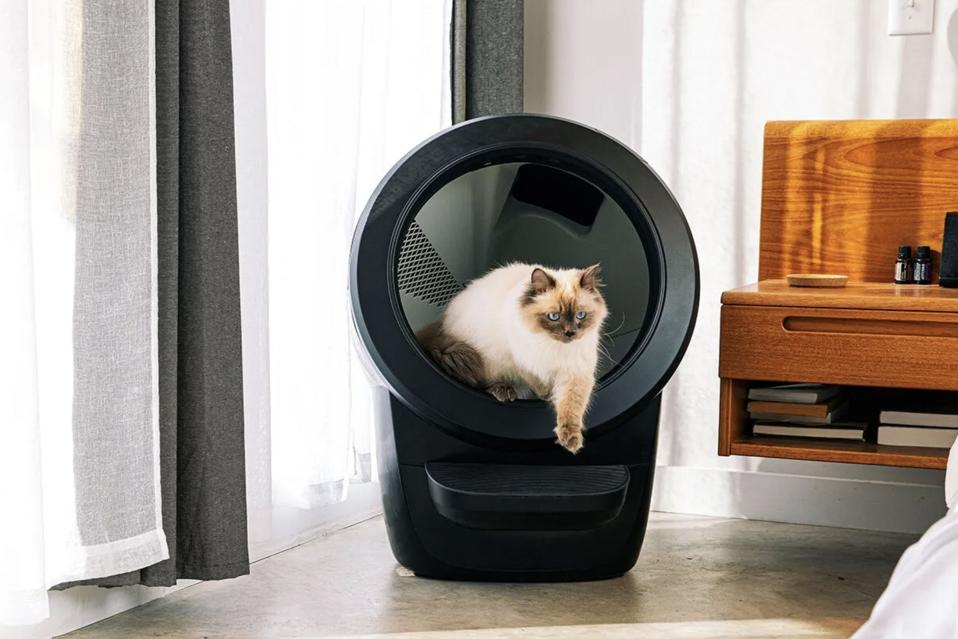
The globe rotates after the cat leaves, separating clumps into a sealed drawer below.
Image source: Forbes
2. Petmate Giant Litter Pan: Best for Large and Long-Haired Breeds
Standard pans often fail large breeds because a Maine Coon or Ragdoll cannot comfortably turn around or cover waste without stepping in old clumps. The Petmate Giant Litter Pan solves that with an oversized footprint and high walls that contain scatter from vigorous digging.
The open design gives cats a clear view of the room, which many large or cautious cats prefer. The smooth interior wipes down quickly, but there is no built-in odor control, so daily scooping matters more with this style.
- Pros: Very roomy, high walls reduce litter scatter, easy to clean, budget-friendly for the size
- Cons: Plain appearance, no sealed odor system, takes up more floor space
- Best for: Large cats, long-haired breeds, and diggers that kick litter over standard pan walls
3. Omega Paw Roll-Too: Best Low-Tech Multi-Cat Option
The Omega Paw Roll-Too uses a roll-and-sift mechanism instead of a motor. You roll the covered unit onto its side and back, and an internal grate separates clumps into a pull-out tray. That makes it a practical option for closets, basements, or rooms without a nearby outlet.
It handles waste from multiple cats without daily scooping, but it depends heavily on clumping litter. If the litter is not high-quality or the tray is overfilled, sifting can become inefficient. The covered shape also means cats that dislike enclosed boxes may need time to adjust.
- Pros: No power required, sealed tray helps contain odor, lower cost than motorized self-cleaners
- Cons: Clumping litter only, can jam if overfilled, enclosed design may not suit every cat
- Best for: Multi-cat homes that want low-maintenance cleaning without an electrical setup
If the roll-and-sift style appeals to you, this detailed look at the roll-and-sift cleaner explains what to expect during daily use and cleaning.
4. Van Ness High-Sided Litter Pan: Best Budget Basic Pan
Not every household needs automation or a designer enclosure. The Van Ness High-Sided Litter Pan is a simple open box with high walls to reduce scatter and a smooth surface that rinses clean quickly. It often costs less than a premium bag of litter, making it a sensible starter box or backup for a second room.
The trade-offs are clear: it has no odor filtration, and the interior is not generous enough for larger cats. For kittens, small cats, or a temporary setup, however, it is a low-risk purchase.
- Pros: Very affordable, lightweight, easy to wash, high walls contain scatter
- Cons: No odor control, too small for cats over about 15 pounds, basic look
- Best for: First-time owners, kittens, small cats, temporary or backup boxes
5. PetFusion Bamboo Litter Box: Best Eco-Friendly Choice
The PetFusion Bamboo Litter Box replaces much of the plastic in a traditional pan with renewable bamboo and a non-toxic sealant. It is scratch-resistant and blends more naturally into living spaces than bright plastic.
The main trade-off is moisture. Bamboo is durable when sealed, but the finish can wear over time, especially in humid bathrooms or if urine sits against the edge. Wipe it down promptly and check the manufacturer’s guidance before assuming the entire box can be composted at home, since sealants and adhesives can complicate disposal.
- Pros: Renewable material, stylish natural finish, lower plastic use, scratch-resistant
- Cons: Higher price than plastic, requires moisture care, limited size options
- Best for: Eco-conscious owners and homes with natural or minimal decor
6. New Age Pet Litter Box Enclosure: Best Furniture-Style Hiding Spot
This enclosure looks like a small side table while hiding a standard litter pan behind a magnetic door. The top shelf provides storage for litter, scoops, and waste bags, which is especially useful in apartments without a dedicated utility closet.
Before buying, measure the interior carefully. Extra-large pans generally do not fit inside this style of cabinet, so it works best with a standard or high-sided pan. Assembly takes time, and the enclosed design needs regular airing out to prevent odor buildup.
- Pros: Hides the litter area, adds storage, looks like furniture
- Cons: Assembly required, interior space limited, enclosed design needs ventilation
- Best for: Studios, open-plan homes, and owners who want the litter box out of sight

A cabinet-style enclosure hides the litter pan and doubles as a small side table with storage space.
Image source: Amazon
For a closer comparison of similar hideaway options, this guide to cabinet-style litter stations covers sizing, ventilation, and setup considerations.
Matching the Box to Your Cat’s Life Stage
Senior Cats and Mobility Challenges
A senior cat may stop using a high-sided box once jumping or stepping over the wall becomes painful. Choose a low-entry open pan with a stable, non-slip floor mat nearby. A small ramp or step can help a cat with arthritis reach the entrance without slipping.
Place at least one box on every floor and keep a box close to where an older cat spends most of its time. The less distance a senior cat has to travel, the fewer accidents you will clean up.
Kittens and First-Time Training
Kittens do best with a shallow, open-top pan that is easy to find and enter. Avoid covered boxes until the kitten is reliably using the litter area, because enclosed spaces can feel intimidating. Use a non-clumping litter for very young kittens to reduce the risk of digestive blockage if they ingest litter while exploring.
If you are raising a new kitten, establishing a kitten’s litter routine early prevents many accidents later.
Anxious Cats and Multi-Cat Tension
In multi-cat homes, litter boxes should not be placed side by side. A dominant cat can block access to a row of boxes simply by sitting nearby. Spread boxes across rooms and levels, and choose open designs or enclosures with more than one escape route so a nervous cat never feels cornered.
When introducing a new box or changing style, keep the old box available for several days. Place a few scoops of used litter in the new box to transfer the cat’s scent and make the change feel familiar. If an adult cat has started rejecting the box, use a calm retraining approach before assuming the equipment is the only problem. This guide to helping an adult cat re-learn the box walks through the reintroduction steps.
Cats That Kick, Track, or Spray Over the Sides
For heavy diggers, choose a high-sided or top-entry box and place a textured mat outside the exit. A box liner or wall shield can protect the area behind the pan. Tracking is easiest to manage by giving the cat a short exit path with a mat or grate that catches litter before it spreads through the house.
If a cat sprays over the side despite a high wall, a covered box or furniture enclosure may help contain the mess, but have the cat checked for a urinary issue first. Spraying is sometimes a medical or territorial signal rather than a simple litter box preference.
Litter Box Placement and Daily Habits That Prevent Problems
Placement is often more important than the price or style of the box. Follow these setup habits to reduce avoidance:
- Keep the box in a quiet, low-traffic area. Avoid washing machines, furnaces, air vents, and busy hallways.
- Separate the box from food and water. Cats naturally avoid eliminating near their eating space.
- Put at least one box on every floor. Stairs become a barrier for older cats.
- Use the right litter depth. Too much litter creates scatter; too little prevents covering. Follow the litter brand’s recommended fill line.
- Scoop once or twice daily. Even a self-cleaning box benefits from a quick check for buildup on sensors and moving parts.
- Deep clean with mild dish soap, not bleach. Bleach can leave strong fumes and may interact with ammonia in urine.
- Change slowly. Put the new box next to the old one and add used litter so the scent transfers.
A common mistake is placing an expensive new self-cleaner in the same stressful corner the cat was already avoiding. The motor does not fix the placement problem.
Frequently Asked Questions
What type of litter box is best for most cats?
A large, open-top box with a low entry is the safest starting point for most cats. It provides easy access, good airflow, and a clear view of the room. Covered and furniture-style boxes can work well, but introduce them gradually if your cat seems hesitant.
How many litter boxes do I need?
Use one box per cat plus one extra, placed in different locations. Two cats should have three boxes. If your home has multiple levels, provide at least one box on each floor.
What is the golden rule of litter box care?
Scoop waste at least once daily and fully change the litter on a regular schedule. Wash the box with mild soap and warm water, then dry it before refilling. More frequent washing is needed in multi-cat homes.
What cat litter do most vets recommend?
Veterinary guidance commonly favors unscented, clumping litter because it is easy to sift and allows for simple daily waste removal. Avoid heavily scented litters if your cat has respiratory sensitivity or starts avoiding the box. If your cat has a medical condition, follow your own veterinarian’s recommendation.
Do cats prefer open or closed litter boxes?
Many cats prefer open boxes because they offer better airflow, visibility, and an escape route. Individual cats vary. If you want a covered box, provide an open alternative and let the cat choose.
How often should I replace my cat’s litter box?
Plastic boxes often last one to two years with regular cleaning. Replace sooner if the surface is deeply scratched, retains odor after washing, or has cracked edges, since damaged surfaces can harbor bacteria and irritate paws.
Do self-cleaning litter boxes work for all cats?
Many cats adjust within several days, but timid or noise-sensitive cats may be startled by the motor. Use the quietest available cycle and let the cat investigate while the unit is off before running a full cleaning.
How do I transition a formerly outdoor cat to an indoor litter box?
Start with a large, shallow open pan in a quiet room and use unscented litter. Add soil or leaves from the cat’s previous outdoor spot on top of the litter to create a familiar scent. For step-by-step help, this guide to retraining a former outdoor cat covers the full process.
Final Verdict: How to Pick the Perfect Litter Box for Your Home
Start by measuring your cat and counting your litter stations. A larger, easy-to-enter box placed in the right spot often solves more problems than any premium feature. For busy households, an automated unit can dramatically cut scooping time. For large breeds, extra floor space wins. For apartments, a furniture enclosure hides the litter area while adding storage.
The best litter box is the one your cat will use without stress. Prioritize size, entry height, placement, and daily cleaning before chasing odor-eliminating claims. Choose the model that fits your daily reality, introduce it gradually, and you will likely see fewer accidents, less odor, and a calmer cat within a few weeks.