

A smelly litter box is rarely just a "cat problem." It is a combination of box design, litter choice, cleaning frequency, ventilation, and your cat’s individual habits. The good news is that you do not have to live with constant ammonia odor. Updated for 2026, this guide covers what actually works when choosing the best cat litter box for odor control, which features justify the cost, and which mistakes make the problem worse.
In practice, the biggest odor reductions come from three core decisions: a box large enough for your cat to use comfortably, a litter that clumps or absorbs moisture quickly, and a routine that removes waste before bacteria can break it down. Everything else—hoods, carbon filters, self-cleaning mechanisms, and deodorizers—works best as support, not as a substitute for those fundamentals.
Why Cat Litter Box Odor Happens
Cat urine and feces smell strongly because bacteria decompose waste compounds over time. Urine develops a sharp ammonia scent as it sits, especially when it soaks into porous plastic or saturated litter. Stool odor is influenced by diet, digestion, gut health, and how quickly waste is covered and removed.
A box usually starts smelling worse when one or more of these conditions is present:
- The litter is too shallow to absorb urine completely before it reaches the bottom.
- Waste sits for days instead of being scooped daily.
- The box is too small, so waste lands on the walls, rim, or floor.
- The plastic surface has micro-scratches that trap urine and bacteria.
- A covered box traps moisture without enough airflow.
- The litter type does not match your cat’s digging habits or your home’s humidity level.
If odor appears suddenly, or if your cat begins urinating outside the box, straining, producing very soft stool, or drinking much more water, contact your veterinarian. A rapid change in litter box odor can sometimes indicate a urinary tract infection, kidney issue, or digestive problem rather than a cleaning problem.
Quick Checklist: What to Look for in an Odor-Control Litter Box
Before comparing styles, use this checklist to narrow your options. The best odor-control box is the one your cat will use consistently and that you can clean without friction.
| Feature | Why It Matters | Practical Trade-Off |
|---|---|---|
| Large interior | Room to turn, dig, and cover waste | Uses more floor space |
| Smooth, non-porous surface | Resists trapped urine and bacteria | Often costs more upfront |
| High sides or hood | Contains kicked litter and spraying | Can feel cramped for some cats |
| Easy waste access | Makes daily scooping quick and likely | Open designs may show mess more |
| Replaceable carbon filter | Helps reduce escaping odors | Needs ongoing replacement |
| Sealed waste drawer | Limits smell between emptying cycles | Needs regular drawer cleaning |
| Low entry | Helps kittens, seniors, and limited-mobility cats | May track more litter |
A reliable sizing rule: choose a box that is at least as long as your cat from nose to the base of the tail, plus a few extra inches. If your cat has to crouch, twist, or perch awkwardly over the edge, the box is too small—and that discomfort can lead to accidents outside the box.
Top Litter Box Types for Odor Control
No single litter box style is right for every household. The best choice depends on your cat’s size, age, digging style, and your tolerance for maintenance.
Open Litter Boxes
Open pans are simple, affordable, and easy to scoop. They work well for cats who dislike enclosed spaces and for owners who want immediate visual access to waste.
The main odor downside is exposure. Because waste is not hidden behind a door or lid, smell can spread faster if you do not scoop frequently. However, an open box with an excellent litter and daily cleaning can outperform a neglected covered box.
Open boxes are best when:
- You scoop at least once daily.
- Your cat refuses hoods or tight spaces.
- You want the simplest cleaning routine.
- You use a fast-clumping, odor-absorbing litter.
Covered and Hooded Litter Boxes
Covered boxes can contain litter scatter and give some cats a more private place to eliminate. Many owners prefer hooded privacy designs because they hide waste from view and keep kicked litter off the floor.
For odor control, the lid must fit well and the box still needs frequent cleaning. A hood can trap ammonia inside the enclosure, which may make the experience unpleasant for your cat. In practice, a covered box with a carbon filter and daily scooping works best in a well-ventilated room.
Covered boxes are best when:
- Your cat already accepts a hooded box.
- You replace or clean filters regularly.
- The interior is large enough for your cat to turn around fully.
- You scoop daily and deep-clean weekly.
Top-Entry Litter Boxes
Top-entry boxes reduce tracking because cats exit through a grated lid, leaving much of the litter behind. They can also contain odor better than open pans because the opening is smaller.
The trade-off is accessibility. Older cats, kittens, large breeds, and cats with arthritis may struggle with jumping in and out. If a cat avoids the box because entry is difficult, odor control becomes irrelevant.
Top-entry boxes are best when:
- Your cat is agile and comfortable jumping.
- Tracking is your main frustration.
- You want an enclosed design without a swinging door.
- You can keep the lid clean and free of stuck litter.
High-Sided and Sifting Boxes
High-sided open boxes are a practical middle ground. They contain spraying and kicked litter while still providing an easy entry point. Some models include sifting trays, which speed up cleaning when paired with clumping litter.
For stronger containment, look for tighter smell containment with a sealed lid and replaceable carbon pad, but make sure the box does not become a trapped moisture chamber. Odor control improves when waste is sealed away, but airflow and cleaning still matter.
High-sided boxes are best when:
- Your cat kicks litter aggressively.
- You want easier access than a top-entry box.
- You prefer a simple, non-electric design.
- You are willing to wipe the sides during weekly cleaning.
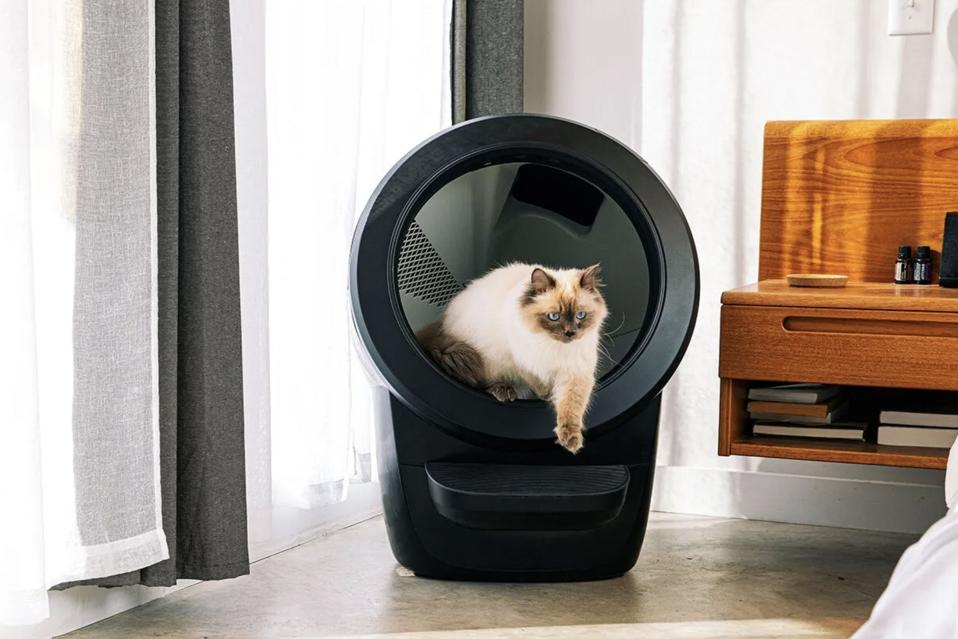
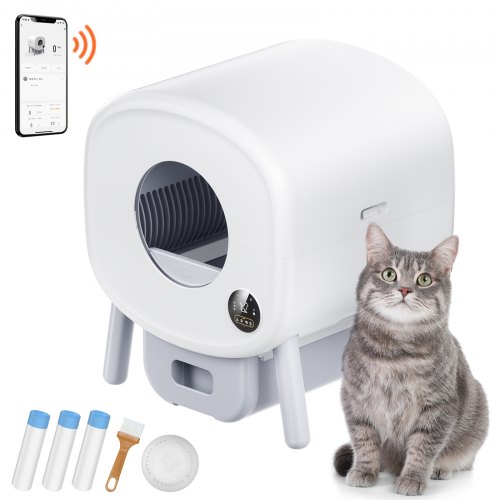
Self-Cleaning and Automatic Litter Boxes
Automatic boxes reduce odor by removing waste soon after your cat uses the box. A reliable automated scooping cycle can prevent waste from sitting exposed for hours, especially in busy households.
However, automatic boxes are not maintenance-free. Waste drawers must be emptied, filters replaced, sensors wiped down, and the litter type must be compatible with the mechanism. If neglected, an automatic box can smell worse than a basic pan because waste collects in a warm, sealed compartment.
Credit: www.forbes.com
A self-cleaning unit can reduce the time waste sits exposed, but filters and drawers still need regular care.
Self-cleaning boxes are best when:
- You want less daily manual scooping.
- You are willing to maintain the waste drawer and filters.
- Your cat accepts the sound and movement.
- You use the manufacturer-recommended litter type.
Credit: www.vevor.ca
Automatic boxes work best when the waste drawer is emptied before it reaches capacity.
Disposable and Travel Litter Boxes
Disposable boxes are useful for travel, foster situations, temporary setups, or short-term recovery periods. Many are made from biodegradable materials and can be discarded when they become worn or odorous.
They are not usually the best long-term odor-control solution for a primary litter station. Because they are lightweight, they may shift, and thinner materials can absorb odor faster than durable plastic or stainless steel. Still, for temporary use, they can be effective if changed on a short schedule.
Disposable boxes are best when:
- You need a portable option for travel.
- You are caring for a foster cat or temporary guest.
- You want to avoid scrubbing a heavily used backup box.
- You can commit to replacing the entire box frequently.
Best Materials for Odor Control
The material of the litter box affects how long odors linger. Scratched, stained, or warped boxes are much harder to keep fresh.
Plastic Boxes
Plastic is common because it is lightweight, inexpensive, and widely available. High-quality plastic with a smooth finish works well, but lower-quality plastic scratches easily. Those scratches trap urine, bacteria, and odor over time.
Replace a plastic box if you notice:
- Persistent smell even after washing.
- Visible scratches or yellowing.
- Cracks around corners or edges.
- A rough, chalky surface that holds residue.
A common mistake is trying to rescue an old, scratched plastic box with strong cleaners. In most cases, replacing the box is more effective than attempting to mask embedded odor.
Stainless Steel Boxes
Stainless steel is one of the best materials for odor resistance. It is non-porous, durable, and far less likely to absorb urine smell. It also withstands repeated washing without degrading the way plastic often does.
The main downside is cost. Stainless steel boxes are usually more expensive upfront, and hooded or self-cleaning options are less common. If odor has become embedded in your current setup, switching to stainless steel can make a noticeable difference—especially if you plan to keep the box in a humid room.
Natural and Alternative Materials
Some owners prefer wood, bamboo, or paper-based accessories, especially for litter box furniture or disposable liners. These materials can look nicer in a home, but they are not ideal for direct waste exposure unless they are properly sealed.
Natural litter materials, such as pine, walnut, corn, or tofu, help with odor in a different way: they absorb moisture quickly and often carry a mild natural scent. The box material and the litter material should be considered together, not separately.
The Right Litter Matters as Much as the Box
Even the best box will struggle if the litter cannot absorb moisture and reduce odor quickly. Litter choice is personal to your cat, so transitions should always be gradual.
Clumping Clay Litter
Clumping clay litter remains popular because it forms solid clumps around urine, making waste easy to remove completely. Many formulas include baking soda or activated charcoal for added odor control.
Pros:
- Strong clumping action.
- Widely available and often affordable.
- Familiar texture that many cats accept.
- Easy to scoop without full-box changes.
Cons:
- Can produce dust.
- May track easily across floors.
- Some scented versions irritate sensitive cats.
Silica Gel Litter
Silica gel crystals absorb urine and dry out solid waste, which can reduce odor effectively. They often last longer between full changes, but some cats dislike the texture or the faint crackling sound under their paws.
Pros:
- Excellent moisture absorption.
- Less frequent full litter changes.
- Low dust in many formulas.
Cons:
- Typically more expensive.
- Some cats avoid the crystal texture.
- Requires stirring to prevent saturation at the bottom.
Plant-Based Litter
Plant-based litters made from tofu, corn, wheat, walnut, or pine can offer good odor control with lower dust. Some are flushable or compostable, but you should always verify local disposal guidance before flushing any litter.
Pros:
- Usually lower dust.
- Natural moisture absorption.
- Good for cats who dislike clay texture.
Cons:
- Clumping strength varies by brand.
- Some have a distinct natural or food-like scent.
- Can attract pests if stored improperly or left damp.
Placement and Ventilation: Underrated Odor Fixes
Where you put the litter box can change how noticeable odor becomes. A box placed in a closed closet, humid bathroom, or poorly ventilated corner will usually smell stronger than one in a space with gentle airflow.
For better results:
- Choose a quiet but ventilated location.
- Avoid placing the box next to food or water bowls.
- Keep it away from washing machines or appliances that may startle your cat.
- Use a mat to reduce tracking; a textured mat catches stray granules before they spread across floors.
- Avoid completely sealed cabinets unless they have dedicated airflow.
If the box is in a closet or furniture enclosure, leave room for air circulation. A fully sealed space concentrates ammonia and moisture, making the area harder to keep fresh—and making your cat less willing to enter.
Cleaning Routine That Keeps Any Box Smelling Better
Odor control is mostly a maintenance problem. Even an expensive box will fail if waste accumulates. A practical routine is more effective than occasional deep cleaning with strong products.
Daily
- Scoop solid waste and urine clumps at least once daily—twice is better for multiple cats.
- Add fresh litter to maintain a depth of at least two to three inches.
- Wipe any visible residue from the edges, lid, or entry ramp.
Weekly
- Empty the box fully.
- Wash with warm water and a mild, unscented detergent.
- Rinse thoroughly so no soap residue remains.
- Dry completely before adding fresh litter—moisture accelerates bacterial growth.
Monthly or As Needed
- Check filters, seals, and waste drawers on automatic boxes.
- Replace carbon filters according to the product schedule.
- Inspect plastic boxes for scratches or lingering odor.
- Deep-clean surrounding floors, mats, and enclosure walls.
When using disinfectants around pets, follow product directions and ventilation advice from the U.S. Environmental Protection Agency. Strong fumes can bother both cats and people, and heavily scented cleaners may mask odor without removing the source. Never mix cleaning products, especially bleach-based ones, with ammonia-containing cleaners.
Complementary Odor Control Solutions That Actually Help
A good litter box is the foundation, but supporting tools can make your home noticeably fresher.

Credit: www.amazon.ca
Odor-control litter, carbon filters, and safe cleaning supplies work best alongside daily scooping.
Carbon Filters and Baking Soda
Activated carbon adsorbs odor molecules, which is why carbon filters are useful in covered boxes and automatic waste drawers. Baking soda can also help neutralize mild odors when used sparingly in the litter.
Use these as helpers, not as cover-ups. If you need heavy deodorizer just to make the box tolerable, the cleaning schedule or box setup likely needs adjustment.
Enzyme Cleaners
Enzyme cleaners are useful for accidents outside the box because they break down urine proteins that cause lingering smell. They are especially helpful on floors, baseboards, or fabric areas where a cat has previously eliminated.
Choose a pet-safe enzyme cleaner and test it on a small area first. Avoid spraying it near your cat’s face, and allow treated surfaces to dry fully before your cat returns to the area.
Air Purifiers
An air purifier with a carbon or HEPA-type filter can help reduce airborne particles and odors near the litter area. It will not replace scooping, but it can improve overall room freshness in a closed or windowless space.
Place the purifier near the box, but not so close that litter dust is pulled directly into the intake. Clean or replace the filter according to the manufacturer’s schedule.
Deodorizers and Sprays: Use Caution
Many sprays simply mask odor with fragrance. Some contain essential oils that may be harmful to cats, especially if licked off paws after walking through a treated surface. The safest approach is to remove the waste source first, then use only pet-safe products sparingly.
Avoid spraying strong fragrance directly into the litter box or onto the litter itself. Cats have sensitive noses, and an overpowering scent may cause them to avoid the box entirely.
Multi-Cat Homes and Special Situations
Odor control becomes more challenging when multiple cats share boxes. The standard guidance is to provide one litter box per cat, plus one extra. This reduces competition, prevents avoidance, and keeps any single box from becoming overloaded between scoops.
If you are adding another cat to the household, plan for more frequent scooping and separate boxes in calm locations. Even friendly cats may not want to share, and stress can lead to accidents outside the box that create a whole new odor source.
Senior Cats and Mobility Issues
Older cats may avoid boxes with high walls, heavy doors, or difficult steps. If your cat has stiff joints, choose a senior-friendly low entry so they can step in without jumping. A box that is easier to enter is more likely to be used consistently—and a used box is always easier to manage than a soiled corner.
For senior cats, odor control depends heavily on accessibility. A box that smells faintly but is easy to use is better than a perfectly sealed box that your cat cannot enter without discomfort.
Diet and Stool Odor
Diet strongly affects litter box smell. Some cats produce less odorous stool on highly digestible foods, while others may need a veterinary-recommended diet for digestive or urinary health. If stool odor is the dominant issue, ask your veterinarian whether a vet-approved wet food might be worth trying.
Do not change your cat’s diet abruptly. Transition slowly over seven to ten days, and monitor stool quality, appetite, and energy. Persistent diarrhea, very foul odor, blood, or weight loss should be evaluated by a veterinarian rather than treated with deodorizers.
Common Odor-Control Mistakes to Avoid
Many odor problems are caused by well-meaning choices that backfire. Avoid these common mistakes:
- Using a box that is too small. A cramped box leads to waste on the sides and more smell outside the litter.
- Relying on scented litter alone. Fragrance may mask odor temporarily, but it does not remove waste and may deter sensitive cats.
- Covering the box without increasing cleaning. A hood can trap ammonia inside if waste is not removed often.
- Letting litter get too shallow. Cats need enough depth to dig and cover—thin litter lets urine pool at the bottom.
- Ignoring scratched plastic. Once plastic absorbs urine odor, cleaning becomes far less effective.
- Using unsafe deodorizers. Strong essential oils and heavy perfumes can irritate cats and make avoidance more likely.
- Forgetting the room. Walls, floors, mats, and enclosures can trap dust and urine residue over time.
What About Litter Box Furniture and Enclosures?
Litter box furniture, such as a bench, cabinet, or planter-style enclosure, can hide the box while blending with your decor. This can work well for odor control—but only if the furniture has enough ventilation.
Common problem areas include:
- Fully sealed cabinets with no air exchange, which concentrate ammonia.
- Tight entry openings that discourage larger cats.
- Surfaces that are difficult to wipe down after accidents or dust buildup.
- Interiors that are too small for your cat to turn around once the box is inside.
If you choose an enclosure, select one with ventilation gaps or a screened back panel, and clean the interior monthly. The enclosure should never become a second odor trap around an already enclosed litter box.
Frequently Asked Questions
How do I keep my cat’s litter box from smelling bad?
Scoop at least once daily, maintain sufficient litter depth, and wash the box weekly with mild soap and water. Choose a litter that absorbs moisture well and consider a box with a carbon filter or sealed waste drawer. If a plastic box still smells after cleaning, replace it.
What is the best odor eliminator for a cat litter box?
The most effective odor eliminator is quick waste removal. Activated carbon filters, baking soda, and enzyme cleaners can help, but they work best alongside daily scooping. Avoid relying on strong fragrances, which only mask the problem.
What cat litter has the best odor control?
Clumping clay litters with carbon or baking soda often perform well, but silica gel and plant-based litters can also be effective. The best litter is one your cat will use consistently while still controlling moisture and smell in your specific home environment.
Do covered litter boxes control odor better?
They can, but only with frequent cleaning and adequate airflow. A covered box may trap odor inside, which can be unpleasant for the cat. If your cat avoids a covered box, an open box with better cleaning may smell fresher overall.
Are self-cleaning litter boxes worth it for odor control?
They can be worth it if you maintain the waste drawer, filters, and sensors regularly. Automatic boxes reduce the time waste sits exposed, but they are not maintenance-free. Neglected automatic boxes can develop strong odors quickly.
Why does the litter box smell even after cleaning?
Lingering odor may come from scratched plastic, residue under the rim, a saturated filter, old litter, or waste that has soaked into surrounding flooring. If the box is old and scratched, replacing it may solve the problem faster than another deep clean.
When should I worry about litter box odor?
Contact your veterinarian if the odor changes suddenly, urine smells unusually strong, stool becomes very foul, or your cat shows signs of pain, straining, diarrhea, vomiting, or urinating outside the box. These can be signs of a medical issue.
Conclusion
The best cat litter box for odor control is not simply the one with the strongest filter or the highest price. It is the box that fits your cat comfortably, matches your cleaning habits, and keeps waste from lingering long enough to create strong odor. In most homes, the fastest improvement comes from choosing the right size, using an absorbent litter, improving ventilation, and scooping daily.
If you want a fresher home sooner, compare our top-rated shortlist before choosing a box. Then commit to a routine that works: scoop daily, wash weekly, replace worn boxes, and treat odor helpers as support rather than substitutes. With the right setup, a clean-smelling home and a comfortable cat are entirely achievable.