
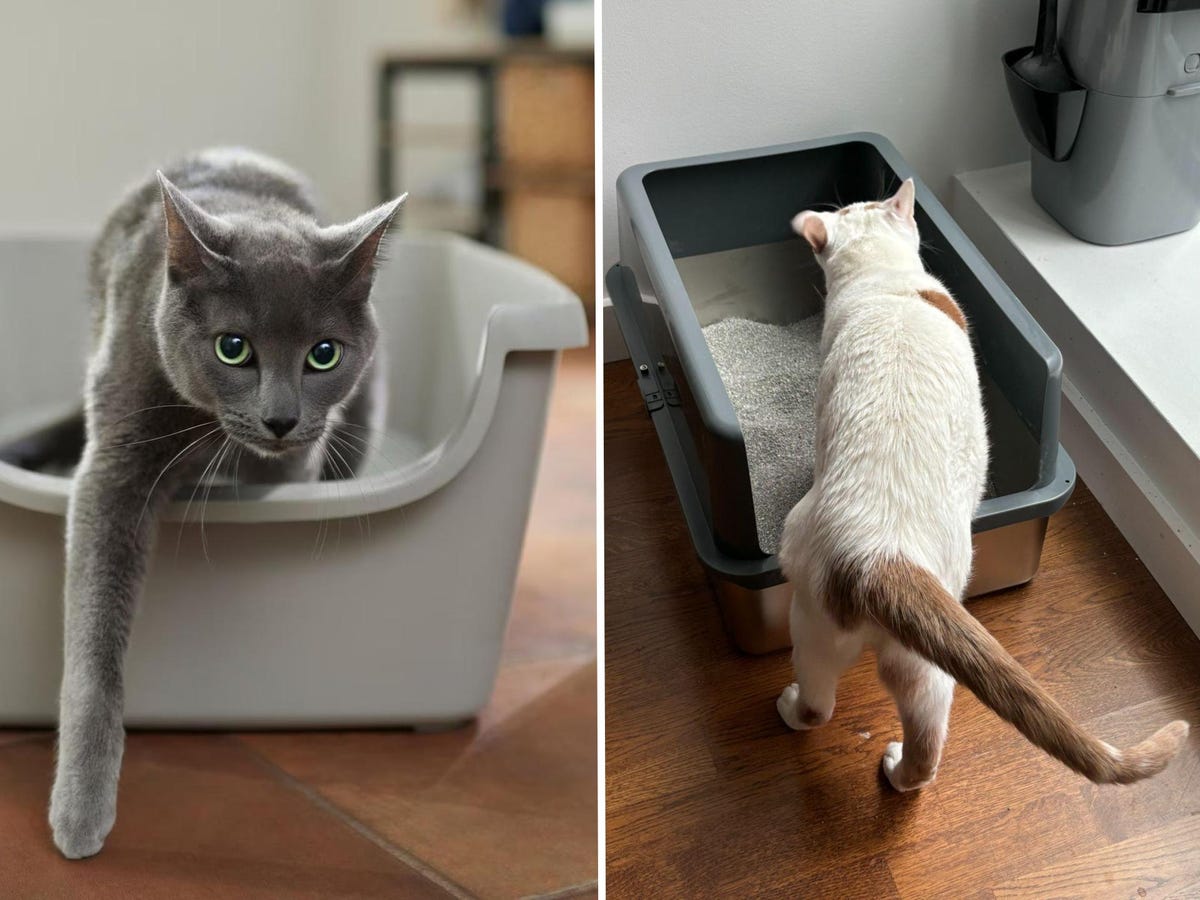
A too-small litter box is one of the fastest ways to create mess, odor, and litter-box avoidance in a large cat. If your cat is a Maine Coon, Ragdoll, Norwegian Forest Cat, oversized domestic shorthair, or a heavier senior cat, the box needs to support real body length, turning space, and comfortable entry. The best litter box for big cats should feel roomy, stay stable during digging, and be easy enough for you to clean consistently.
In practice, the most common mistake is buying a pan labeled "large" without checking the usable floor space inside. Many products look generous on the outside but lose inches to walls, corners, hoods, or filtering systems. This guide breaks down what actually matters: sizing, entry height, litter depth, odor control, material quality, and the box styles that work best for large cats in 2026. You can also read our guide on extra large litter box for big cats.

Credit: www.amazon.com
A roomy pan gives a large cat space to turn without crouching against the sides.
Why a Properly Sized Litter Box Matters for Big Cats
Large cats need enough room to step in, turn around, dig, squat, and step out without pressing their shoulders or hindquarters against the walls. When a box is too short or too narrow, cats often hang over the edge, urinate on the wall, kick litter out, or stop using the box altogether.
A comfortable box also supports health. Heavy cats and older cats may have stiffness, arthritis, or reduced balance. A box with a high lip and cramped interior can make elimination stressful, which may lead to accidents elsewhere in the home. In multi-cat households, an uncomfortable box can also become a resource-guarding flashpoint. You can also read our guide on best rated cat litter box.
The right setup improves hygiene for the whole home. Bigger cats produce more waste, move more litter, and need more stable footing. A box with solid walls, a smooth base, and enough litter depth makes daily scooping easier and reduces the chance that your cat will track granules across the floor.
How to Size a Litter Box for a Big Cat
Measure Your Cat First
Before comparing products, measure your cat from the tip of the nose to the base of the tail. Do not include the full tail length, because the tail usually curls or lifts during use. Also note shoulder height and whether your cat can step over obstacles easily. You can also read our guide on best ear wipes for cats.
For long-bodied cats, interior length matters more than exterior width. A cat should be able to lie down fully inside the box and still have room to shift position. If your cat is between sizes, choose an extra-roomy litter pan rather than trying to make a standard box work.
Practical Sizing Rules
A useful rule is to choose a box with interior floor length at least one and a half times your cat’s nose-to-tail-base length. The box should also be wide enough for your cat to turn without twisting awkwardly.
For many large cats, these practical ranges work well:
- Interior length: at least 1.5 times the cat’s body length
- Interior width: enough for a full turn without touching both walls
- Side height: often 8 to 12 inches for cats that kick litter
- Entry height: lower is better for seniors, short-legged cats, or stiff joints
- Litter depth: usually 2 to 4 inches, depending on digging style
Match the Box to Your Cat’s Body Type
| Cat profile | Priority feature | Best box style |
|---|---|---|
| Large agile cat | Length and high walls | Extra-large open or high-side pan |
| Long-bodied breed | Interior length | Open pan or roomy covered box |
| Senior or arthritic cat | Easy entry | Low-front pan, no top entry |
| Heavy digger | Litter containment | High-side or top-entry box |
| Multi-cat home | Access and territory | Multiple boxes in separate areas |
Do Not Forget Room Clearance
Measure the space where the box will live. A giant litter box may fit the cat but not the closet, bathroom corner, or laundry nook. Leave enough clearance for your cat to approach comfortably and for you to scoop without straining. If the box sits in a cabinet or furniture enclosure, confirm that the opening does not force your cat to squeeze.
Comfort Features That Actually Matter
Interior Turning Space
A big cat should be able to enter, turn, dig, and exit without feeling trapped. Rounded interiors can look sleek, but they sometimes reduce usable corner space. Rectangular pans often give the most practical room for a long body.
If your cat crouches with hind legs pressed against the back wall, the box is too short. If your cat frequently eliminates over the edge, the box may be too small, too shallow, or placed in a spot that feels unsafe.
High Sides Without a Difficult Entry
High sides help contain litter, spray, and digging mess. This is especially useful for cats that scratch vigorously after covering waste. A high wall helps, and pairing it with a mat for trapping scattered granules makes cleanup faster.
The trade-off is entry height. A box with tall walls all the way around may be hard for an older cat, a kitten, or a cat with mobility issues. Look for a box with one lowered entry point or a gently sloped front.
Stable, Non-Slip Base
Large cats can shift their weight quickly. If the box slides, rocks, or lifts at one corner, your cat may feel insecure and avoid it. Rubber feet, textured bases, or heavier plastic pans help keep the box in place.
In practice, a lightweight box that slides during digging is one of the most common causes of litter scatter. Even a good box can feel unreliable if it moves every time your cat steps inside.
Smooth, Nonporous Plastic
Quality matters because big cats use the box more heavily and may scratch the surface over time. Smooth, sturdy plastic is easier to wipe down and less likely to hold odor. Scratched, worn plastic can trap urine smell even after cleaning.
Avoid thin, flimsy pans that bow under weight. A sturdy box should support your cat without flexing, especially if your cat is heavy or likes to stand near the edge.
Odor Control Without Trapping Ammonia
Covered boxes and carbon filters can reduce odor in the room, but they can also concentrate smell inside the box. If a hooded box is not cleaned often enough, the interior can become unpleasant for the cat. Cats have a much stronger sense of smell than people do, and a box that smells stale to you may be unbearable to them.
Good odor control comes from three things: enough litter depth, frequent scooping, and regular full cleaning. Filters help, but they do not replace maintenance.
Low Entry for Seniors and Heavy Cats
A big cat with arthritis may struggle with tall lips, top-entry lids, or enclosed boxes with narrow doors. For these cats, a low-front entry is often more important than maximum litter containment. You can control scatter with a mat, high back walls, and proper litter depth instead of forcing the cat to climb.
Types of Litter Boxes for Big Cats

Credit: www.amazon.com
High walls help keep litter inside when a big cat digs.
Open High-Side Pans
Open high-side pans are often the easiest choice for large cats. They give clear visibility, simple access, and plenty of room to move. They are also easy to scoop and usually do not require special liners or replacement filters.
Best for: large cats, seniors, owners who want simple cleaning
Watch-outs: litter kick-out, less privacy, odor spreads faster if not maintained
Covered or Hooded Boxes
Covered boxes can help contain litter and give some cats a quieter, more enclosed space. For big cats, the interior height and door width are critical. A hooded box that looks large outside may feel cramped inside, especially if the door swings inward or the interior ceiling is low.
If you want the visual concealment of a covered box but your cat needs more space, look for an enclosed litter cabinet with a wide opening rather than a small hooded tray.
Best for: cats that like privacy, homes needing visual concealment
Watch-outs: trapped odor, cramped interior, harder to clean thoroughly
Top-Entry Boxes
Top-entry boxes reduce tracking because cats step through a grated lid when leaving. They can also deter dogs from accessing the litter. However, they are not ideal for every large cat. Heavy cats, seniors, and cats with joint pain may dislike jumping up and down through the top.
Best for: agile cats that kick litter, homes with dogs
Watch-outs: difficult entry for older cats, lid may feel unstable to heavy cats
Automatic Self-Cleaning Boxes
Automatic self-cleaning boxes can reduce daily scooping and help maintain a fresher box, especially in busy households. In 2026, many models offer app alerts, waste-drawer reminders, and multi-cat recognition, but the core issue for big cats remains the same: interior space and weight capacity.
Before buying, verify the manufacturer’s weight limit, entry opening, and interior dimensions. Some large cats dislike the noise, motion, or vibrating cleanup cycle. Introduce the box slowly, leaving it turned off at first so your cat can explore it without fear. If you want a guide to the newest automated litter boxes for big cats, compare the drum opening rather than just the overall machine footprint.
Best for: owners who want less scooping, tech-friendly homes
Watch-outs: price, noise, replacement parts, limited interior space in some models
Disposable and Travel Litter Boxes
Disposable boxes are useful for travel, boarding, foster rooms, or temporary setups. They are lightweight and hygienic because you can toss the whole unit when done. For a large cat, though, many disposable boxes are too shallow or flimsy for long-term use.
Best for: travel, emergencies, short-term care
Watch-outs: low durability, poor containment, not ideal for daily use
DIY Storage-Tote Litter Box
A clean plastic storage tote can be a practical solution for extra-large cats. Choose a sturdy, shallow tote, cut a low entry on one side, and sand any rough edges smooth. This option can provide more interior length than many retail boxes at a lower cost.
Best for: very large cats, budget-friendly setups, custom entry height
Watch-outs: requires safe modification, may look less polished
Litter Choice and Depth for Large Cats
Litter type affects comfort, odor, tracking, and respiratory irritation. Many cats prefer unscented, low-dust litter with a soft texture. Scented litters may smell pleasant to people, but they can be overwhelming to cats and may discourage use.
For big cats, depth matters. A shallow layer may not allow enough digging or covering, which can lead to frustration and mess. Most cats do well with 2 to 4 inches of litter, but very heavy diggers may need more.
Common litter options:
- Clumping clay: easy to scoop, good odor control, can be dusty
- Low-dust clay: better for sensitive cats, still familiar to most cats
- Silica gel: excellent odor control, less scooping, texture not loved by all cats
- Paper pellets: low dust, soft, less clumping control
- Wood or plant-based: natural odor control, variable texture preference
If you switch litter, do it gradually. Mix the new litter with the old over several days to reduce refusal. Sudden changes are a common cause of litter-box avoidance.
Placement Matters as Much as the Box Itself
Even the best litter box can fail if it is placed in a stressful or inconvenient location. Big cats need a quiet, safe spot where they do not feel cornered. Avoid placing the box next to loud appliances, such as washing machines, furnaces, or refrigerators that cycle suddenly.
Good placement tips:
- Choose a low-traffic but accessible area.
- Keep food and water bowls far away from the box.
- Provide an escape route so the cat does not feel trapped.
- Avoid dark closets unless there is safe lighting.
- In multi-story homes, place at least one box on each level.
In multi-cat households, location can prevent conflict. A single box in a narrow hallway or laundry room may become guarded by one cat. Spread boxes across separate areas so no single cat controls access.
Maintenance Routine That Keeps a Big-Cat Box Inviting

Credit: www.amazon.com
A simple mat-and-scoop setup reduces daily cleanup time.
Large cats produce more waste and often need more frequent maintenance than small cats. A clean box is not just about odor; it is also about encouraging consistent use.
Daily and Weekly Schedule
A practical routine looks like this:
- Daily: scoop solid waste and urine clumps at least once, preferably twice
- Weekly: empty all litter, wash the box with mild soap and warm water, dry fully, refill
- Monthly: check for scratches, warped plastic, lingering odor, or worn feet
- As needed: replace filters, liners, or waste drawers according to the product’s instructions
Avoid harsh chemical cleaners or strong fragrances. Residue and scent can irritate sensitive paws and noses. Mild soap and thorough rinsing are usually enough.
Replace the Box When It Wears Out
Plastic litter boxes do not last forever. Deep scratches can trap bacteria and odor, even if the box looks clean. If a box continues to smell after washing, or if the surface feels rough and stained, replace it.
A heavy cat can also wear down entry edges or cause thin plastic to crack. A damaged box may leak or become unstable.
Common Problems and Fixes
| Problem | Likely cause | Practical fix |
|---|---|---|
| Litter everywhere | High kicking, low sides | Higher walls, mat, top-entry if agile |
| Urine over the edge | Box too small or shallow | Longer, deeper box |
| Box avoidance | Dirty box, stress, pain | Scoop more often, add boxes, consult vet |
| Strong odor | Infrequent cleaning, poor ventilation | Scoop twice daily, improve airflow |
| Box sliding | Lightweight pan | Non-slip base, heavier box, mat |
Keep litter-box cleaning tools separate from the grooming supplies you use near your cat’s face and paws. This helps prevent cross-contamination and keeps hygiene routines clear.
Health, Safety, and Odor Control
A litter box is also a health-monitoring station. Changes in urine volume, stool consistency, frequency, or straining can signal medical issues. If a previously reliable cat begins eliminating outside the box, do not assume it is only a behavior problem. Pain, urinary disease, digestive issues, and mobility problems can all cause litter-box changes.
Diet can also affect waste. If your cat transitions to moisture-rich meals, expect changes in stool and urine output during the adjustment period. More moisture often means more urine volume, which can require more frequent scooping.
Litter boxes can also carry zoonotic concerns, especially Toxoplasma. If anyone in the household is pregnant or immunocompromised, review the CDC's Toxoplasma guidance before assigning litter-box duty. When possible, have another person handle scooping, wear gloves if needed, and wash hands thoroughly afterward.
For a broader health perspective on elimination problems, the Cornell Feline Health Center is one resource for accurate feline care information. A sudden refusal of the litter box deserves both an environmental review and a veterinary check, not just a new pan.
Big Breeds, Long Bodies, and Multi-Cat Homes
For long-bodied breeds, interior length is the most important measurement. A cat may fit through the door but still feel cramped when turning or digging. Maine Coons, Ragdolls, and similar cats often need a box that feels more like a small basin than a standard cat pan.
In multi-cat homes, the usual recommendation is one litter box per cat plus one extra. With large cats, this is even more important because each cat needs enough physical space and a safe route to the box. If one box is in a confined area, a bold cat may block access without the owner noticing.
Signs you may need more boxes or better placement:
- One cat waits outside the box while another uses it
- Waste appears near the box but not inside it
- A cat hesitates before entering the room
- One cat becomes stressed around feeding or resting areas
- Accidents happen in quiet, hidden corners
Frequently Asked Questions
Do bigger cats need bigger litter boxes?
Yes. Bigger cats need more interior length, width, and turning room. A spacious box helps prevent litter scatter, waste over the edge, and avoidance behavior. Look for a sturdy pan with high sides and an easy entry point, especially for senior or heavy cats.
Can a 20 lb cat fit in a self-cleaning litter box?
Many large-capacity self-cleaning boxes can accommodate a 20 lb cat, but not all models do. Check the manufacturer’s weight limit, interior diameter, entry height, and noise level before buying. If your cat is long-bodied or cautious, give the box time to feel safe by leaving it off during the introduction period.
What kind of litter box do Maine Coon cats use?
Maine Coons usually do best with large, sturdy boxes that provide plenty of interior length. High sides help contain litter, but the entry should still be manageable for a big, long-bodied cat. Open high-side pans and extra-large covered boxes often work well if the interior is truly roomy.
What should I use for a large cat litter box?
Use a durable, spacious box made from smooth, nonporous plastic. Choose low-dust or unscented litter, provide enough depth for digging, and place the box in a quiet, accessible area. Add a mat if tracking is a problem, and scoop at least once daily.
How often should I clean a litter box for a big cat?
Scoop at least once daily, and twice daily is possible. Empty and wash the entire box weekly with mild soap and warm water. Large cats produce more waste, so they often need more frequent attention than smaller cats.
Are covered litter boxes better for odor?
Covered boxes can reduce odor in the room, but they may trap smell inside the box if not cleaned often enough. For a large cat, the bigger issue is whether the hood creates a cramped or stuffy interior. A covered box works best when it is truly oversized, well ventilated, and scooped regularly.
Conclusion
The best litter box for big cats is the one that gives your cat enough room to move while staying easy for you to maintain. Focus first on interior length, stable construction, comfortable entry, and enough litter depth for natural digging. High sides help control mess, but they should not make the box hard to enter, especially for older or heavier cats.
Choose a box that fits your cat’s body, your home, and your cleaning habits. If your cat is long, senior, or living with other cats, give extra attention to placement, number of boxes, and daily scooping. A roomy, clean, well-placed litter box reduces odor, tracking, and avoidance while giving your large cat the comfort they need. If you’re currently using a smaller tray, start by upgrading to a deeper pull-out model—your cat will show you quickly whether the extra space is working.