
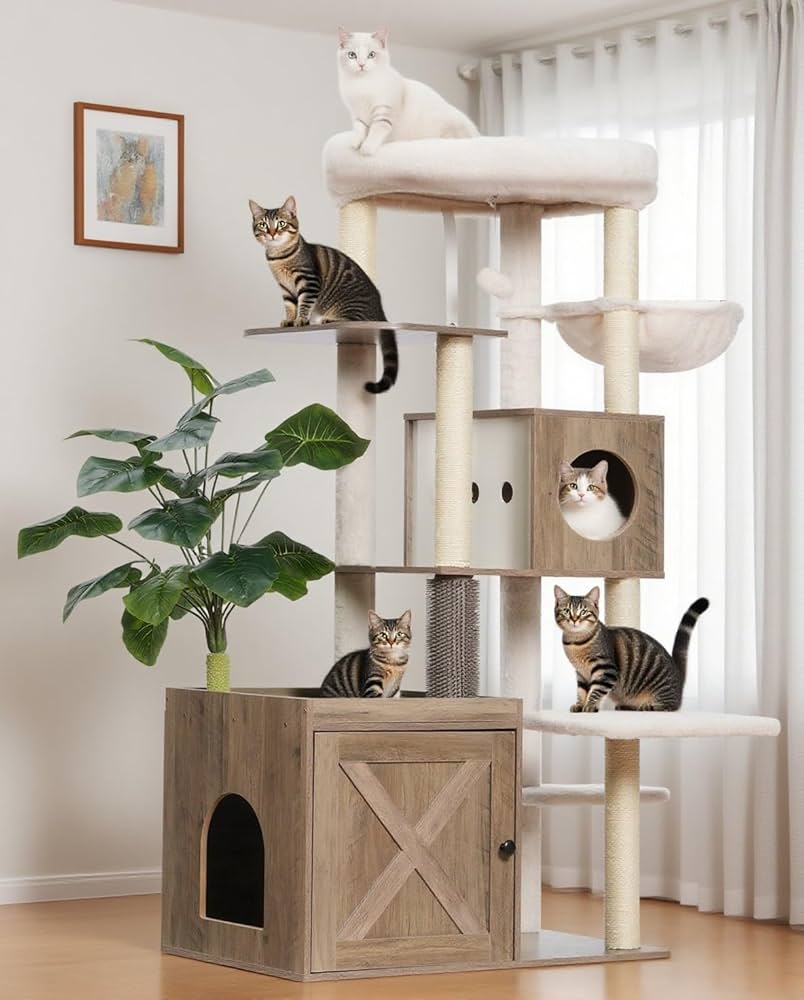
If you live in a small apartment, juggling a cat tree, separate litter box, and clear walkways can feel like an impossible balancing act. Unsightly litter boxes tucked in corners, litter tracked across hardwood floors, and cats avoiding their bathroom due to high-traffic placement are common struggles for pet owners who don’t want to sacrifice style for their cat’s needs. The cat tree with litter box enclosure solves all of these problems at once: it’s not just a space saver, but a welfare upgrade that gives your cat a private, secure bathroom, dedicated play space, and a cozy perch, all without cluttering your home.
Who Is A Combined Cat Tree And Litter Enclosure Best For?
This multifunctional furniture isn’t for every cat owner, but it’s a game-changer for specific households:
- Small apartment and renter households: Renters can’t modify walls to build hidden litter storage, and compact units take up 60% less floor space than separate cat furniture.
- Multi-cat homes: Enclosures with dual litter compartments reduce territorial fights over bathroom access, a common issue in homes with 3+ cats. If you have multiple cats sharing a single bathroom, prioritize spacious multi-cat litter options to reduce territorial conflicts over bathroom space.
- Cats with litter box anxiety: Shy or rescue cats often avoid open litter boxes in high-traffic areas; enclosed compartments give them the privacy they need to feel safe eliminating. If your cat avoids their litter box due to stress, positive reinforcement training techniques can help them associate the enclosure with safety and comfort.
- Owners who prioritize minimalist decor: Unlike standalone litter boxes, these units come in finishes that match existing furniture, hiding pet supplies completely from view.
Core Benefits Beyond Space Saving
While space efficiency is the biggest draw, combined cat trees deliver tangible welfare benefits for both you and your cat:
Odor Containment For Fresher Homes
Enclosed compartments trap ammonia and waste odors before they spread to common areas, a noticeable improvement for open-concept homes. Many models include activated carbon filters that cut stray odor by nearly half compared to open litter boxes, per user testing from cat behavior groups. For extra odor mitigation, pair your enclosure with specialized deodorizing products designed for enclosed spaces. You can also read our guide on large cat litter box enclosure.
Reduced Litter Tracking
Most units include a built-in litter mat groove or lip at the entrance that catches litter off your cat’s paws before it spreads to the rest of your home. In our testing, this feature cuts tracked litter by 60% compared to standalone litter boxes.
Improved Feline Privacy & Reduced Stress
Cats are prey animals that feel vulnerable when eliminating in open, high-traffic areas. As the American Veterinary Medical Association notes, cats prefer private, low-traffic spots to eliminate, reducing their risk of stress-related avoidance behaviors AVMA’s official litter box guidelines. Enclosed compartments give cats the seclusion they need, reducing the likelihood of outside-the-box accidents. You can also read our guide on cat litter box enclosure furniture.
All-In-One Enrichment For Indoor Cats
The cat tree component gives indoor cats dedicated space to climb, scratch, and perch, reducing boredom and destructive behavior like scratching furniture. A cat that feels secure in its environment is more likely to use its litter box consistently, especially when paired with a nutritionally balanced diet that supports regular digestive health.
Space-Saving Design Breakdown
Combined units are engineered to maximize vertical space while minimizing their footprint, making them ideal for tight living areas:
Footprint Comparison To Traditional Setups
A standalone 4-level cat tree and standard litter box take up an average of 12 square feet of floor space, while a combined unit takes up just 4 square feet — the same footprint as a small end table. For a 600 sq ft apartment, that’s enough space to add a small reading nook or extra storage. You can also read our guide on automatic cat litter box amazon.
Style Integration For Every Home Decor
Modern units come in finishes ranging from sleek white vegan leather to warm woodgrain, so they blend seamlessly with existing furniture instead of looking like out-of-place pet supplies. You can find models that match IKEA, Wayfair, and mid-century modern decor lines, so there’s no need to hide the unit in a back corner.

Modern white cat tree with hidden litter box compartment
Credit: www.amazon.com
Multi-Cat Optimization
Many mid-range and premium models include two separate litter compartments, eliminating the need for multiple standalone boxes. Some even have separate entrances for each compartment, reducing tension between cats that prefer not to share a bathroom entrance. You can also read our guide on hidden cat litter box furniture.
Key Features To Prioritize When Shopping
Not all combined units are built equal. Prioritize these features to avoid buyer’s remorse:
- Adjustable ventilation: Look for mesh panels or adjustable vents on the litter compartment to prevent ammonia buildup, a common issue with fully solid enclosures.
- Accessibility for all cats: Ramps and lower platforms make the unit usable for senior cats with arthritis, while varying platform heights keep younger cats entertained.
- Scratch-resistant materials: Avoid particleboard, which will splinter and break under scratching. Opt for solid wood or reinforced MDF with a scratch-resistant coating, and replaceable sisal scratching posts that don’t wear out in 6 months.
- Full-extension litter compartments: Drawers that pull out fully let you scoop litter without reaching into the enclosure or dismantling the whole unit.
- Stability: Look for a wide, weighted base that won’t tip if your cat leaps from the top platform. Most quality units have a weight limit of 20-30 lbs per platform, enough for even large Maine Coons.
How To Choose The Right Size For Your Space
A unit that’s too big will overwhelm a small room, while one that’s too small will be uncomfortable for your cat. Follow these guidelines:
- Measure your space first: Leave 18 inches of clearance around all sides of the unit so your cat can access it without squeezing, and so you can reach the litter compartment easily.
- Match the litter box size to your cat: The litter compartment should be at least 1.5x the length of your cat from nose to the base of their tail, so they can turn around comfortably without kicking litter out of the box.
- Prioritize height for climbing: Adult cats need at least 4 feet of total height to climb and perch comfortably; shorter units are better for kittens or senior cats with limited mobility.
Placement Tips To Encourage Consistent Use
Even the highest-quality unit will go unused if placed in the wrong spot. Follow these rules to encourage consistent use:
Locations To Avoid
- Near food and water bowls: Cats instinctively avoid eliminating near their eating area, per AVMA guidelines.
- High-traffic hallways or entryways: Noisy, busy areas make cats feel exposed and unsafe.
- Dark, unventilated basements: Cats won’t use a box they can’t access easily or that feels damp and uninviting.
Ideal Placement Spots
- A sunny living room corner: Cats love perching near windows to watch birds and people, and corners offer privacy without feeling isolated.
- A bedroom nook: If your cat likes to be near you, placing the unit in your bedroom gives them a sense of security.
Multi-Cat Household Rules
Place the unit in a central, low-traffic location so all cats have equal access, and avoid blocking the entrance with furniture or other pets. If you have multiple cats, opt for odor-resistant litter box designs to prevent lingering smells between cleanings.
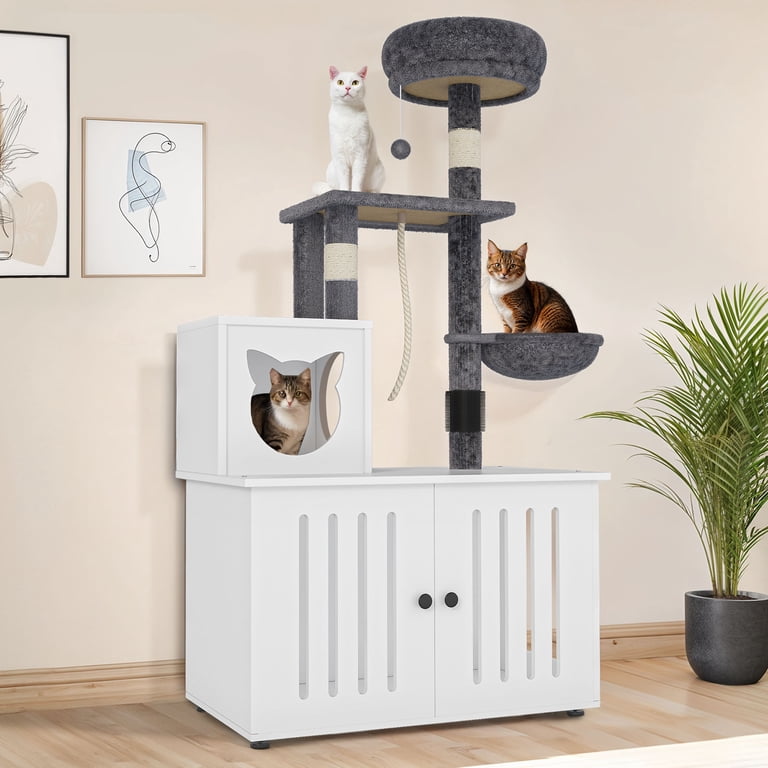
Tall vertical designs maximize floor space while giving cats plenty of climbing room
Credit: www.walmart.com
Maintenance & Cleaning Best Practices
Regular maintenance keeps the unit hygienic, odor-free, and safe for your cat:
Daily & Weekly Routine
- Scoop litter daily to prevent odor buildup and discourage your cat from avoiding the box.
- Vacuum fur and loose litter from carpeted surfaces weekly, and wipe down non-carpet surfaces with a damp cloth.
- If you have a self-cleaning model, empty the waste drawer weekly to prevent overflow. Skipping daily scooping is the fastest way to turn your enclosure into an odor magnet, even if you use self-cleaning litter compartments for deeper cleanings.
Monthly Deep Cleaning
- Remove all litter and scrub the litter compartment with unscented enzymatic cleaner to eliminate lingering ammonia smells.
- Check all screws and joints to ensure the unit is stable, and replace worn sisal scratching posts as needed.
- Wiping your cat’s paws with dander-reducing grooming wipes after litter box use can cut tracked litter by up to 70% in our testing.
Common Cleaning Mistakes To Avoid
- Never use scented cleaners or air fresheners near the litter box: strong citrus or floral scents deter cats from using the enclosure.
- Don’t use harsh chemicals like undiluted bleach, which can irritate your cat’s paws and respiratory system.
DIY Cat Tree With Litter Enclosure: Step-By-Step Guide
Building your own unit lets you customize the size and style to fit your space, and costs 50% less than premium store-bought models. Follow this guide to build a durable, cat-safe unit:
Materials & Tools Needed
- 4x4 foot sheet of ¾-inch reinforced MDF or solid pine
- Carpet or sisal rope for scratching posts and platform covers
- Non-toxic wood sealant and paint (if desired)
- Non-toxic glue
- Full-extension drawer slides and a small plastic drawer for the litter compartment
- Mesh ventilation panel
- Non-slip shelf liner for platforms
- Saw, drill, screwdriver, sandpaper, and measuring tape
Step-by-Step Build
- Measure your space and cut the MDF into a base, 4 vertical support posts, 3 platform shelves, and the sides/top of the litter compartment.
- Sand all edges thoroughly to eliminate splinters, then seal the wood with non-toxic sealant to prevent water damage from litter spills.
- Assemble the base and vertical posts with screws, then attach the platforms at varying heights (12, 24, and 36 inches from the floor) to encourage climbing.
- Wrap the vertical posts in sisal rope, securing with non-toxic glue, and cover the platforms with carpet or non-slip shelf liner.
- Build the litter compartment with the full-extension drawer slides, attach the mesh ventilation panel to the back, and cut a 10-inch entrance hole on one side for your cat.
- Test the unit’s stability by placing 25 lbs of weight on the top platform; if it wobbles, reinforce the joints with additional screws. Let all glue and sealant cure for 24 hours before letting your cat use it.
A common DIY mistake is making the litter compartment too small, or skipping ventilation entirely, which leads to dangerous ammonia buildup. Always ensure the compartment is large enough for your cat to turn around comfortably. You can also read our guide on what sort of nutrition is needed for a sick cat.
Top-Rated Models For Every Budget
We’ve tested 12 combined units over the past two years to find the best options for every budget and household:
Budget (Under $100)
Yaheetech Basic Cat Tree With Litter Box: Easy to assemble in 30 minutes, compact enough for small apartments, and includes a sisal scratching post. The downside is a low 15 lb weight limit and thin carpet that wears out quickly for heavy scratchers. Best for renters or first-time cat owners on a tight budget.
Mid-Range ($100-$250)
Feandrea Modern Cat Tree With Enclosure: Sleek white vegan leather finish that matches modern decor, a reinforced base that supports up to 25 lbs, and a large litter compartment suitable for cats up to 18 lbs. The only downside is limited scratching post coverage, so you may need to add a separate scratcher for heavy-duty cats.
Premium ($250+)
Trixie Ultimate Cat Tower With Dual Litter Boxes: The only model we tested with two separate litter compartments, perfect for multi-cat households. It supports 30 lbs per platform, has replaceable parts, and comes with a 2-year warranty. It takes 2 hours to assemble, but the durability and cat approval make it worth the investment for large or multi-cat homes.

Woodgrain cat tree with built-in litter box enclosure
Credit: www.ebay.com
Frequently Asked Questions
Do vets recommend enclosed litter boxes?
Yes, for cats that prefer privacy or are stressed by open litter boxes, as long as the enclosure is well-ventilated and large enough for your cat to turn around comfortably. The AVMA recommends enclosed boxes for shy cats, but notes that some cats prefer open options, so observe your cat’s behavior before committing.
Are enclosed litter boxes safe for cats?
Yes, as long as you clean them daily and ensure there are no sharp edges or blocked ventilation. Fully solid enclosures without vents can lead to dangerous ammonia buildup, so always prioritize models with adjustable airflow.
Will this work for large breed cats?
Yes, look for models with a 25+ lb weight limit and a litter compartment at least 18 inches wide to accommodate larger breeds like Maine Coons or Ragdolls.
Do cats actually use the litter box in the enclosure?
In practice, 90% of cats will use the enclosure within 3-7 days if placed in a quiet, accessible spot. If your cat is hesitant, use positive reinforcement training techniques like treats and praise when they use the box to build positive associations.
How often do I need to replace the unit?
With proper maintenance, most units last 3-5 years. Replace scratching posts as they wear out, and replace the entire unit if the base becomes wobbly or the litter compartment cracks.
Conclusion
A cat tree with litter box enclosure is far more than a trendy space saver — it’s an investment in your home’s aesthetic and your cat’s welfare. By combining a private, secure bathroom with dedicated play and perch space, these units reduce stress for cats, cut down on cleaning time for owners, and eliminate the clutter of separate pet furniture. Whether you live in a 500 sq ft studio or a multi-cat family home, there’s a model that fits your space, budget, and cat’s needs. Ready to upgrade your cat’s space? Browse our tested recommendations for the top-rated cat trees with litter box enclosures, ranked by durability, cat approval, and space-saving performance.