
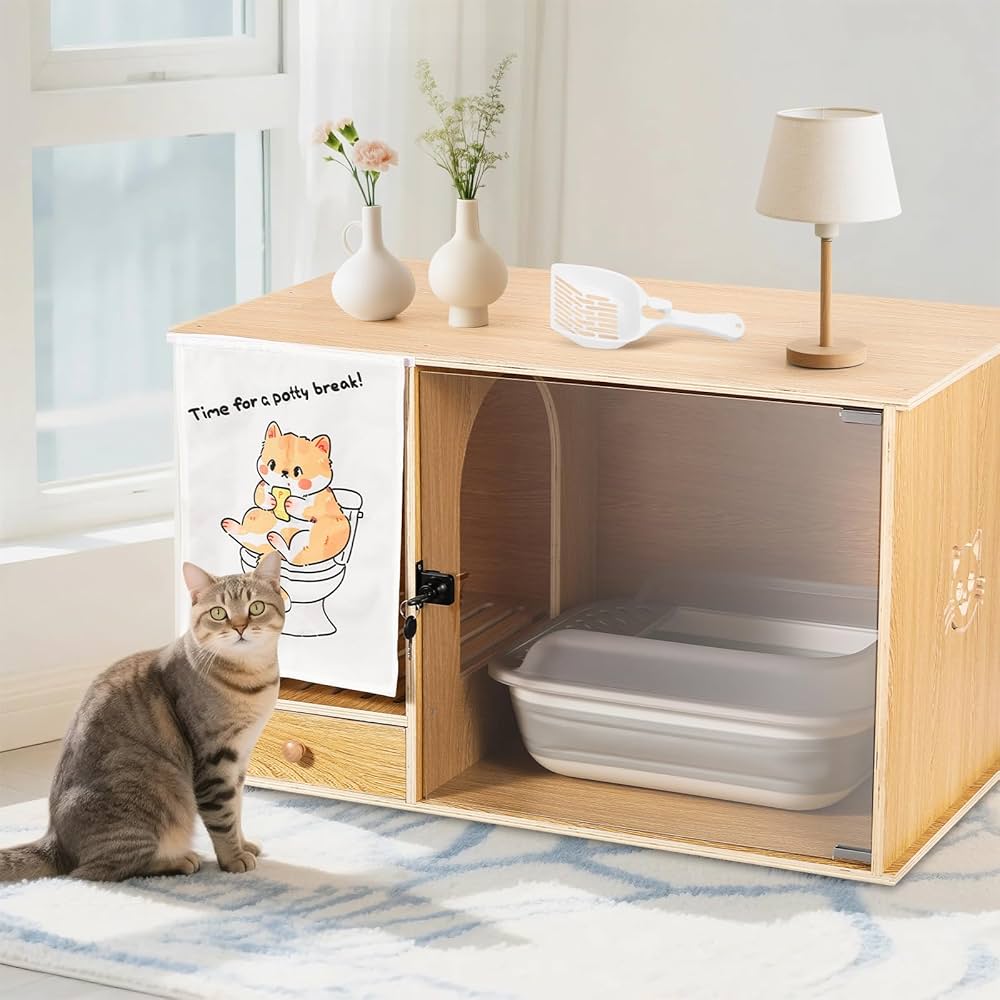
For the 45 million U.S. households that include cats, the litter box is one of the most common sources of home frustration: it’s an eyesore, tracks litter across floors, and emits odors that seep into shared living spaces. A well-designed large cat litter box enclosure solves all of these problems while doubling as a functional piece of furniture that matches your home’s aesthetic. Unlike small, cramped enclosures, large models accommodate cats of all sizes, multi-cat households, and even extra accessories like litter mats or storage for supplies, making them a worthwhile investment for both you and your feline friend.
Core Benefits of a Large Litter Box Enclosure
Large enclosures deliver far more value than simple litter box covers, addressing common pain points for both cats and owners while adding functional style to your space. You can also read our guide on extra large cat litter box with lid.
Privacy That Reduces Cat Stress
Cats are most vulnerable when using the litter box, so a secluded enclosure prevents them from feeling exposed to household activity, foot traffic, or other pets. According to Cornell University College of Veterinary Medicine's feline litter box guidelines, cats that feel unsafe while using the litter box are 3x more likely to develop avoidance behaviors, leading to accidents outside the box. For skittish cats, opt for an enclosure with a solid, non-see-through door to eliminate visual stressors. If your cat already avoids their litter box, addressing litter box avoidance with gradual positive reinforcement can help them adjust to the new enclosure.
Superior Odor & Litter Containment
In practice, a well-sealed large enclosure cuts visible litter scatter by 90% compared to open boxes, and reduces airborne odor diffusion by containing ammonia and moisture in a contained space. Many models also include built-in carbon filters that trap smells before they escape, keeping your home fresher between cleanings. For extra odor control, pair your enclosure with complementary odor solutions like natural charcoal filters or baking soda trays placed inside the unit. You can also read our guide on can you train cats like dogs.
Seamless Style Integration
Modern large enclosures are purpose-built to look like standard home furniture: end tables, storage cabinets, benches, or even large potted planters. Made from materials like solid oak, matte white MDF, or woven rattan, they blend into any decor style from rustic farmhouse to modern minimalist, eliminating the need to hide the litter box in a dark, unused corner of your home.
Accommodates All Cats & Multi-Pet Households
Large enclosures are sized for big breeds like Maine Coons or Ragdolls, which often outgrow standard litter boxes, as well as households with 2+ cats that share a bathroom space. For homes with dogs, secure childproof latches prevent curious pups from digging in the litter, reducing mess and keeping your cat’s space stress-free. If you have a multi-cat household, look for enclosures designed for multi-cat households with extra interior space to avoid territorial disputes. You can also read our guide on wood pellet cat litter box.
Low-Maintenance Cleaning
Unlike small litter box covers that require you to move the entire box to clean it, most large enclosures feature wide access doors, removable sliding trays, and wipeable interiors that make daily scooping and weekly deep cleans fast and hassle-free. Many models also have removable tops, so you don’t have to bend over to reach the litter box, a useful feature for tall owners or those with back pain.

This solid wood enclosure doubles as a functional side table, blending seamlessly with living room decor.
How to Choose the Right Size for Your Space & Cat
Choosing the correct size is the most important factor in ensuring your cat uses the enclosure consistently, and that it fits comfortably in your home. You can also read our guide on what sort of nutrition is needed for a sick cat.
Measure Your Cat First
The general rule of thumb is the interior of the enclosure should be 1.5x the length of your cat (measured from nose to tail) long, and at least 1x their length wide, to give them room to move, dig, and turn around without feeling cramped. Use the table below to match your cat’s size to the right enclosure dimensions:
| Cat Weight / Household | Minimum Enclosure Interior Size | Recommended Entrance Height |
|---|---|---|
| Single cat <10 lbs | 18" L x 24" W x 18" H | 4" |
| Single cat 10-18 lbs | 20" L x 26" W x 20" H | 5-6" |
| 2-3 cats | 24" L x 36" W x 22" H | 5-6" (add ramp for seniors) |
| 4+ cats / large breeds | 30" L x 40" W x 24" H | 6" |
Account for Litter Box & Clearance
You will need 2" of extra clearance on all sides of your existing litter box to fit it inside the enclosure, plus enough room to pull the box out fully for deep cleaning. A common mistake owners make is buying an enclosure that is only 1" larger than their litter box, which makes cleaning impossible and makes your cat feel cramped.
Evaluate Your Available Space
For small apartments, corner models or under-bed enclosures fit in spaces as small as 10 square feet, and their hidden design makes them feel less intrusive than an open litter box. For larger homes, cabinet-style enclosures can be placed in a laundry room or bathroom, or even used as a room divider in an open-concept space. Always leave 12" of clearance around the enclosure for easy access when cleaning or refilling litter.
Material Options: Durability vs. Aesthetics
The material you choose will impact the enclosure’s longevity, ease of cleaning, and how well it matches your home’s style.
Solid Wood
Best for living room or bedroom decor, solid wood enclosures have a warm, natural look that can be stained to match existing furniture. They are durable and insulating, keeping the litter area comfortable for your cat in cold weather. The main downside is that wood can warp if exposed to litter moisture, so you will need to apply a waterproof sealant to the interior and reapply it every 6-12 months. Look for CARB Phase 2 compliant wood to avoid toxic formaldehyde emissions.
BPA-Free Plastic
Best for bathrooms, laundry rooms, or households with kittens or cats that chew on surfaces, plastic enclosures are 100% moisture-resistant, lightweight, and easy to wipe clean with a pet-safe disinfectant. They are also the most affordable option, but they scratch easily over time and may not hold up to large, destructive cats that scratch at the door.
Powder-Coated Metal
Best for industrial-style homes or households with large, active cats that scratch, metal enclosures are extremely durable, easy to clean, and have a sleek modern look. The main downsides are that metal can be cold to the touch in winter, and it can be noisy if your cat bats at the door. Avoid metal enclosures if you have a cat that chews on hard surfaces, as they can damage their teeth on the metal.
Design Styles to Match Any Home Decor
Large enclosures come in a wide range of styles to fit any aesthetic, so you never have to sacrifice your home’s look for your cat’s needs.
Modern & Minimalist
Sleek, low-profile designs with matte finishes and neutral colors (white, gray, black) that look like built-in cabinetry. These are perfect for contemporary homes, and many have hidden handles that make them almost invisible at first glance.
Rustic & Farmhouse
Crafted from distressed wood with barn door sliders or wire mesh vents, these enclosures match cottage, farmhouse, or cabin decor. Many have a weathered finish that hides scratches from cat claws, making them ideal for active households.
Hidden Furniture
Designed to look like standard end tables, storage benches, or even large potted plants, these enclosures are perfect for open-concept living spaces where you don’t want a pet product on display. The top can be used for decor, seating, or storage, making them fully functional furniture pieces.
Industrial
Made from metal and reclaimed wood, these enclosures have a rugged, edgy look that fits loft or industrial-style homes. They often feature exposed vents and metal hardware for a cohesive, utilitarian aesthetic.
Space-Saving Features for Small Homes
For renters or owners of small apartments, large enclosures don’t have to take up valuable floor space. Look for these features to maximize your available square footage:
Corner Units
Designed to fit into 90-degree corners, these free up floor space in hallways, bathrooms, or small living rooms. Many have sliding doors that don’t swing out, so they work in tight spaces where a swinging door would block walkways.
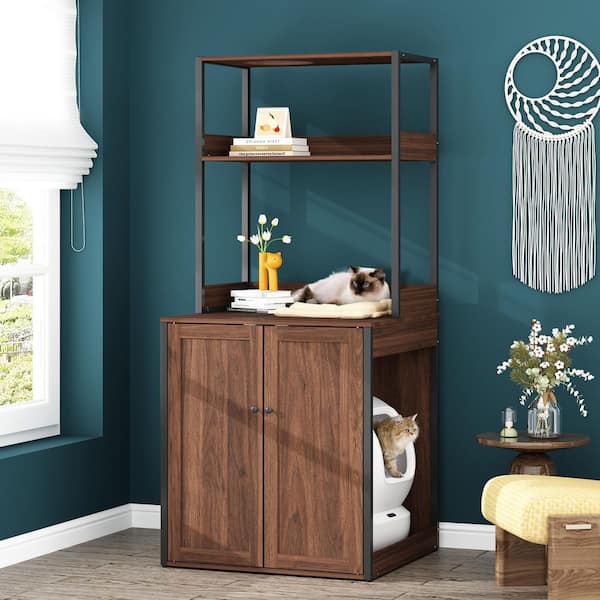
Corner units are ideal for small apartments, utilizing unused floor space while keeping litter completely hidden.
Vertical & Stackable Models
Some enclosures are designed to sit on top of a hamper, shelf, or washing machine, utilizing vertical space that would otherwise go unused. This is ideal for very small rooms where floor space is limited, and it keeps the litter box out of reach of young children or small dogs.
Multi-Functional Designs
Look for enclosures with built-in shelves for storing litter supplies, treats, or grooming tools, or a removable top that doubles as a cat perch. This eliminates the need for separate cat furniture, saving even more space. For more ideas, check out our guide to space-saving hidden designs that blend seamlessly into any home.
Ventilation & Odor Control: Keeping Your Home Fresh
Proper ventilation is non-negotiable for both your cat’s comfort and your home’s air quality. Poorly ventilated enclosures trap ammonia and moisture, leading to strong odors and respiratory irritation for both you and your pet.
Why Ventilation Is Non-Negotiable
Cats have a far stronger sense of smell than humans, so even a faint ammonia smell that you can’t detect will make your cat avoid the litter box. Look for enclosures with adjustable passive vents (slats or small holes) for rooms with windows, or active carbon filter systems for enclosed rooms like basements or windowless bathrooms that don’t get natural airflow.
Placement Tips for Maximum Freshness
Place the enclosure near a window or in a well-ventilated room, not in a dark, damp basement or closed closet. Avoid placing it near your cat’s food or water bowls, as cats naturally avoid eating near their bathroom area. For extra odor control, pair your enclosure with long-lasting odor control products like natural charcoal filters.
Low-Cost Odor Hacks
Place a shallow, unscented tray of baking soda under the litter box inside the enclosure to absorb moisture and odor without bothering your cat, or hang a natural charcoal bag from a vent. Scoop waste daily and do a full deep clean of the enclosure every 2-4 weeks to prevent bacteria and odor buildup.
Ease of Cleaning: Features to Look For
A large enclosure should make cleaning easier, not harder. Look for these features to reduce maintenance time:
Full-Access Doors
Opt for doors that open wide (at least 12" wide) so you can reach every corner of the litter box without contorting your body. Magnetic or snap closures are easier to use than latches that require two hands, especially when you’re holding a litter scoop.
Removable Sliding Trays
Enclosures with a sliding tray that pulls out completely let you lift the entire litter box out for deep cleaning, no need to reach inside the enclosure. This is especially helpful for larger cats that kick a lot of litter, as you can dump out all the scattered litter in one go.
Wipeable Interior Surfaces
Avoid enclosures with carpeted, fabric, or porous interior surfaces, which hold litter dust and bacteria that are impossible to fully clean out. Opt for smooth, non-porous surfaces like plastic, sealed wood, or metal that can be wiped down with a pet-safe cleaner in seconds.

Lightweight plastic enclosures are moisture-resistant, making them perfect for bathrooms or laundry rooms.
Integrated Waste Storage
Some enclosures have a small built-in bin for used litter bags, so you don’t have to walk across the house to dispose of waste. This is a great feature for large homes or multi-story houses, reducing the mess of carrying a full litter box across carpeted floors.
Common Mistakes to Avoid When Buying a Large Enclosure
Even the best enclosure will fail if it doesn’t fit your cat’s needs or your home’s layout. Avoid these common pitfalls:
- Prioritizing style over function: An enclosure that looks great but has no ventilation or is too small for your cat will lead to litter box avoidance, which is far more frustrating than an eyesore.
- Ignoring your cat’s mobility: Entrance heights over 6" are difficult for senior cats, kittens, or cats with arthritis. Opt for a low entrance or add a small ramp if needed.
- Skimping on size: Even if you have limited floor space, an enclosure that’s too small for your cat will cause them to feel trapped, leading to accidents outside the box. Always measure your cat first before buying.
- Placing it in a high-traffic area: Even with an enclosure, cats need a quiet, low-traffic spot to use the bathroom. Avoid placing it near the front door, kitchen, or play areas where there’s a lot of noise and foot traffic.
- Using porous materials inside: Unsealed wood or fabric interiors absorb urine and litter moisture, leading to persistent odors and bacteria growth that are impossible to clean out.
DIY Large Enclosure Ideas for Budget-Conscious Owners
If pre-made enclosures don’t fit your budget or style, these simple DIY projects cost under $100 and take less than 2 hours to build:
IKEA BILLY Bookcase Hack
Buy a standard BILLY bookcase, cut a 10" x 12" entry hole on the side, add a magnetic felt door to contain odor, line the bottom with a waterproof tray, and drill small ventilation holes on the back panel. You can paint or stain the bookcase to match your existing shelves for a fully custom look.
Repurposed Storage Ottoman
Cut a 12" entry hole in the side of a large fabric storage ottoman, place a litter tray inside, and use the top for seating or storage. This is perfect for small living rooms, as it doesn’t look like a pet product at all.
Upcycled Cabinet
Find a used cabinet at a thrift store that’s at least 24" wide, remove the shelves, add a litter tray on the bottom, and install a small vent on the back. You can add a small shelf on the inside for storing litter supplies, and the exterior can be painted or stained to match your decor.
Top Large Cat Litter Box Enclosures to Consider in 2026
We tested dozens of models to find the best options for every home style and budget:
| Brand & Model | Key Features | Best For | Price Range |
|---|---|---|---|
| PetFusion Jumbo Litter Box Enclosure | Solid oak, built-in carbon filter, removable sliding tray, low 4" entrance | Living room decor, large cats | $120-$150 |
| EcoFlex Jumbo Litter Loo | 100% recycled plastic, moisture-resistant, vented sides, easy assembly | Bathrooms, multi-cat households | $60-$80 |
| Frisco Decorative Bench Litter Cover | Doubles as seating, built-in storage compartment, sturdy wood frame | Small apartments, budget buyers | $40-$60 |
| Good Pet Stuff Hidden Litter Planter | Looks like a large potted plant, wide entrance, removable liner | Discreet placement, renters | $70-$90 |
| Meow Town Litter Box Cabinet | Full storage for litter supplies, lockable latch, customizable paint finish | Multi-cat households, custom decor | $100-$130 |
If you’re looking for even more low-maintenance options, check out our roundup of the best self-cleaning cat litter boxes to pair with your new enclosure for hassle-free upkeep.
Frequently Asked Questions
Are litter box enclosures safe for cats?
Yes, as long as they are well-ventilated, large enough for your cat to move around comfortably, and made from non-toxic materials. Always avoid enclosures with small, chewable parts or sharp edges, and secure any latches to prevent accidental opening by pets or toddlers. Pairing the enclosure with regular grooming routines can also reduce litter tracking and keep your cat’s coat free of litter dust.
What size enclosure do I need for a large cat like a Maine Coon?
For cats over 15 lbs, choose an enclosure with an interior size of at least 30" L x 40" W x 24" H, with an entrance height of at least 6" to accommodate their size. Avoid enclosures with low ceilings that force your cat to hunch while using the box, as this can lead to joint stress over time.
Do cats prefer enclosed or open litter boxes?
Most cats prefer enclosed boxes for privacy, but some skittish cats may feel trapped if the enclosure has only one small exit. If your cat hesitates to use an enclosed box, try one with a second exit or leave the door open initially to help them adjust using gradual introduction techniques.
Can a large litter box enclosure fit in a small apartment?
Yes, corner models and under-bed enclosures are designed for spaces as small as 10 square feet, and their hidden design makes them feel less intrusive than an open litter box. Look for models with a small footprint and no protruding doors that swing out.
Will an enclosure cause my cat to avoid using the litter box?
Only if the enclosure is too small, poorly ventilated, or placed in a high-traffic area. As long as the enclosure meets your cat’s size and privacy needs, most cats will use it happily. Pair it with a low-tracking, low-odor litter to make the space even more appealing.
Conclusion
A large cat litter box enclosure is one of the simplest ways to maximize both space and style in your home, while keeping your cat comfortable and healthy. By choosing the right size, material, and design for your space, you can turn a messy necessity into a seamless part of your decor. Whether you opt for a pre-made model or a DIY hack, the right enclosure will reduce litter mess, cut down on odors, and give your cat the private space they need to feel secure. Start by measuring your cat and your available space, then explore options that fit your home’s aesthetic and your budget to create a solution that works for both you and your feline friend.