
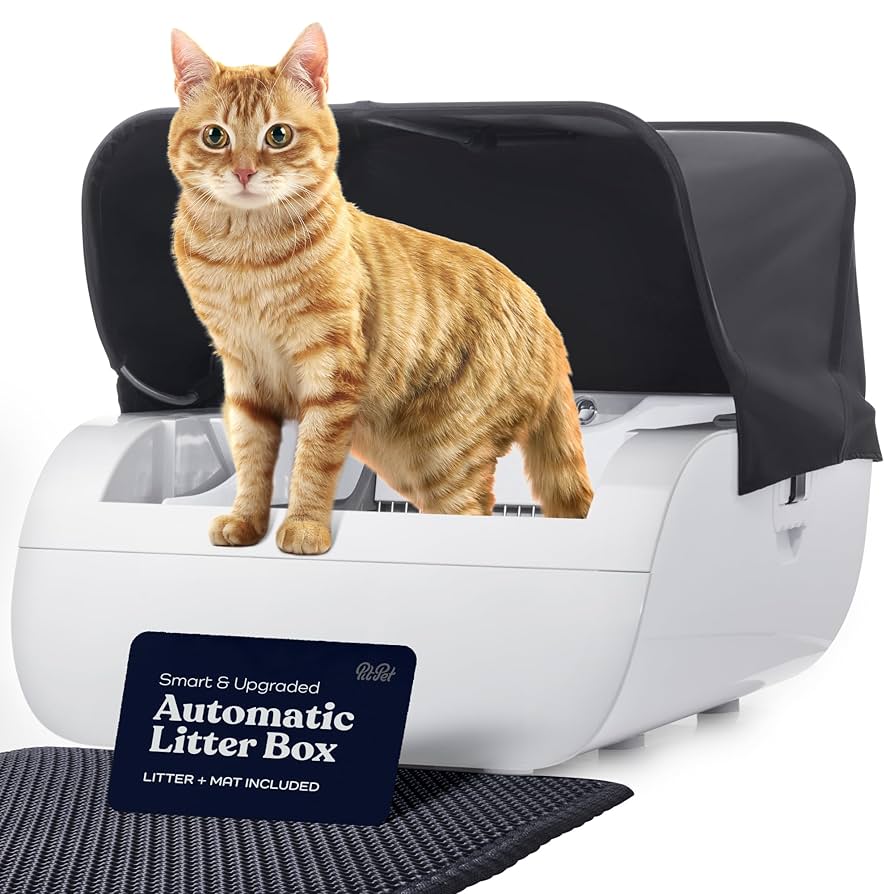
If you have ever winced while scooping a soiled litter box before your first cup of coffee, you already understand why automatic boxes have moved from novelty to near-necessity. The best self cleaning cat litter box options for 2025 do more than save you a few minutes a day. They keep the box consistently clean, reduce household odor, and give you a clearer picture of your cat’s bathroom habits. This guide walks through how these machines work, what separates a good model from a frustrating one, and which picks are worth your money right now.
Before you buy, it helps to understand the full landscape of self-cleaning litter box options, because not every mechanism fits every cat or home.
Why Switch to a Self-Cleaning Litter Box?
A self-cleaning litter box is not a magic box that eliminates all cat care. It is a mechanical aid that removes waste on a schedule, usually minutes after your cat exits. In practice, the best models reduce scooping to a weekly or twice-weekly drawer empty, which is a meaningful shift for most owners.
Time Savings Without Sacrificing Cleanliness
The obvious benefit is time. Instead of scooping twice a day, you empty a sealed drawer and occasionally wipe down the globe or rake. Many owners report that a single cat household can go several days between drawer changes with a high-capacity model.
Odor Control Is Stronger
Because waste is moved into a sealed compartment quickly, odor has less time to spread. Most premium units add carbon filters or tightly fitted drawer seals. That makes a noticeable difference in apartments, small homes, or litter boxes placed near living areas.
Healthier Environment for Your Cat
Cats are fastidious. A dirty box can cause them to hold urine, eliminate outside the box, or develop stress-related behaviors. A self-cleaning unit removes waste before it accumulates, so your cat steps into fresh litter more often.
Reduced Physical Strain
For owners with mobility issues, back pain, or pregnancy-related lifting restrictions, not having to bend and scoop multiple times a day is a major quality-of-life improvement.
Better Habit Tracking
Smart models log weight, visit frequency, and sometimes waste patterns. That data can help you spot early signs of urinary tract issues, constipation, or kidney problems before they become emergencies.
How Self-Cleaning Litter Boxes Actually Work
Understanding the mechanism helps you pick the right one. There are three common designs.
Rotating Globe or Drum
The entire litter chamber rotates after the cat leaves. Clumps are separated through a screen and deposited into a drawer below while clean litter falls back into the bed. This design is common in premium models like the Litter-Robot series. It works best with hard-clumping clay litter.
Rake or Conveyor System
A motorized rake or comb moves through the litter bed, pushing solid waste into a covered end compartment. These units often have fewer moving parts than rotating globes and can be quieter in some cases, but they may struggle with very soft stool or lightweight litters.
Flushing or Washing Systems
Rare but available, these boxes use water to wash reusable granules and flush waste into a drain or toilet line. They require a water hookup and more involved installation. For most renters or apartment dwellers, a gravity-based rotating or rake model is far simpler.
A common mistake is assuming every automatic box works with any litter. Many require specific clumping clay or crystal litter to function properly, which we cover later.
Key Features to Evaluate Before Buying
Before comparing specific models, focus on the features that determine daily satisfaction.
Mechanism Type
Match the mechanism to your cat’s habits. If your cat produces firm clumps, a rotating globe works well. If you prefer crystal litter, a rake or tray-based system may be better.
Odor Control
Look for carbon filters, sealed waste drawers, and tight-fitting bonnets. Some boxes also have optional odor-neutralizing pods or gel packs.
Litter Compatibility
Check whether the model requires proprietary litter, clumping clay, or crystal litter. Proprietary litters add ongoing cost, but often perform more reliably. Using the wrong litter is the top reason automatic boxes jam or fail.
Size and Capacity
A larger globe or drawer means fewer emptying trips. If you have more than one cat, choose a model rated for multi-cat use. Conversely, if you live in a small apartment, a compact footprint matters. For those with larger breeds, a spacious extra-large litter box may be worth comparing even if it is not automatic.
Noise Level
Cats can be startled by a cleaning cycle that starts too soon. Look for models with adjustable delay timers, usually 3 to 30 minutes. In practice, many cats adapt within a week if you run the machine while they are out of the room at first.
Smart Features and App Connectivity
Wi-Fi-enabled boxes send alerts when the drawer is full, track weight, and let you start a clean cycle remotely. If you travel or work long hours, these alerts are genuinely useful rather than gimmicky.
Safety Sensors
Weight sensors and infrared entry sensors should pause the cleaning cycle if a cat re-enters. This is non-negotiable for safety, especially with curious kittens.
Ease of Deep Cleaning
Even automatic boxes need a full wash every few weeks. Removable globes, wipeable surfaces, and dishwasher-safe trays make the job far less unpleasant. You can also use gentle pet-safe wipes for spot cleaning between deep cleans.
Best Self-Cleaning Cat Litter Box Picks for 2025
These are the models that consistently stand out for reliability, owner satisfaction, and feature balance. Prices shift throughout the year, so think of these as categories rather than a strict ranking.
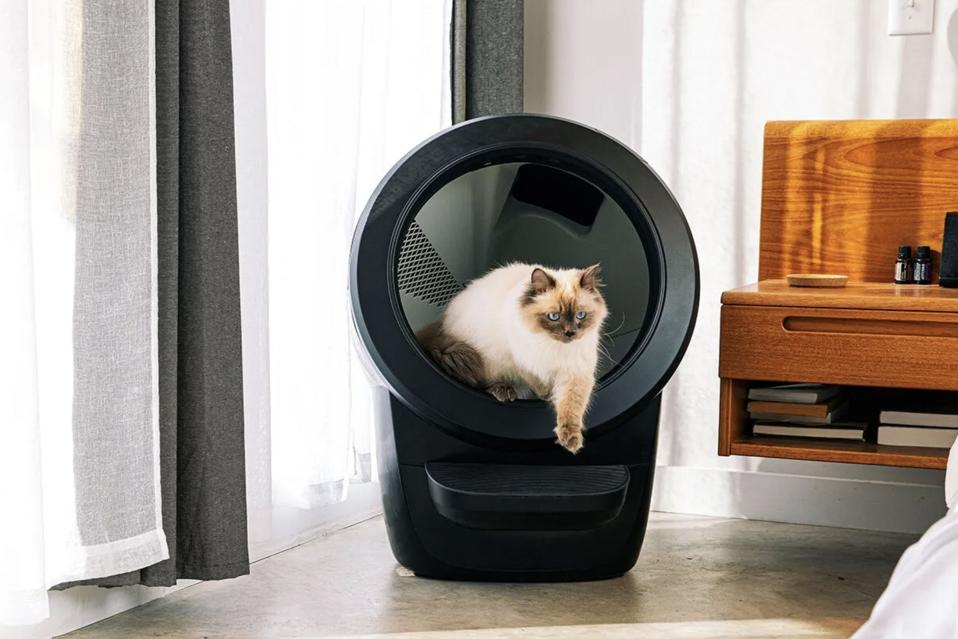
The Litter-Robot 4 uses a rotating globe to separate waste while keeping the entry wide for large cats.
Premium Smart Pick: Litter-Robot 4
The Litter-Robot 4 remains the benchmark for rotating-globe automatic boxes. It uses a wide entry, quiet sifting cycle, and a sealed drawer with carbon filtration. Its app tracks weight and cycle history, and the waste drawer holds enough for most single-cat homes to go several days between empties. The trade-off is the price, which is higher than most alternatives, and the need to use clumping clay litter for best results.
Crystal Litter Pick: PetSafe ScoopFree
Instead of clumping clay, the ScoopFree line uses disposable crystal litter trays that absorb urine and dehydrate solid waste. A rake sweeps solids into a covered compartment. This design works well for owners who dislike clay dust and want a simple replacement cycle: swap the tray every few weeks. The downside is ongoing tray costs and a less natural litter feel for some cats.
Mid-Range Smart Pick: Leo’s Loo Too
Leo’s Loo Too offers many premium features at a lower price than the top-tier rotating globe boxes. It includes app connectivity, a sealed drawer, and a quieter motor than older budget models. It uses clumping clay litter and works best for single or two-cat homes that want smart alerts without the highest price tag.
Water-Based Option: CatGenie AI
CatGenie takes a different approach by washing reusable granules with water and flushing waste away. It requires a cold water hookup and a drain or toilet connection. It eliminates litter purchases almost entirely, but installation is more complex, and some cats dislike the wash cycle noise. This is a specialized pick for owners who want to avoid disposable litter altogether.

Many automatic boxes hide the soiled litter in a sealed lower drawer to control odor.
Comparison Table of Top Picks
| Model | Mechanism | Litter Type | Best For | Noise Level | Price Range |
|---|---|---|---|---|---|
| Litter-Robot 4 | Rotating globe | Clumping clay | Smart home, multi-cat use | Low to moderate | $$$ |
| PetSafe ScoopFree | Rake + tray | Crystal | Low-dust, low-maintenance | Low | $$ |
| Leo’s Loo Too | Rotating globe | Clumping clay | Budget smart features | Moderate | $$ |
| CatGenie AI | Washable granules | Washable granules | No disposable litter | Moderate to high | $$$ |
Litter Compatibility and Setup Tips
The single biggest cause of automatic litter box problems is using the wrong litter. Here is what you need to know before filling the box.
- Rotating globe boxes: Use hard-clumping, low-dust clay litter. Lightweight or plant-based clumping litters may not separate cleanly and can cause sensor errors.
- Rake or tray systems: Crystal litter works best because it absorbs urine and dries waste. Some models also accept disposable trays for easier cleanup.
- Flushing systems: Only use the manufacturer’s washable granules. Never substitute clay or clumping litter.
In practice, switching from a standard box to an automatic one works best when you also consider the physical placement. If your cat is used to a hidden box, a litter box enclosure can house a compact automatic model while keeping it out of sight. Alternatively, a litter box with a removable tray may be a simpler first step if you want easier manual cleaning without full automation.
How to Train Your Cat to Use a Self-Cleaning Box
Many cats will switch over within a few days, but some need extra patience. The key is to avoid forcing the change and to make the new box familiar before the old one disappears.
- Set up the new box next to the old one. Keep it unplugged for the first day or two so your cat sees only a new litter box, not a moving machine.
- Mix a little used litter into the new box. The familiar scent lowers resistance.
- Run the cleaning cycle only when your cat is not in the room. This prevents a startling first impression.
- Reward investigation and use. Treats, praise, or a short play session right after your cat exits the new box reinforces the habit.
- Remove the old box gradually. Once your cat has used the automatic box consistently for several days, take the old one away.
If you are starting from scratch with a stray or outdoor cat, review litter training fundamentals before introducing an automatic box. For cats that have never used a box indoors, the process may take longer and requires a quiet, low-traffic location. If your cat was recently adopted from outdoors, training a stray or outdoor cat to trust an enclosed automatic unit may involve leaving the lid off for a week or more.
Maintenance and Troubleshooting
Even the best automatic litter box is not maintenance-free. A simple routine prevents most jams, odors, and sensor errors.

Some models use a rake to push clumps into a covered waste compartment.
Weekly Routine
- Empty the waste drawer before it reaches the fill line.
- Check the litter level and top off as needed.
- Wipe the entry and exterior surfaces with pet-safe wipes.
- Inspect the carbon filter and replace it if odor lingers.
Monthly Deep Clean
- Disconnect the unit and remove the globe or tray.
- Wash with mild, unscented soap and warm water.
- Dry all parts completely before reassembly.
- Vacuum or wipe the base and sensor area.
Common Issues and Fixes
- Box stops cycling: Check that the power supply is seated and the drawer is not overfilled.
- Rake or globe jams: Usually caused by too much litter, the wrong litter type, or a large clump. Remove the obstruction and reduce the litter level slightly.
- Persistent odor: Replace the carbon filter, empty the drawer more often, or switch to a litter the manufacturer recommends.
- Cat avoids the box: Revert to training steps, keep the unit unplugged temporarily, and offer a second regular box nearby.
Safety and Health Considerations
A self-cleaning box should never compromise safety. Look for models with weight sensors that pause motion when a cat is detected. Kitten mode on some premium units delays cycling until a minimum weight is reached, reducing risk for cats under five pounds.
Monitoring waste habits through an app can provide early warning signs. Sudden changes in frequency, clump size, or weight may indicate a urinary tract infection, diabetes, or kidney disease. For deeper guidance on feline urinary and digestive health, resources from the Cornell Feline Health Center provide trustworthy, science-based information.
In practice, a common mistake is ignoring a cat’s initial avoidance of an automatic box. If your cat eliminates outside the box for more than two days, stop the automation, reintroduce a standard box, and consult your veterinarian to rule out a medical issue before assuming it is behavioral.
Frequently Asked Questions
What is the best self-cleaning cat litter box for multiple cats?
The Litter-Robot 4 and other high-capacity rotating globe models handle multi-cat households well because they cycle after every visit and have larger waste drawers. For two or more cats, look for a model rated for multi-cat use and be prepared to empty the drawer every three to five days.
Are self-cleaning litter boxes safe for kittens?
Many automatic boxes have a minimum weight threshold and will not cycle while a kitten is inside. However, kittens under three pounds may be too light for some sensors. Use kitten mode if available, and supervise initial use until your kitten reaches a safe weight.
How often do I need to empty the waste drawer?
For one cat, most owners empty the drawer every five to seven days. Two cats may require every three to four days. Boxes with smaller drawers or crystal trays may need more frequent attention.
Are self-cleaning litter boxes noisy?
Modern models are much quieter than older ones, but they still produce a motor hum during the cleaning cycle. Look for adjustable delay timers if your cat is sound-sensitive.
What litter works best in an automatic box?
Rotating globe boxes work best with hard-clumping clay litter. Rake systems often work best with crystal litter. Always check the manufacturer’s recommendation, because using the wrong litter can void the warranty and cause jams.
Can I leave a self-cleaning box for a week while I travel?
You can, but only if the waste drawer has enough capacity and the litter level is sufficient. Some smart models send alerts when the drawer is full. For trips longer than a weekend, arrange for someone to check the box or provide an additional standard litter box.
Conclusion
The best self cleaning cat litter box for 2025 is the one that fits your cat’s habits, your home layout, and your tolerance for maintenance. A premium rotating globe like the Litter-Robot 4 offers the most hands-off experience, while crystal tray systems like PetSafe ScoopFree reduce dust and simplify replacement. Budget smart models and water-based units fill specific niches.
Focus on mechanism, litter compatibility, safety sensors, and ease of deep cleaning before comparing prices. Train your cat gradually, maintain the unit consistently, and use the health-tracking features if available. With the right setup, you can spend less time scooping and more time enjoying your cat. For a broader look at automatic and semi-automatic choices, revisit our guide to self-cleaning litter box options and compare footprints before you decide.