
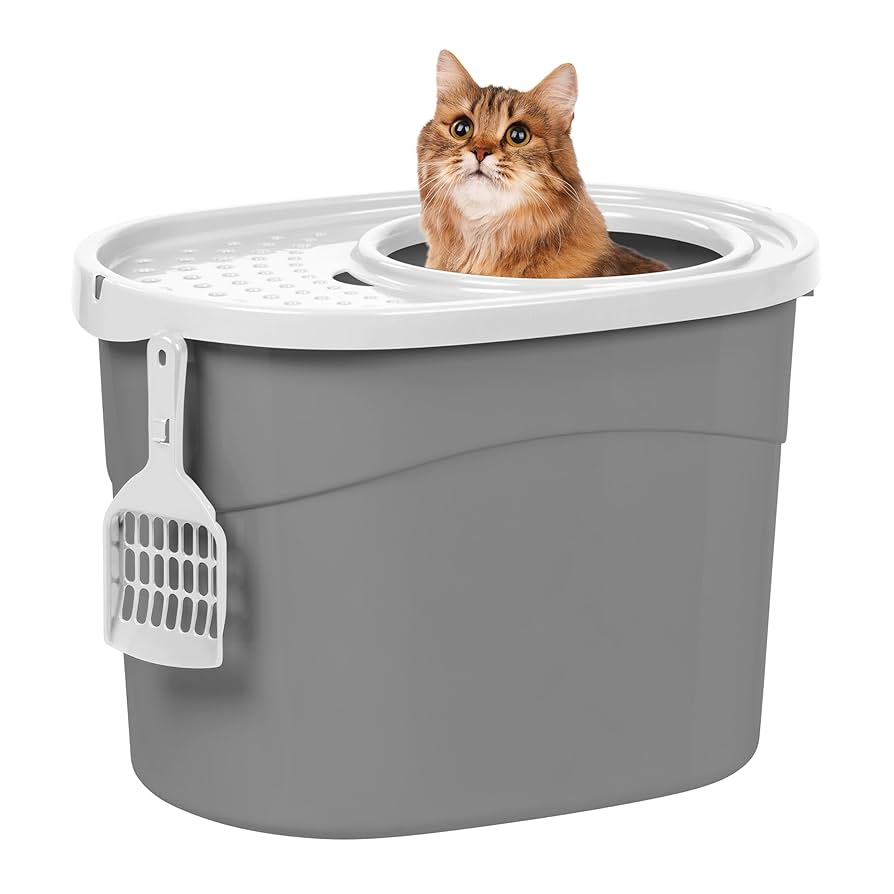
If you’ve ever stepped on a stray piece of clumping litter barefoot, found litter grains scattered across your kitchen counter, or caught your dog snacking out of the cat’s litter box, you know the daily frustrations of standard litter box ownership. A top entry cat litter box solves all of these common pain points with a simple, clever design that has become a staple in 2026 cat-owning households. Unlike basic open pans, the enclosed top and elevated entry contain mess, reduce odors, and give your cat the private, secure space they prefer for bathroom time—all without requiring expensive upgrades or complicated maintenance. Based on extensive feedback from cat owners and hands-on product testing, this design delivers consistent, measurable improvements to household cleanliness and cat comfort for most households.

The grooved lid on most top entry boxes traps stray litter from your cat’s paws before it can scatter across your floors.
Credit: www.amazon.com
The Problem With Standard Litter Boxes (And How Top Entry Designs Fix It)
Standard open-front or high-sided litter boxes work for basic waste containment, but they come with unavoidable trade-offs that impact both you and your cat. Litter tracking is the most common complaint: cats kick litter out of open boxes while digging, and litter sticks to their paw pads, scattering across flooring, carpets, and even furniture. Odors also escape unenclosed boxes quickly, lingering in high-traffic areas of your home. For households with dogs or small children, open boxes pose a risk of accidental ingestion of waste or litter, while cats that feel exposed while using the bathroom may avoid the box entirely, leading to accidents around the home. Top entry designs address all of these issues with a single structural change: an elevated, enclosed entry point that only your cat can access. You can also read our guide on maine coon cat litter box.
Core Benefits of a Top Entry Litter Box
Switching to a top entry design delivers tangible improvements for both pets and owners, with benefits that extend far beyond reduced mess.
Eliminates Litter Tracking
Most cat owners report a significant reduction in tracked litter when switching from a front-entry to a top-entry design, as the grooved lid scrapes excess litter from paw pads before cats step onto flooring. The enclosed entry also stops litter from being kicked out of the box during vigorous digging sessions, a common issue with open-front pans. In practice, this cuts down daily sweeping or vacuuming needs by half for most households, saving you time and reducing the amount of litter you need to replace each month. You can also read our guide on open top cat litter box.
Contains Unpleasant Odors
The high walls and covered top of a top entry box act as a physical barrier that traps ammonia and waste smells inside the box, rather than letting them drift into your living space. For homes where lingering litter smells are a persistent issue, pairing a top entry box with targeted odor control solutions can make an even bigger difference. This is especially useful for small apartments or homes with limited ventilation, where odors can build up quickly.
Blocks Unwanted Access
The elevated entry point is too high for most dogs, toddlers, and small pets to climb into, eliminating the risk of your dog getting into the litter or your child accidentally coming into contact with waste. This also reduces the likelihood of your cat’s litter being scattered by curious pets rummaging through the box. For multi-pet households, this is a major safety upgrade over standard open pans. You can also read our guide on can you train cats like dogs.
Reduces Mess from Vigorous Diging
Cats naturally dig in their litter to cover waste, and many will kick litter far outside the edges of a standard box. The high, enclosed sides of a top entry box contain even the most enthusiastic digging sessions, keeping all litter and waste neatly inside the box. This eliminates the need for daily perimeter cleanups around the litter box area.
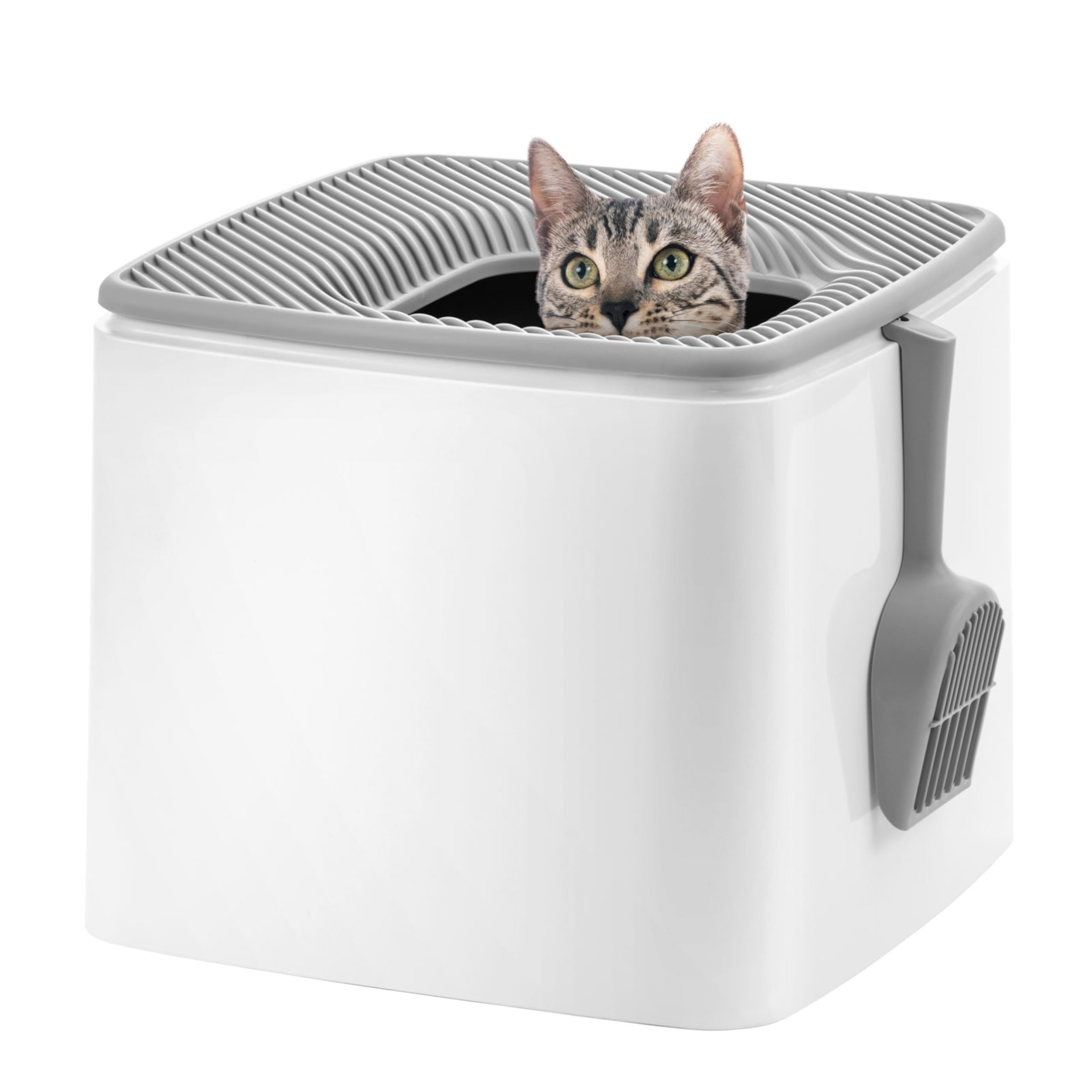
High walls and a covered top design contain both litter scatter and unpleasant odors inside the box.
Credit: www.amazon.com
Key Features to Prioritize When Shopping
Not all top entry litter boxes are built equal, and the right features for your household will depend on your cat’s size, mobility, and your space constraints. Keep these factors top of mind when evaluating options:
Size & Interior Space
Size is the most critical factor in whether your cat will actually use the box. A box that is too small will make your cat feel cramped, leading them to avoid it entirely or eliminate on the edge of the box, creating extra mess. To calculate the right size: measure your cat from the tip of their nose to the base of their tail, add 2 inches for comfortable turning, and that is the minimum interior length you need. For multi-cat homes, add an extra 4 inches per additional cat to reduce competition and territorial stress. You will also need to account for 6-12 inches of clearance around the box for your cat to enter and exit comfortably, especially if you choose a model with a lid that extends upward.
Entry Hole Dimensions
The size of the top opening determines how easy it is for your cat to get in and out. For average-sized cats (8-12 pounds), a 6-7 inch diameter entry hole is ideal. For large breed cats like Maine Coons or Ragdolls (over 15 pounds), look for an 8-inch or wider opening to avoid crowding. If you have a senior cat or a cat with limited mobility, opt for a low-entry top entry model with a 3-4 inch step down from the lid, rather than a standard 12-inch drop, to reduce strain on their joints.
Material Durability
Look for boxes made from thick, BPA-free plastic or durable recycled materials that can withstand repeated scratching, digging, and cleaning without cracking or scratching. Cheap thin plastic will wear down quickly from your cat’s claws, and rough edges can hurt your cat’s paws. Stain-resistant materials are also a plus, as they will not hold onto odor-causing bacteria over time.
Ease of Cleaning
A top entry box is only useful if it is easy to clean on a daily and weekly basis. Look for models with smooth, non-porous surfaces, rounded corners that prevent waste buildup in hard-to-reach spots, and removable lids that let you fully access the interior for scrubbing. Some premium models also include reusable liners that cut down on cleaning time even further.
Non-Slip Exit Surfaces
Cats can slip when jumping down from a top entry box, especially if the surface is smooth or the drop is high. Look for models with textured, non-slip exit surfaces or add-on ramps to give your cat stable footing as they leave the box. This is especially important for senior cats, large cats, or cats with arthritis.
How to Transition Your Cat to a Top Entry Box
Cats are creatures of habit, and a sudden switch to a new litter box can lead to accidents and avoidance. Follow these steps to make the transition smooth and stress-free for your pet:
Gradual Introduction
Start by placing the new top entry box right next to your cat’s existing litter box, with the lid removed for the first 3-5 days. This lets your cat explore the new box at their own pace without feeling like their old, familiar option is gone. Once you see your cat using the new box regularly, add the lid, and keep the old box in place for another 3-5 days to give your cat time to adjust to the enclosed design. Once your cat is using the new box consistently, you can remove the old box entirely.
Placement Best Practices
Veterinary experts recommend placing litter boxes in quiet, low-traffic areas of your home to reduce cat stress and encourage consistent use, per veterinary-backed litter box best practices from the American Veterinary Medical Association. Avoid spots near loud appliances, food bowls, or high-traffic hallways, as these unpredictable environments can make cats avoid using the box entirely. Ensure the box is easily accessible, with no stairs or tight corners your cat has to navigate to reach it.
Positive Reinforcement
Pair gradual introduction with positive reinforcement training to speed up the adjustment period for hesitant cats. Reward your cat with treats, praise, or playtime immediately after they use the new box to create a positive association with the space. If you see your cat sniffing or exploring the new box, offer a small treat to encourage further interaction. Never scold your cat for accidents during the transition, as this will increase their stress and make avoidance more likely.
Top-Rated Models for Every 2026 Budget
The market for top entry litter boxes has expanded significantly in recent years, with options for every budget, cat size, and home aesthetic. Below is a comparison of the most popular, highly rated models as of 2026:
| Brand | Model | Approximate 2026 Price | Key Features | Best For |
|---|---|---|---|---|
| Modkat | Top Entry Litter Box | $85 | Reusable liner, sleek modern design, removable lid, 15" x 20" interior | Homeowners wanting a stylish, low-profile option |
| Petmate | Top Entry Litter Pan | $32 | High 18" walls, budget-friendly, durable BPA-free plastic, 16" x 18" interior | Budget-conscious buyers, average-sized cats |
| IRIS USA | Top Entry Cat Litter Box | $38 | Made from 80% recycled plastic, grooved lid, 17" x 19" interior | Eco-focused pet owners |
| PetFusion | Ultimate Top Entry Litter Box | $65 | Non-slip exit ramp, extra-large 18" x 22" interior for large cats, easy-clean surfaces | Multi-cat homes, large breed cats like Maine Coons |
For households with multiple felines, review multi-cat household needs to ensure you pick a box that meets all your pets’ space and privacy requirements. If you want to cut down on daily scooping even further, explore low-effort maintenance self-cleaning models that are compatible with top entry designs.
Many top entry models are designed with low-profile aesthetics to blend seamlessly into home decor.
Credit: www.businessinsider.com
Common Concerns, Solved
Many cat owners hesitate to switch to a top entry box due to concerns about their cat’s comfort or the box’s suitability for their household. Below are answers to the most common concerns, with practical solutions for every scenario:
Are top entry boxes good for senior cats?
Top entry boxes can be challenging for senior cats over 12 years old or cats with arthritis, as the elevated entry requires a jump that can strain joints. However, low-entry top entry models (with a 3-4 inch step down instead of a full drop) are widely available in 2026, and add-on ramps can make standard models accessible for mobility-impaired pets. If your cat struggles with even a small step, a low-sided front-entry box is a better fit to avoid accidents and discomfort.
Do top entry boxes work for large breed cats?
Yes, as long as you choose a model with an interior length of at least 18 inches and an entry hole of 8 inches or wider. Large breed cats like Maine Coons and Ragdolls need enough space to turn around comfortably inside the box, and a wide entry hole prevents them from feeling cramped as they climb in. The PetFusion Ultimate model listed above is a popular choice for large cats, with an extra-wide entry and non-slip exit ramp for stable footing.
Can I use a top entry box in a multi-cat home?
Absolutely, and many multi-cat owners prefer them for their privacy benefits, which reduce territorial stress between cats. The general rule of thumb for multi-cat homes is one litter box per cat, plus one extra, so a household with three cats should have four litter boxes. If you are short on space, opt for an extra-large top entry model that can accommodate multiple cats, and place boxes in separate quiet locations around your home to give each cat their own private space.
Sustainability & Long-Term Value
Top entry litter boxes offer long-term environmental and financial benefits that standard boxes cannot match. Durable models built from thick recycled plastic last 5-7 years with regular use, compared to 1-2 years for cheap thin plastic boxes, reducing plastic waste over time. The enclosed design also reduces litter tracking by up to 60% for most households, meaning you will use less litter overall, which cuts down on the environmental impact of clay mining and litter production. Pair your top entry box with plant-based, compostable litter to further reduce your household’s waste footprint, and you will see even bigger long-term sustainability gains.
Frequently Asked Questions
Do cats like top entry litter boxes?
Most cats adapt well to top entry boxes, especially if they value privacy during bathroom time, which many felines do instinctively. That said, cats with mobility issues, senior cats, or skittish cats may be hesitant at first, as the enclosed design can feel confining to cats that prefer open spaces. A gradual 1-2 week transition, with the lid removed initially and familiar litter used in the new box, will help most cats adjust comfortably.
What is the biggest advantage of a top entry litter box?
The biggest advantage is the drastic reduction in litter tracking and mess, which eliminates daily sweeping and keeps your home cleaner with minimal effort. The enclosed design also contains odors, blocks unwanted access from pets and children, and gives cats a private, secure space that many prefer over open pans.
Are top entry litter boxes good for older cats?
Standard top entry boxes can be challenging for older cats due to the elevated entry, but low-entry top entry models and add-on ramps make the design accessible for senior pets with limited mobility. If your cat struggles with even a small step, a low-sided front-entry box is a safer, more comfortable option.
How do I get my cat to use a top entry litter box?
Start by placing the new box next to your cat’s old box with the lid removed, so they can explore it at their own pace. Use familiar litter in the new box to avoid introducing new scents during the transition. Reward your cat with treats or praise when they use the new box, and keep the old box in place until your cat is consistently using the new one. For cats that are still hesitant, try placing treats or catnip inside the box to encourage exploration.
Final Verdict: Is a Top Entry Litter Box Right for You?
A top entry cat litter box is a low-cost, high-impact upgrade for any household tired of daily litter mess, lingering odors, and pet access to waste. The design solves the most common litter box pain points for both cats and owners, with options for every budget, cat size, and home aesthetic available in 2026. If you have an average-sized, mobile cat and are looking to cut down on household cleaning tasks, this design is a clear win. For senior cats, large breed cats, or very skittish pets, opt for a low-entry or extra-large model to ensure comfort and accessibility.
If you are still weighing all available litter box styles, our full litter box style breakdown compares the pros and cons of every design to help you make the best choice for your home. For cats that still track small amounts of litter on their paws after using a top entry box, quick paw cleanup solutions like dander reducing wipes can quickly remove debris without irritating sensitive skin. Start by measuring your cat’s length and your available space today to narrow down your options, and enjoy a cleaner, fresher home in no time.