
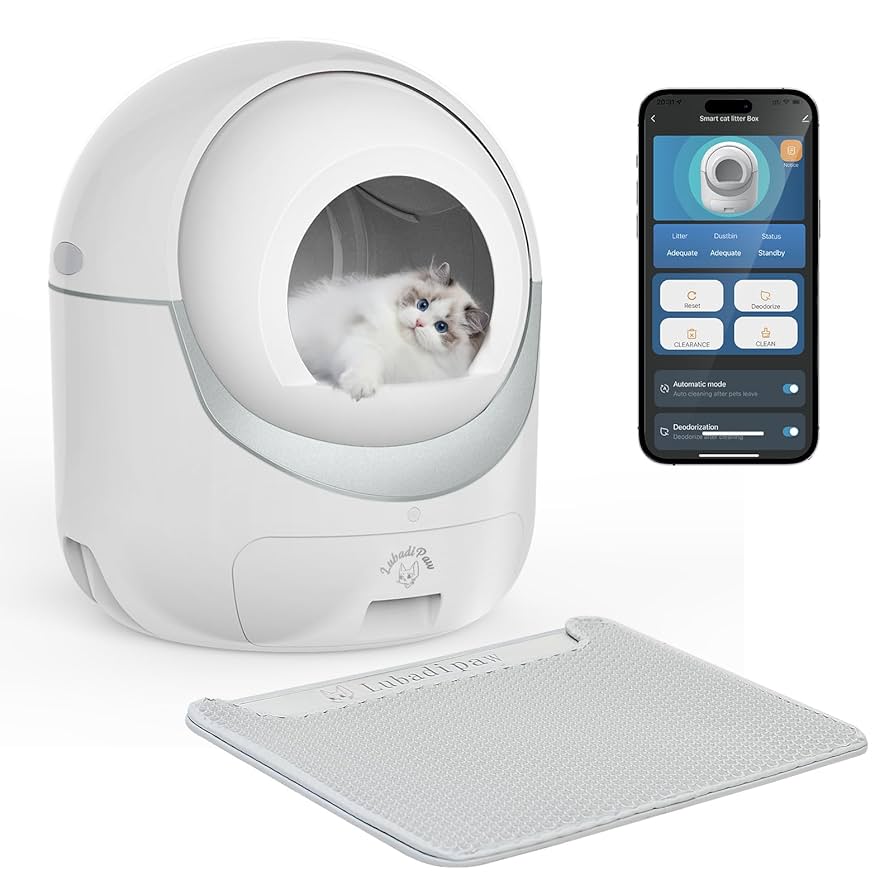
If you’ve ever cringed at the smell of a dirty litter box, groaned at the daily chore of scooping waste, or worried about your cat avoiding their box due to grime, you’re not alone. Traditional litter boxes require near-daily maintenance, can harbor bacteria and odors, and offer zero visibility into your cat’s urinary health—a critical gap for felines prone to conditions like feline lower urinary tract disease (FLUTD) or kidney issues.
The smart litter box for cats eliminates these pain points by combining self-cleaning automation, health tracking, and odor control technology to simplify pet care for owners and improve wellbeing for cats. Unlike basic automatic boxes that only scoop waste on a timer, 2026’s smart models connect to your smartphone, alert you to changes in your cat’s bathroom habits, and require only weekly maintenance to keep your home fresh and your cat healthy. This guide breaks down how these devices work, what to look for when shopping, and how to maximize their benefits for you and your feline friend. You can also read our guide on best cat litter box for odor control.
What Exactly Is a Smart Litter Box for Cats?
A smart litter box is an IoT-enabled pet care device that automates waste removal, tracks your cat’s litter box habits, and sends real-time alerts to your smartphone. Unlike basic automatic litter boxes that only sift waste on a fixed timer, smart models include presence sensors to avoid disrupting your cat, health analytics tools to flag abnormal behavior, and app integration for remote control and long-term data storage.
These devices are ideal for busy professionals, multi-cat households, owners with mobility limitations, and cats with chronic urinary health issues. They reduce the time spent on litter box maintenance from 10–15 minutes per day to just 5 minutes per week emptying a sealed waste drawer, while giving you actionable insights into your pet’s health that would otherwise go unnoticed. You can also read our guide on best cat toilet training kit.
Core Benefits That Revolutionize Cat Care
Proactive Health Monitoring
Smart litter boxes track key metrics including urination frequency, stool consistency, visit duration, and even weight (on models with integrated scales). Deviations from your cat’s normal baseline trigger app alerts, letting you catch early signs of FLUTD, kidney disease, diabetes, or gastrointestinal issues before they become life-threatening. For cats with chronic conditions, this data helps your vet adjust treatment plans more accurately, reducing unnecessary vet visits and improving long-term outcomes. For cats that struggle with consistent litter box use, positive litter training habits can support better long-term urinary health, and these early alerts can help you address issues before they become chronic. If your vet recommends dietary adjustments based on these trends, pairing them with targeted nutritional support can improve outcomes for cats with kidney disease or FLUTD.
Unmatched Convenience for Owners
Gone are the days of daily scooping, tracking down clumps, and dealing with messy litter spills. Smart litter boxes automatically sift waste after each use, deposit it into a sealed, leak-proof waste drawer, and send you an alert when the drawer is full. Most models let you adjust cleaning schedules, set quiet hours to avoid disrupting your sleep, and monitor litter levels remotely—so you never have to worry about coming home to a dirty box or running out of litter unexpectedly. For owners with mobility issues, this automation removes a physically demanding chore from your routine entirely. You can also read our guide on litter box mats for cats.
Superior Odor Control & Hygiene
Traditional litter boxes trap odors in loose litter and open waste, spreading bacteria and unpleasant smells throughout your home. Smart litter boxes use sealed waste drawers, activated carbon filters, and optional UV sanitizing or deodorizing spray systems to trap odors at the source. For cats with asthma or respiratory sensitivities, this consistently clean environment reduces exposure to ammonia and bacteria that can trigger flare-ups. If you live in a small apartment or have severe odor concerns, pairing your smart box with extra deodorizing support can eliminate even the toughest smells.

Credit: www.ebay.com
A modern smart litter box with integrated app controls and automatic waste sifting, designed for low-maintenance cat care.
Key Features to Prioritize When Shopping
Not all smart litter boxes are created equal, and prioritizing the right features for your household will ensure you get the most value from your purchase.
Cleaning Mechanism Type
The most common cleaning mechanisms are rake-style, rotating drum, and sifting systems. Rake-style models use a motorized rake to sift clumps from clean litter, and work with most clumping litters; they’re the most affordable and widely available option. Rotating drum models tilt the entire litter chamber to sift waste into a separate compartment, and are better suited for crystal or non-clumping litter, with less litter tracking. Sifting systems use a passive sifting tray to separate waste, requiring no power but less frequent cleaning cycles. For skittish cats, look for models with noise levels under 50dB to avoid startling them during cleaning cycles.
Health & Safety Sensors
Non-negotiable safety features include weight or infrared presence sensors that pause cleaning cycles if your cat enters the box mid-use, child locks for households with kids, and auto-shutoff mechanisms that disable the device if a malfunction is detected. Look for BPA-free, easy-to-clean materials to reduce bacterial growth.
App Integration & Data Tools
A user-friendly app is the core of any smart litter box’s value. Look for apps that let you adjust cleaning schedules, set custom alerts (for full waste drawers, low litter, or abnormal health metrics), and export health logs to share with your vet. Some premium models even integrate with smart home systems like Alexa or Google Home for voice control.
Litter Compatibility & Capacity
Many smart litter boxes are designed to work only with specific litter types (clumping clay, crystal, etc.), and using the wrong litter can clog the rake or damage the mechanism. Always check manufacturer guidelines before purchasing, and opt for litter formulated for self-cleaning units to extend your device’s lifespan. Waste drawer capacity also matters: a 1-cat household needs a drawer that holds 1 week of waste, while 3+ cats require a drawer that holds 3–5 days of waste to avoid overflow.

Credit: www.amazon.com
Sealed waste drawers are a key feature of most smart litter boxes, trapping odors and reducing mess for pet owners.
How Smart Litter Boxes Work: Step-by-Step
Understanding the basic workflow of a smart litter box will help you troubleshoot issues and set expectations for maintenance:
- Your cat enters the box, triggering a weight or infrared presence sensor. If a cleaning cycle is active, it pauses immediately to avoid startling or harming your pet.
- After your cat exits, a built-in timer waits 5–15 minutes (adjustable via app) to ensure your cat is fully clear of the box before cleaning starts.
- The motorized cleaning mechanism (rake, drum, or sifter) separates waste clumps from clean litter, depositing the waste into a sealed, odor-proof drawer below the main litter chamber.
- The system redistributes clean litter evenly across the box, then alerts you via app if the waste drawer is full, litter levels are low, or a sensor needs cleaning.
- All usage data is logged to the app, where you can view trends in your cat’s bathroom habits and share reports with your veterinarian.
How to Choose the Right Model for Your Household
Single Cat vs. Multi-Cat Homes
For single-cat households, compact mid-sized models with 1-week waste capacity are sufficient and cost-effective. If you have multiple cats, opt for models sized for multi-pet homes with larger waste drawers, faster default cleaning cycles, and more robust sensors to handle higher usage. For 4+ cats, look for models with daily cleaning cycles and waste drawers that hold 5+ days of waste to avoid overflow.
Cat Size, Age & Mobility
Kittens under 6 months may struggle with high-entry boxes, and models with small detachable parts can pose a choking hazard—opt for low-entry designs with no small detachable components. Senior cats with arthritis or mobility issues benefit from low entry points (under 6 inches tall) and non-slip surfaces. Large breeds like Maine Coons require interior dimensions of at least 20 inches wide and 15 inches deep to turn around comfortably.
Budget & Long-Term Costs
Entry-level smart litter boxes start at $200, mid-range models with advanced health tracking cost $300–$500, and premium robotic models with AI-driven insights cost $500–$800+. Factor in ongoing costs: waste bags ($5–$10 per month), litter ($10–$20 per month), and replacement filters ($20–$50 per year). If you want advanced features like personalized cleaning schedules and health trend analysis, high-end robotic options are worth the higher upfront investment.
Noise & Space Requirements
Most smart litter boxes are 20–25 inches wide, 15–20 inches deep, and require 6 inches of clearance above the lid for the cleaning mechanism to operate. Measure your space before purchasing to avoid returns. For small apartments or homes with skittish cats, prioritize models with noise levels under 45dB to avoid disrupting daily life.
Safety Considerations & Common Myths Debunked
Non-Negotiable Safety Features
Before purchasing, verify that the model has presence sensors that stop cleaning mid-cycle if a cat is inside, no exposed electrical components in the litter chamber, child locks to prevent accidental activation, and a stable base that won’t tip over if your cat jumps on the edge. Look for models with UL certification to ensure they meet electrical safety standards for household use.
Debunking Widespread Myths
A common misconception is that smart litter boxes are stressful for cats, but most felines adapt quickly to the consistently clean environment—many even prefer them to traditional boxes, which can accumulate odors and bacteria that deter use. Another myth is that all smart litter boxes are prohibitively expensive: entry-level models under $200 now offer core self-cleaning and app integration features for budget-conscious owners. Finally, many owners assume smart boxes are 100% maintenance-free, but you will still need to empty the waste drawer weekly, clean the rake and interior monthly, and replace filters as recommended to avoid odors and malfunctions. A common mistake new owners make is placing the box in a high-traffic area like a kitchen or hallway: cats need privacy to use the bathroom, so place the box in a quiet, low-traffic corner of your home regardless of its automation features.

Credit: www.elspet.com
A low-entry smart litter box design, ideal for senior cats, kittens, and large breeds with limited mobility.
How to Get the Most Out of Your Smart Litter Box
Acclimating Your Cat to the New Box
Cats are creatures of habit, so a gradual transition is key to avoiding litter box avoidance. Place the new smart box next to your cat’s existing box for 1–2 weeks, add familiar litter to the new box, and reward your cat with treats when they investigate or use it. For hesitant cats, positive reinforcement training with high-value treats can speed up the adjustment process. Never force your cat to use the new box, and keep the old box available until your cat is consistently using the smart model.
Routine Maintenance Best Practices
To keep your smart litter box functioning optimally, empty the sealed waste drawer every 1–7 days depending on your cat’s usage, wipe down the rake and interior with mild, unscented soap monthly, replace carbon filters every 3–6 months per the manufacturer’s guidelines, and update the device’s app firmware regularly to fix bugs and add new features. Avoid using harsh chemical cleaners inside the box, as these can leave residues that irritate your cat’s paws and respiratory system.
Leveraging Health Data for Better Vet Care
One of the biggest underutilized perks of smart litter boxes is their health tracking data. Export usage logs and trend reports to share with your veterinarian during checkups, especially if your cat has a history of urinary issues. This concrete data helps vets diagnose problems faster, avoid unnecessary testing, and adjust treatment plans based on real-world habits rather than owner estimates.
Frequently Asked Questions
What is the best smart litter box for cats in 2026?
The best model depends on your household’s needs: the Litter-Robot 4 is the top pick for most single and multi-cat households, with a 4.8-star average rating from over 10,000 user reviews, advanced health tracking, and quiet operation. The PetSafe ScoopFree is the best budget option for owners who want core self-cleaning features without app connectivity, while the Whisker Litter-Robot Connect is ideal for multi-cat homes with 4+ pets. All top-rated models have been tested for safety and durability by independent pet product reviewers.
Do veterinarians recommend automatic litter boxes?
Many feline veterinarians recommend smart litter boxes as a low-effort way to support consistent litter box cleanliness, a key factor in preventing litter box avoidance per ASPCA cat care guidelines. For cats with a history of FLUTD or kidney disease, the health tracking features can provide vets with invaluable data to inform treatment plans.
Are smart litter boxes safe for kittens and senior cats?
Yes, most models include presence sensors that pause cleaning cycles if a cat of any size enters the box mid-use, eliminating the risk of injury. For kittens, avoid models with small detachable parts that could pose a choking hazard, and supervise use initially. For senior cats with arthritis, opt for low-entry designs with non-slip surfaces to make access easier.
What are the disadvantages of a smart litter box?
The main downsides are higher upfront costs ($200–$800+), ongoing expenses for waste bags, litter, and replacement filters, and the fact that they are not 100% maintenance-free. Noisy models may startle skittish cats, and some cats may need time to adjust to the new box. It’s also important to note that some models only work with specific litter types, so you may need to switch your cat’s preferred litter to use the device.
Can a 20lb cat fit in a standard smart litter box?
Yes, most mid-sized and large smart litter boxes (including the Litter-Robot 4, PetSafe ScoopFree Large, and Whisker Litter-Robot Connect) have interior dimensions of 20+ inches wide, accommodating cats up to 25lbs with plenty of room to turn around and cover their waste. For extra-large breeds over 25lbs, look for models with 24+ inch interior diameters explicitly marketed for large cats.
Conclusion
Smart litter boxes for cats represent a genuine revolution in pet care, moving beyond the basic convenience of self-cleaning to deliver proactive health insights, reduced household stress, and a better quality of life for both you and your feline friend. While they require an upfront investment and occasional maintenance, the time saved, reduced odor, and peace of mind from monitoring your cat’s health make them a worthwhile upgrade for most households.
If you’re ready to cut down on litter box chores and gain valuable insights into your cat’s wellbeing, explore our curated roundup of the top-rated self-cleaning models for every budget to find the perfect fit for your home.