
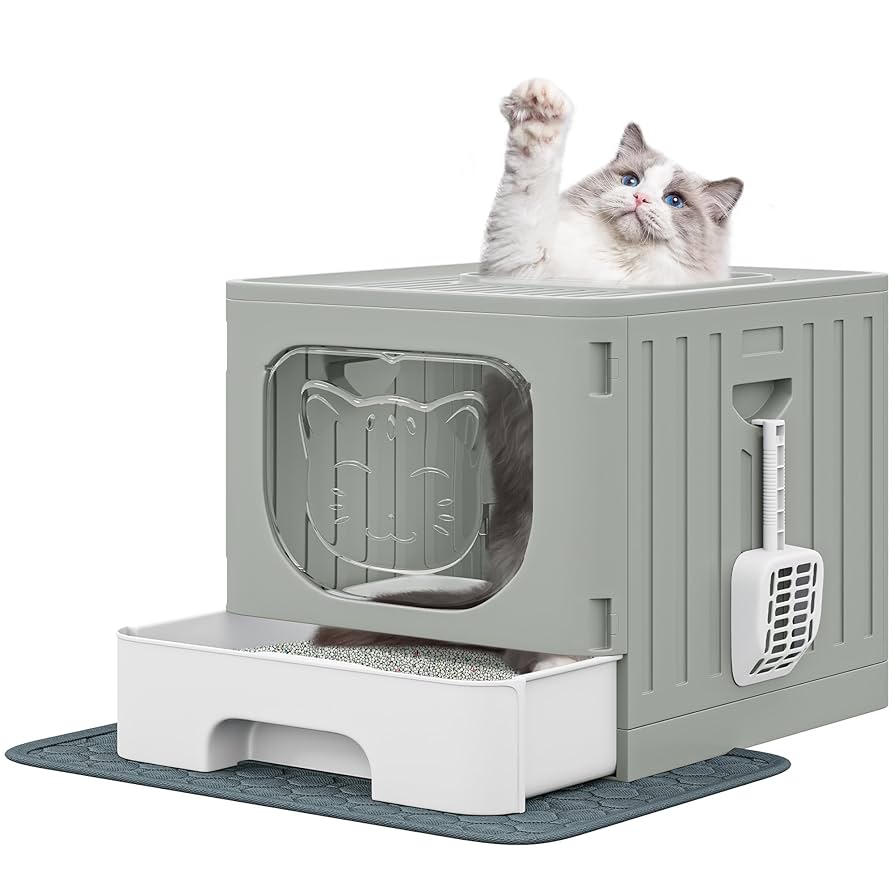
If you’ve ever stepped on a stray litter pellet at 2 a.m., walked into a cloud of ammonia when entering your home, or watched your skittish cat sprint away from an open litter box mid-use, a large covered cat litter box could be the all-in-one fix you’ve been searching for. Far more than a simple decorative cover, these enclosed units are engineered to balance feline privacy needs with owner priorities: reduced mess, contained odors, and a dedicated, stress-free bathroom space for your pet. That said, they’re not a one-size-fits-all solution—poorly ventilated models or incorrectly sized boxes can lead to litter box avoidance, a top behavioral issue in domestic cats. In this guide, we’ll break down exactly how to pick the right large covered litter box for your home, what features to prioritize, how to introduce it to your cat, and how to avoid common pitfalls that turn a promising purchase into a wasted expense.
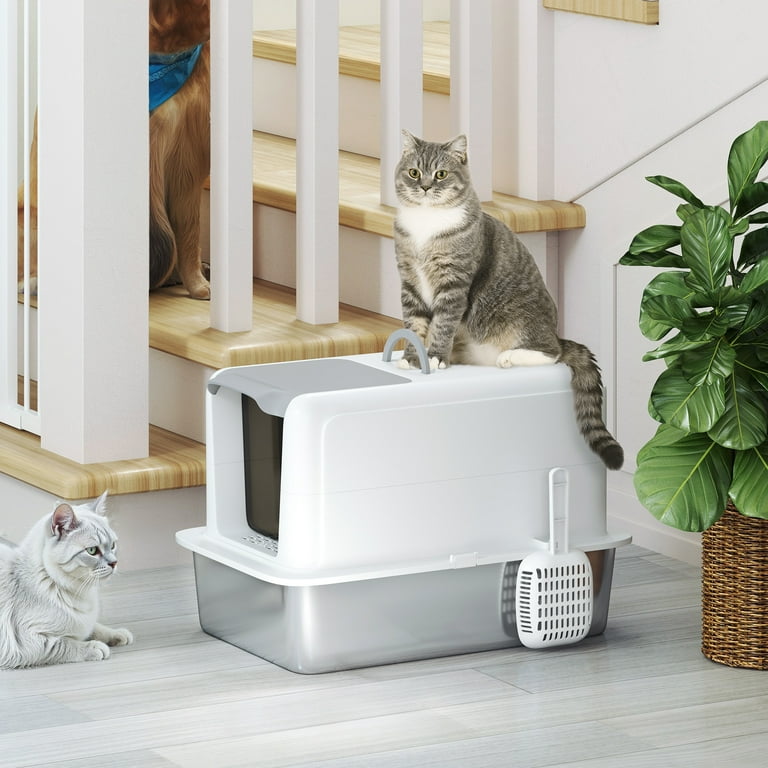
This style of covered box features a removable lid for simple waste removal and deep cleaning.
Benefits Of Covered Cat Litter Boxes
Covered litter boxes solve core pain points for both cats and owners, from eliminating mess to reducing household odors. Cats are both predators and prey in the wild, so enclosed, secluded spaces reduce their sense of vulnerability during elimination, a key factor in reducing litter box stress per AVMA’s cat litter box best practices. For owners, these units contain mess and smells that would otherwise spread throughout your living space. You can also read our guide on open top cat litter box.
Enhanced Privacy For Cats
Privacy is a non-negotiable for most cats when using the bathroom, especially in multi-pet or high-traffic households. A covered box creates a dark, enclosed space that blocks views of passing humans, other pets, or sudden movements that could startle your cat mid-elimination. This is especially beneficial for skittish rescue cats, senior cats with arthritis, or cats that have previously had negative experiences with open boxes. The enclosed space also blocks drafts, making it more comfortable for cats to use in colder months.
Odor Control Features
Uncovered litter boxes allow ammonia and waste smells to circulate freely through your home, often lingering for hours after your cat uses the box. Covered boxes reduce this odor escape by 60-70% when properly maintained, using a combination of sealed base joints to prevent leakage, high-placed vent ports with activated carbon filters to neutralize smells, and non-porous plastic that doesn’t absorb ammonia over time. Unlike scented air fresheners that only mask odors, charcoal and carbon filters bind to odor molecules to eliminate them entirely, and generic replacement filters work just as well as brand-name options for most models. You can also read our guide on litter box mats for cats.
Prevention Of Litter Scatter
Litter scatter around your home is a common headache for open-box users, with many cat owners reporting they have to sweep around their litter area daily to clean up kicked pellets. Covered boxes contain 90% of kicked litter within their walls, and most include a small built-in lip at the entrance to catch stray pellets on your cat’s paws as they exit. For homes with light-colored carpets or hardwood floors, this feature alone can cut your floor cleaning routine in half.
Sizing Your Covered Litter Box For Your Cat(s)
Choosing the right size is the most critical factor in whether your cat will actually use a covered box. A box that’s too small is the #1 reason cats avoid covered units, per veterinary behaviorists, so always measure your cat before buying. You can also read our guide on cat litter box training problems.
Minimum Space Requirements For Individual Cats
To calculate the minimum interior size you need, measure your cat from the tip of their nose to the base of their tail, then multiply that number by 1.5—that’s the minimum interior length required for them to turn and dig comfortably. For width, add 2 inches to your cat’s shoulder width to avoid them brushing against the walls while eliminating. For height, aim for at least 15 inches of interior space for average-sized cats, and 18+ inches for large or long-haired breeds (like Maine Coons or Persians) to prevent litter from sticking to their fur as they exit.
Sizing For Multi-Cat Households
The standard rule of one litter box per cat plus one spare still applies, but if you’re using a single extra-large covered box for 2-3 cats, you’ll need a minimum interior size of 36” L x 18” W x 16” H to give each cat enough personal space to eliminate without feeling crowded. Covered boxes are especially well-suited for multi-cat homes, as the enclosed design reduces territorial tension by giving each cat a private space even when sharing a unit. For households with more than two felines, you may want to review multi-cat litter box guidelines to ensure you’re meeting all pets’ needs. You can also read our guide on covered litter boxes for cats.
Material And Design Features That Make Or Break Performance
The materials and small design details of a covered litter box will determine how long it lasts, how easy it is to clean, and how comfortable it is for your cat to use.
Durable, Non-Porous Construction
High-impact polypropylene is the gold standard for litter box construction, as it resists cracking, warping, and scratching from cat claws, and doesn’t absorb ammonia or moisture like cheaper thin plastic or ceramic options. Avoid boxes with textured interior walls, as they’re harder to scrub clean and can hold onto bacteria and odor over time. A removable lid with secure, easy-to-snap latches is ideal, so you can take it apart for deep cleaning without struggling to reassemble it. If you struggle with persistent odors even with regular cleaning, pairing a non-porous box with a high-quality cat litter box deodorizer can extend freshness between deep cleans. You can also read our guide on can you train cats like dogs.
Ventilation And Airflow
Unventilated covered boxes trap humidity and ammonia, which not only smells bad, but can also cause respiratory irritation for both cats and humans, especially in small enclosed spaces like bathrooms. Look for boxes with 2-4 small, screened vent ports placed high on the lid, which allow air to circulate without letting litter scatter out. Avoid solid, unventilated lids unless you plan to pair the box with an external air purifier in the room. If your cat sneezes frequently after using their box, or avoids it entirely, poor ventilation is often the culprit—a common mistake owners make is assuming cats hate covered boxes when the real issue is stale air.
Entrance Design And Accessibility
Entrance height is a frequently overlooked design factor. Boxes with a 4-6 inch step-up entrance work for most adult cats, but kittens, senior cats, or cats with mobility issues need a low-profile entrance (2 inches or less) or a built-in ramp to avoid injury or litter box avoidance. Some models also offer a removable front panel, so you can adjust the entrance height as your cat ages.
Game-Changing Features For Low-Maintenance Ownership
Modern covered litter boxes come with a range of features designed to cut down on your daily maintenance work and improve your cat’s experience.
Self-Cleaning Mechanisms
If you’d rather cut down on daily scooping, self-cleaning covered litter boxes automate waste removal with minimal input from you. Most use a rake system that sifts waste into a sealed waste drawer 5-10 minutes after your cat exits (to avoid startling them), while others use a rotating sifter that separates clumps from clean litter. These are ideal for busy owners or cats with strict hygiene preferences, but they’re more expensive upfront, and require specific low-dust clumping litter to work properly.
Integrated Odor Filtration
Activated carbon filters are the most effective odor-control option, as they bind to ammonia molecules rather than just masking smells. Look for replaceable filters that are easy to swap without taking the entire box apart—many models have a slide-out filter tray on the side of the lid for convenience. Filter replacement is needed every 2-3 months for single-cat homes, and every 1-2 months for multi-cat homes to maintain effectiveness. Some premium models also include a secondary HEPA filter to reduce litter dust escape, a big plus for owners with allergies.
Top-Entry Options
Top-entry covered boxes have the entrance on the top of the unit, which drastically reduces litter tracking because cats have to climb up and step out, shaking litter off their paws on a built-in grate first. These are perfect for homes with light-colored carpets or hardwood floors, as they eliminate 95% of tracked litter. Note that top-entry models are not ideal for senior cats, kittens, or cats with mobility issues, so opt for a front-entry model if you have a pet with limited mobility.
Optimal Placement For Your Covered Litter Box
Even the highest-quality covered litter box will go unused if placed in the wrong spot. Cats prioritize privacy, quiet, and easy access when choosing a bathroom spot, so placement is key to encouraging consistent use.
Ideal Locations In Your Home
The best spots are quiet, low-traffic areas with good airflow: a corner of a spare bathroom, a nook in the laundry room, or a dedicated closet with a pet door. Never place the box near your cat’s food or water bowls, as cats instinctively avoid eliminating near their eating area. Also avoid placing it next to loud appliances like washing machines or furnaces, which can startle your cat and make them avoid the box. If you have a small apartment, a covered box is perfect for tucking into a closet or under a sink (as long as there’s enough headroom for your cat to stand up fully inside).
Ensuring Unobstructed Access
Make sure there’s a clear, unobstructed path from your cat’s main hanging areas (living room, bedroom) to the litter box. If your home has multiple floors, you need at least one box per level, so your cat doesn’t have to climb stairs when they need to go. For covered boxes, make sure the lid opens easily—some models have a push-to-open latch that’s simple for cats to operate, which is great for skittish cats that don’t like human intervention when using the box. If you have a covered box with a high entrance, a small step stool can help kittens or senior cats get in and out safely.
Introducing A Covered Litter Box To Your Cat
Cats are creatures of habit, so a sudden switch to a covered box can cause stress and avoidance if not introduced properly.
Step-By-Step Transition Plan
Start by keeping your cat’s old open box in its usual spot, and place the new covered box next to it for 3-5 days with the lid removed. This lets your cat get used to the new box’s location and texture without the intimidating cover. Once your cat is using the new box comfortably, reattach the lid but leave the entrance open, or prop the lid up with a small book for another 2-3 days. Once your cat is entering and exiting without hesitation, lower the lid fully. If your cat is hesitant to transition, using positive reinforcement training methods can help them associate the new box with rewards and comfort.
Troubleshooting Common Behavioral Challenges
The most common reason cats reject covered boxes is poor ventilation (leading to stale air) or a box that’s too small. If your cat is scratching at the lid, meowing outside the box, or eliminating elsewhere in the home, first check that the box is at least 1.5x their length, and that the vents are not blocked by litter or dust. If the box is the right size, try removing the lid for a week to see if the behavior stops—if it does, the cover is the issue, and you may need to switch to a model with better airflow. If you recently changed litter type, switch back to the old litter first, as cats are extremely sensitive to texture and scent changes. If avoidance persists for more than a week, consult your veterinarian to rule out urinary tract infections or other health issues that can cause litter box avoidance.
Common Covered Litter Box Mistakes To Avoid
Even with the right box, small mistakes can lead to litter box avoidance and persistent odors:
- Choosing a box that’s too small: Always measure your cat before buying, and err on the side of a larger size to give them enough room to move.
- Skipping regular cleaning: Covered boxes trap smell, so scoop waste daily and deep clean the entire box with mild soap and water once a week to prevent ammonia buildup.
- Using the wrong litter: Clumping, low-dust clay or silica litter works best for covered boxes, as it doesn’t stick to the walls as much as non-clumping or paper litter. Avoid scented litters, as the strong fragrance combined with the enclosed space can be overwhelming for cats.
- Ignoring ventilation: Never place a covered box in a tiny, unventilated closet or cabinet without adding a small fan or air purifier to circulate air.
- Forgetting to replace filters: A clogged charcoal filter does nothing to control odor, so mark your calendar to replace it every 2-3 months for single-cat homes, and every 1-2 months for multi-cat homes.
Comparing Brands And Value
The covered litter box market has options for every budget and household need, from $15 basic models to $200 premium self-cleaning units. Below is a breakdown of top-performing options as of 2026:
| Brand | Standout Features | Best For | Price Range |
|---|---|---|---|
| Petmate Booda Dome | Durable polypropylene, charcoal filter, arched roof for extra headroom | Budget-minded single-cat households | $15–$25 |
| Catit Jumbo Hooded Box | Extra-large interior (21”x16”x17”), built-in bag anchor, removable lid | Large or multiple cat households | $25–$35 |
| Modkat Flip Litter Box | Top-entry design, lockable lid, low entrance option | Litter tracking reduction, modern decor | $80–$110 |
| PetSafe ScoopFree Self-Cleaning Covered Box | Automatic rake, disposable waste trays, odor control | Busy owners, low-maintenance needs | $120–$180 |
You don’t need to break the bank for a high-performing covered litter box. Budget models under $25 work perfectly for single, average-sized cats, as long as they have proper ventilation and a large enough interior. Premium models with self-cleaning functions or top-entry designs cost more, but they’re worth the investment if you struggle with daily scooping, have allergies, or want to minimize litter tracking entirely. The only feature worth skipping is integrated air fresheners, which can irritate cats’ sensitive respiratory systems and often make odor problems worse. If you’re shopping in-person, you can find a wide range of budget-friendly covered litter box options at most major pet retailers.

Jumbo covered boxes like this one offer enough space for large or multiple cats to use comfortably.
Real Owner Experiences With Covered Litter Boxes
Customer reviews highlight consistent real-world benefits and small drawbacks to consider before purchasing.
Common Praise And Complaints
Most positive reviews cite two consistent benefits: a noticeable drop in household odor, and a reduction in litter scatter on floors and carpets. Owners also report that skittish cats that previously avoided open boxes now use their covered unit consistently. The most common complaints center on boxes that are too small for larger cats, poor ventilation that causes stale smells inside the box, and lids that are difficult to snap on and off for cleaning. A small number of owners also note that very timid cats may be afraid to enter a covered box if the entrance is dark or narrow, so opting for a model with a wide, well-lit entrance can mitigate this issue.
Success Stories From Multi-Cat Households
Owners with 3+ cats frequently report that covered boxes reduce territorial tension, as each cat has a private, enclosed space to use without being watched by other pets. One reviewer with three Maine Coons noted that switching to a 48-inch extra-large covered box eliminated all in-house litter box conflicts, and reduced their daily sweeping routine by 15 minutes. Another owner with a senior cat with arthritis praised a low-entrance covered box for letting their pet access the box without jumping, reducing joint pain and accidents.
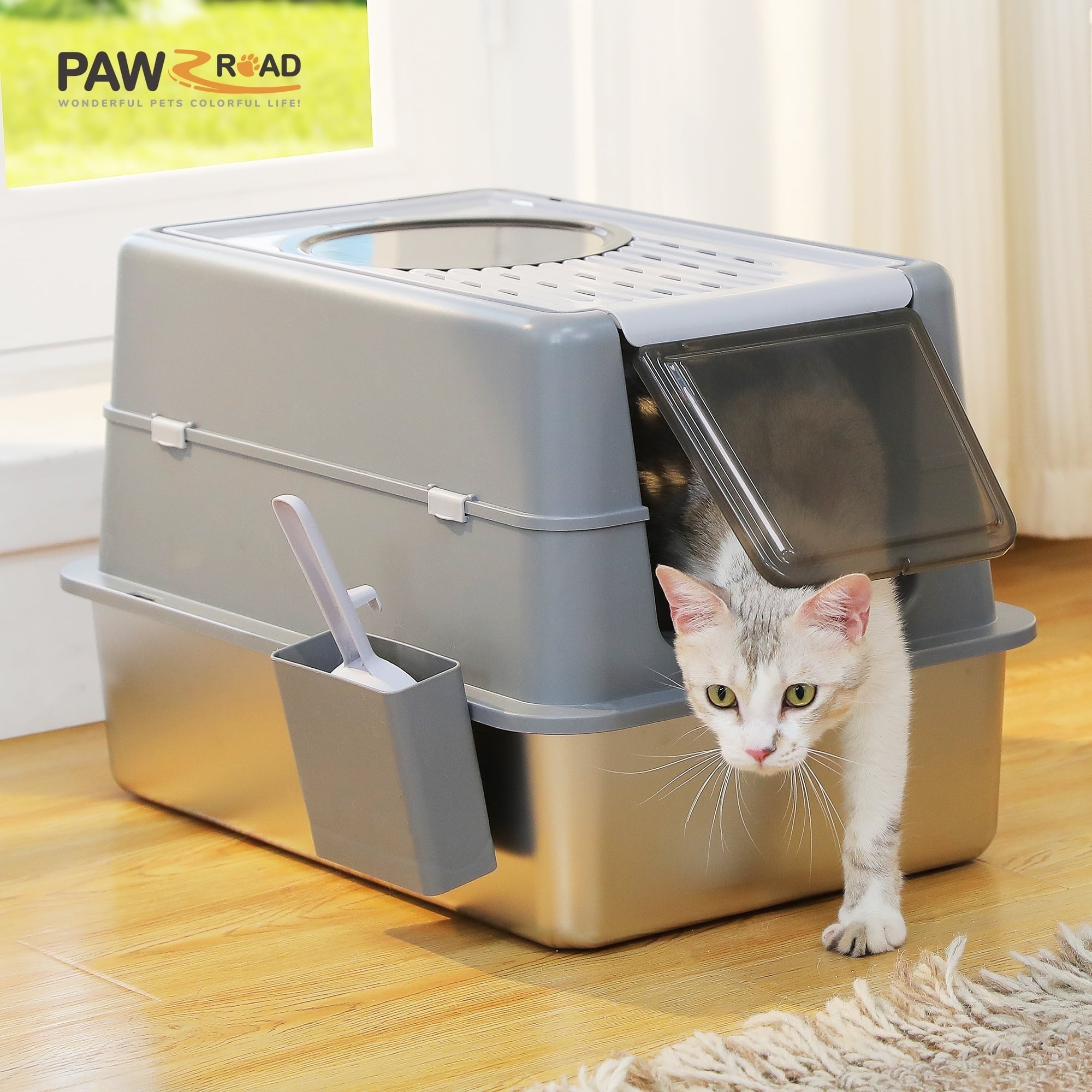
Stainless steel models are highly durable, scratch-resistant, and easy to sanitize.
Frequently Asked Questions
Are cats ok with covered litter boxes?
Most cats adapt well to covered litter boxes if introduced gradually and given a properly sized, well-ventilated unit. Some skittish cats or cats with anxiety may prefer open boxes, but offering a covered option with a removable lid lets you test your cat’s preference without a full commitment. Never force a cat to use a covered box if they show clear signs of distress (hissing, refusing to enter, eliminating elsewhere).
What is the largest litter box size available?
As of 2026, the largest commercially available covered litter boxes measure up to 48 inches long, 20 inches wide, and 18 inches high, designed for multi-cat households or large breeds like Maine Coons and Norwegian Forest Cats. These extra-large units often have dual entrances to reduce crowding and territorial tension.
Are covered litter boxes worth the extra cost?
For most households, yes. Covered boxes reduce odor escape by 60-70% compared to open boxes when properly maintained, cut down on litter scatter by 90%, and give cats a private space that reduces stress. The only exception is if you have a cat that has already shown a strong preference for open boxes, or if you have a small space where a covered box would be too cramped to clean easily.
Do cats prefer large litter boxes?
Veterinary behaviorists universally recommend large litter boxes, as they give cats enough room to dig, turn, and eliminate without feeling confined. Most cats will choose a larger box over a smaller one when given the option, and larger boxes are linked to lower rates of litter box avoidance in multi-cat households.
Conclusion
A large covered cat litter box is one of the simplest, most cost-effective upgrades you can make to your cat care routine, offering benefits for both you and your pet. By prioritizing proper sizing, ventilation, and gradual introduction, you can avoid the most common pitfalls and give your cat a private, comfortable space to eliminate, while cutting down on litter mess and household odors for good. When shopping, focus on durable, non-porous materials, a size that fits your cat’s full range of motion, and features that match your household’s needs—whether that’s a self-cleaning function for busy owners or a top-entry design to eliminate litter tracking. If you’re still unsure which model is right for your home, check out our roundup of vetted litter box recommendations for cat-tested picks tailored to every budget and living space.