

Many cat owners dream of exploring the outdoors with their feline companion, but a common myth holds that leash training is only for dogs. The truth? Most cats can learn to walk on a leash with patience, consistent positive reinforcement, and the right approach—though it’s not a good fit for every cat. This guide walks you through every step of the process, from choosing gear to troubleshooting common setbacks, to help you and your cat enjoy safe, low-stress outdoor adventures.
Is Leash Training Right for Your Cat?
Not every cat will take to leash walking, and that’s completely normal. Before starting, assess your cat’s temperament to set realistic expectations:
- Confident, curious cats who show interest in windows, doorways, or outdoor spaces tend to adjust the fastest
- Previously outdoor cats who were brought inside may already be comfortable with outdoor stimuli and adapt quickly
- Skittish, anxious, or senior cats with chronic health conditions (like arthritis or heart disease) may find outdoor walks overwhelming or unsafe
- Cats with a history of trauma or extreme fear of new objects may never be comfortable with a harness
If your cat shows consistent signs of extreme stress (hiding, drooling, aggressive swatting at the harness) after 2–3 weeks of gentle desensitization, it’s okay to abandon leash training. Alternatives like secure outdoor catios, window perches, or puzzle feeders can still provide mental stimulation without forcing your cat into a stressful situation. You can also read our guide on how to train cat to walk on a leash.
Essential Gear: Choosing the Right Harness and Leash
The right equipment is non-negotiable for safety and comfort. Never use a standard cat collar for leash walking: cats can easily slip out of collars, and the pressure on their neck if they bolt can cause tracheal damage or even strangulation.
Harness Types to Consider
There are three main harness styles designed specifically for cats, each with different benefits:
- Step-in harnesses: The easiest option for cats who dislike having objects placed over their head. You simply place your cat’s front paws into the two loops and fasten the clip behind their neck. Ideal for first-time training.
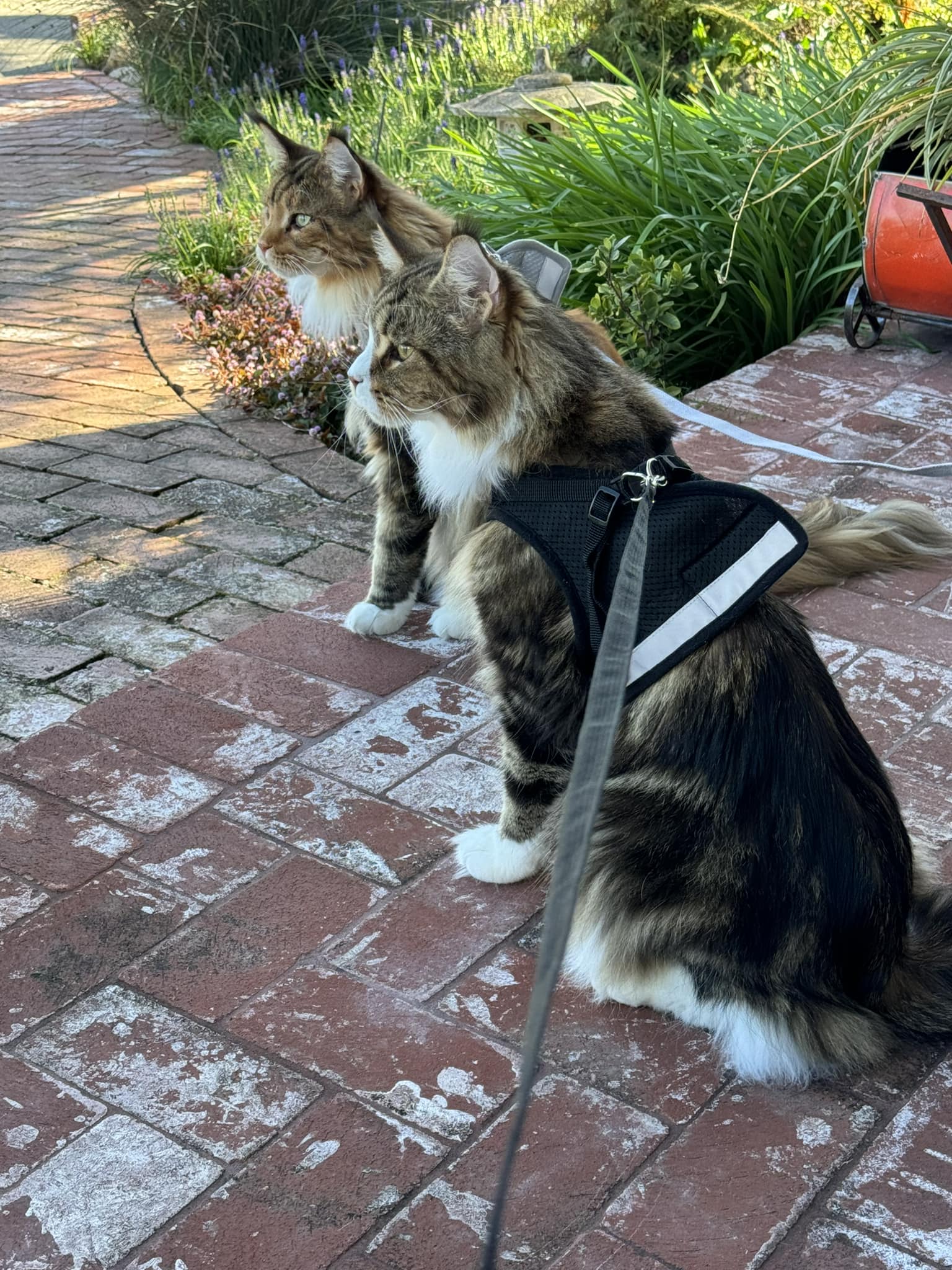
- Vest-style harnesses: The most secure and escape-proof option, with straps that wrap around the cat’s chest and neck to distribute pressure evenly. Best for cats who pull or try to back out of harnesses.
- H-style harnesses: A minimal, adjustable design with two loops (one around the neck, one around the chest) connected by a strap. Lightweight and good for smaller cats, but less secure for strong pullers.
Leash Selection and Fit Check
Opt for a fixed 4–6 foot nylon or leather leash for maximum control. Retractable leashes are not recommended: they can extend up to 30 feet, letting your cat bolt into danger, and the sudden retraction mechanism can injure their neck or spine if they run at full speed.
Always test the fit before your first walk: you should be able to slide two fingers between the harness and your cat’s chest with no extra room, and the harness should not be able to be pulled over your cat’s head when fastened. Pair your new harness with high-value training treats to create positive associations during desensitization.
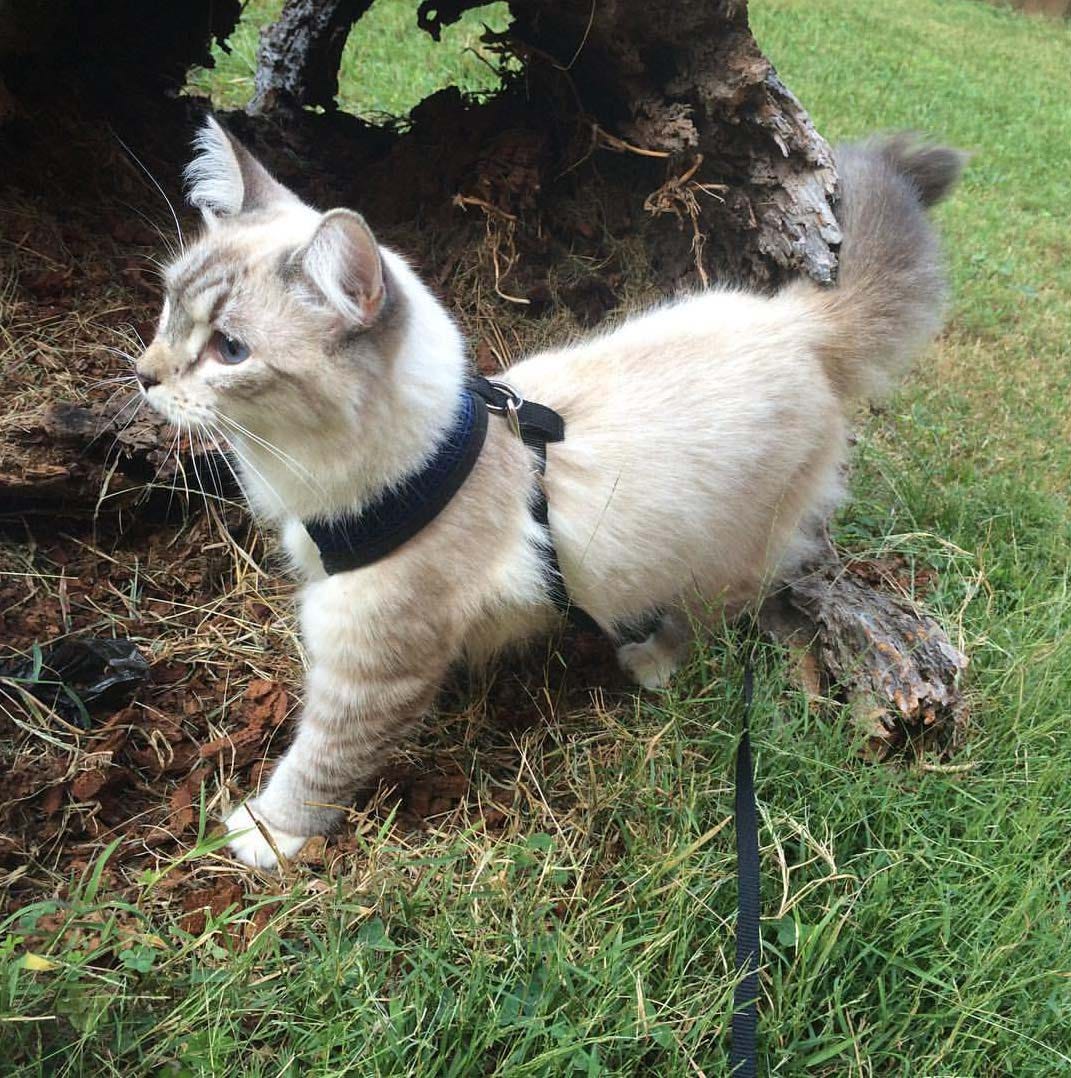
A well-fitted step-in harness is the most comfortable option for cats new to leash training.
Credit: medium.com
Pre-Training Prep: Desensitize Your Cat to the Harness First
Rushing to put a harness on your cat is the most common mistake new trainers make. Spend 3–5 days on gradual desensitization to avoid creating a permanent negative association with the gear:
- Day 1: Place the harness near your cat’s food bowl or favorite resting spot. Let them sniff and investigate it on their own terms, and reward curious behavior with treats. Do not force them to interact with it.
- Day 2: Drape the harness loosely over your cat’s back while they are eating a meal or playing with a favorite toy. Do not fasten it. Reward calm behavior with praise and extra treats.
- Day 3: Fasten the harness loosely for 10 seconds while your cat is distracted with food or play, then immediately take it off and reward them. Gradually increase wear time by 10–15 seconds each day until your cat is comfortable wearing it for 15+ minutes indoors without trying to chew or escape it.
This positive reinforcement-based training approach avoids scaring your cat and builds long-term trust. If your cat freezes or tries to bite the harness at any point, go back to the previous step and slow down the process.
Step-by-Step Indoor Leash Training (Weeks 1–2)
Once your cat is comfortable wearing the harness for 15+ minutes indoors, you can start introducing the leash. Keep all initial sessions in a quiet, familiar space (like a living room or hallway) with no distractions from other pets or loud noises.
Phase 1: Get Comfortable with the Leash
- Attach the leash to the harness and let your cat drag it around the house under close supervision. Make sure the leash doesn’t get caught on furniture or snags, which could scare your cat. Reward calm exploration with treats.
- Pick up the end of the leash and follow your cat around at their pace. Do not pull or tug—let them lead, and reward them for moving willingly while on the leash.
- If your cat freezes, stop moving and wait for them to take a step. Reward the movement immediately with a treat and praise. Keep these sessions short, 5–10 minutes max, 2–3 times per day to avoid boredom or frustration.
Phase 2: Practice Basic Walking Manners
Once your cat is comfortable moving around with the leash attached, start teaching basic cues:
- Use a cheerful, consistent cue like “let’s go” when you start walking.
- Reward your cat for walking beside you, rather than pulling ahead.
- If your cat pulls, stop walking immediately. Wait for them to look at you or loosen the leash tension, then reward them and continue moving. This teaches them that pulling doesn’t get them where they want to go faster.
Most cats will never walk perfectly by your side like a dog, and that’s okay. The goal of indoor training is to build comfort with the leash, not perfect obedience. If your cat picks up indoor training quickly, you can move on to advanced leash training tips like teaching them to navigate stairs and obstacles before going outside.
Transitioning to Outdoor Walks (Weeks 3–4)
Moving outdoors is a big jump for cats, so keep initial outings extremely low-stakes to avoid overwhelming them.
Choose the Right First Location
Pick a quiet, enclosed space for your cat’s first outdoor experience: a fenced backyard, an empty side street at dawn or dusk (when foot traffic and noise are minimal), or a calm patio area. Avoid busy parks, areas with lots of off-leash dogs, or loud construction sites. Before your first outing, check the space for hazards like sharp objects, toxic plants (lilies, azaleas, and sago palm are all toxic to cats), and busy roadways. Make sure your cat is up to date on all vaccines and outdoor parasite prevention to protect them from fleas, ticks, and heartworm. Avoid bringing perishable wet food treats on warm days, and follow safe food handling practices to prevent spoilage.
Keep First Outings Short and Low-Pressure
Limit your first outdoor walk to 5–10 minutes max. Let your cat lead the way, and let them stop to sniff, roll in the grass, or watch birds as long as they want. Do not force them to walk further than they’re comfortable with. Bring extra treats to reward calm behavior, and a favorite small toy if they get spooked. Learn to read feline behavioral cues to spot early signs of stress, like flattened ears, a twitching tail, or dilated pupils, and end the walk before your cat becomes overwhelmed. For outdoor acclimation guidance tailored to more anxious cats, refer to our advanced training guide.

Vest-style harnesses distribute pressure evenly and are the most escape-proof option for leash training.
Credit: www.amazon.com
Safety Best Practices for Leash Walks
Keeping your cat safe during outdoor outings requires preparation and constant attention. Follow these guidelines to reduce risk:
- Never leave your cat unattended on a leash, even for a second. They can get tangled in branches, attacked by wild animals, or slip out of a poorly fitted harness in seconds.
- Check your harness and leash for fraying, loose stitching, or broken clips before every walk. Replace damaged gear immediately.
- Avoid walking in extreme temperatures: cats can get heatstroke at temperatures as low as 80°F (27°C), and their paw pads can be burned by hot asphalt or frostbitten by ice and road salt in winter. Test pavement temperature with your hand before walking your cat on it; if it’s too hot for your hand, it’s too hot for their paws.
- Carry a small, portable carrier with you on all walks. If your cat gets spooked by a loud noise or another animal and tries to bolt, you can safely secure them in the carrier to transport them home.
- The American Veterinary Medical Association (AVMA) recommends keeping cats on a fixed leash at all times during outdoor outings to prevent them from getting lost, injured, or exposed to infectious diseases from other animals AVMA outdoor cat safety guidelines.
After walks, wipe down your cat’s paws and coat with dander-reducing wipes to remove pollen, dirt, and outdoor allergens that could irritate their skin or be ingested during grooming.
Troubleshooting Common Setbacks
Leash training rarely goes perfectly on the first try. Here’s how to handle the most common issues:
- Cat refuses to move outdoors: This is almost always caused by sensory overload. Cut your first outdoor sessions down to 2–3 minutes, stick to the quietest possible space, and bring extra high-value treats to reward even small steps forward. Let your cat set the pace entirely for the first few outings.
- Cat pulls constantly: Stop walking immediately when they pull, wait for them to loosen the leash or look at you, then reward and continue. Never yank or tug on the leash, as this will make your cat fear walking and associate you with discomfort.
- Cat bolts at small animals or loud noises: This is normal prey drive. Practice a “look at me” cue indoors first, where you say the cue and reward your cat for making eye contact with you. Use this cue outdoors to redirect their attention away from triggers.
- Cat tries to bite or escape the harness: Go back to the desensitization steps and slow down the process. Forcing the harness on your cat will create a permanent negative association that is very hard to undo.
If your cat gets dirty or wet on a walk, use gentle grooming wipes to clean them off quickly without the stress of a full bath.
Short, low-stakes outings in quiet areas help cats build confidence with leash walking.
Credit: www.facebook.com
When Leash Training Isn’t the Right Fit
Leash training is not a requirement for a happy, healthy cat, and forcing it will only damage your bond. Stop training and seek alternatives if:
- Your cat shows consistent signs of extreme stress (hiding, drooling, loss of appetite) during or after walks for 3+ weeks
- Your cat has a chronic health condition that makes outdoor activity unsafe (consult your veterinarian for guidance)
- You live in an area with high traffic, lots of predators, or other unavoidable outdoor hazards that make leash walks unsafe
For cats who prefer to stay indoors, you can still provide mental stimulation with scheduled wet food meals and window perches to watch wildlife.
Frequently Asked Questions
Can I use a retractable leash for my cat?
No. Retractable leashes are unsafe for cats: they allow your cat to run far enough to get lost, tangled, or injured, and the sudden snap back can hurt their neck or spine. Always use a fixed 4–6 foot leash for full control.
What age should I start leash training?
You can start desensitizing kittens to harnesses as early as 8 weeks old, as they are more adaptable to new experiences at a young age. Adult cats can be trained too, but it may take longer and require more patience.
How often should I walk my cat?
Aim for 1–2 short walks per day, 5–15 minutes each, depending on your cat’s energy level. Watch for signs of overstimulation (flattened ears, rapid tail flicking, trying to head home) and end the session early if you see them. Never force your cat to walk longer than they want to.
Do I need to train my cat to walk beside me like a dog?
No. Most cats will never walk heel like a dog, and that’s not the goal of leash training. The point is to let your cat explore the outdoors safely at their own pace, not to follow strict obedience commands. Let them stop, sniff, and investigate their surroundings as long as they are safe.
Can I walk my cat in the rain or snow?
Most cats dislike getting wet, so it’s best to avoid walks in rain or heavy snow. If you do go out in cold weather, limit the walk to 5 minutes max, and check their paws for ice or salt buildup when you get home.
Conclusion
Training your cat to walk on a leash is a gradual process that requires patience, consistency, and a focus on positive experiences rather than perfect walks. Every cat learns at their own pace: some may be comfortable on outdoor walks in 2 weeks, while others take 2–3 months of indoor practice before they’re ready to step outside. The most important thing is to keep sessions short, fun, and reward-driven to build a positive association with the harness and leash.
Even if your cat never loves long outdoor walks, the training process itself is a great way to build trust and strengthen your bond. If leash training doesn’t work out, there are plenty of other ways to give your cat safe access to outdoor stimulation. Ready to start your leash training journey? Stock up on high-value training treats and a well-fitted harness to set you and your cat up for success from day one.