
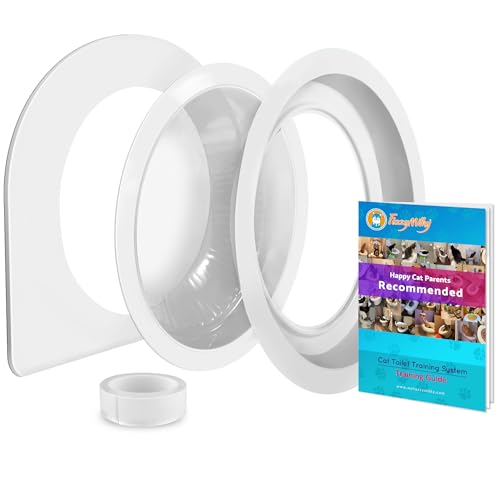
Every cat owner knows the frustration of litter box upkeep: daily scooping, tracking paws leaving gritty paw prints across floors, persistent odors that cling to fabrics, and the ongoing cost of litter that adds up to $150–$300 per year for most households. Traditional clay litter also creates unnecessary waste, with the U.S. Environmental Protection Agency noting that roughly 2 million tons of non-biodegradable cat litter end up in landfills annually. A DIY toilet trainer for cats offers a customizable, low-cost solution to eliminate these headaches, teaching your feline friend to use a human toilet instead of a litter box for a cleaner, litter-free home.
Unlike generic commercial guides, this walkthrough covers honest prerequisites to make sure toilet training is a good fit for your cat, low-cost DIY build options, a step-by-step training timeline, reviews of the top commercial trainer kits for DIY setups, troubleshooting for common setbacks, and critical safety and long-term maintenance tips. We’ll also cover the key trade-offs of toilet training so you can make an informed choice for your household. For more on this, see our guide on petsmart litter boxes for cats.
Is Toilet Training Right for Your Cat?
Toilet training isn’t a one-size-fits-all solution, and pushing a cat to adapt before they’re ready will lead to stress, accidents, and long-term litter box aversion. Start by assessing your cat’s suitability:
- Ideal candidates: Cats over 6 months old, with no mobility issues (arthritis, missing limbs, neurological conditions), a confident, adaptable temperament, and a history of consistent litter box use. Cats that already respond well to positive reinforcement techniques will typically learn faster.
- Cats who may not thrive: Kittens under 6 months, senior cats with joint pain that make balancing on a toilet seat difficult, cats with existing litter box aversion or severe anxiety around loud bathroom noises, and cats in households with frequent guests who may close the toilet lid.
- Key trade-off to consider: Toilet training eliminates litter mess and cost, but you will no longer be able to monitor your cat’s urinary health by checking litter for blood, crystals, or changes in frequency. The American Veterinary Medical Association notes that cats thrive on consistent routines, so sticking to a steady training schedule is critical for success, and forcing a cat to use a trainer before they’re ready can lead to long-term litter box aversion.
If you decide toilet training isn’t a fit for your household, a high-quality odor-control litter box is the next best option for a clean home.
Building Your Own DIY Cat Toilet Trainer
One of the biggest benefits of a DIY toilet trainer is the low cost: most builds use materials you already have at home, costing under $10 total, compared to $20–$80 for commercial kits. You’ll need:
- A non-slip rubber mat (to prevent the trainer from sliding on the toilet seat)
- A sturdy plastic tray (a plastic storage bin lid, disposable aluminum tray, or cut-to-size piece of acrylic plastic works)
- A utility knife or drill to cut incremental center holes in the tray
- Sandpaper to smooth rough edges from cutting
- Optional: non-toxic sealant to coat cut edges, and a small amount of flushable biodegradable litter for the first week of training
For a simple, effective build:
- Cut the plastic tray to fit snugly on your toilet seat, with 1–2 inches of overhang on all sides to prevent it from falling in.
- Cut a 2-inch diameter hole in the exact center of the tray.
- Attach the non-slip mat to the bottom of the tray to keep it stable.
- Place a small amount of litter around the edge of the hole for the first week of training, so your cat associates the new surface with their usual bathroom spot.
In practice, many owners find that using a shallow layer of litter on the trainer for the first 3–5 days reduces hesitation, as the familiar scent encourages cats to step onto the new surface. For more on this, see our guide on best litter box for cats.
Step-by-Step Toilet Training Process
Most cats take 4–8 weeks to fully transition to using the toilet, depending on their temperament. Follow this gradual schedule to avoid accidents and aversion:
- Weeks 1–2: Familiarization
Place the trainer (with litter around the hole) on the toilet seat, and keep the toilet lid up at all times. Reward your cat with high-value training treats every time they approach, sniff, or step onto the trainer. Never force your cat to interact with the trainer, as this will create fear. A common mistake owners make is moving the trainer to a different location during this phase, which confuses cats and slows progress. - Weeks 3–4: Gradual Hole Enlargement
Cut the center hole 1 inch larger every 3–4 days, moving the litter closer to the hole each time to encourage your cat to shift their position. If your cat avoids the trainer for more than 24 hours, revert to the previous hole size for a few days before progressing again. For more on this, see our guide on best litter boxes for cats. - Weeks 5–8: Full Transition
Once the hole is 6–7 inches wide (large enough for your cat to fit through), remove the trainer entirely. Keep the toilet lid up for 2–3 weeks after removing the trainer to reinforce the habit. For cats that struggle with the final step, leave the trainer in place with the hole fully enlarged for an extra week before removing it completely.
Top Commercial Toilet Trainer Kits for DIY Setups
If you don’t want to build a trainer from scratch, vetted commercial toilet training kits streamline the process with pre-sized, stable components designed for gradual cat adjustment. Below are the most popular options, all compatible with standard DIY training setups:
1. FuzzyMilky Cat Toilet Trainer Kit

The FuzzyMilky kit uses a graduated tray system to help cats adjust to toilet use incrementally
The FuzzyMilky kit is a budget-friendly, no-fuss option for first-time trainers. It includes three graduated plastic trays with increasing center hole sizes, fitting most standard round toilet seats. Made from BPA-free, durable white plastic, it’s easy to wipe clean after each use. For more on this, see our guide on best litter box for big cats.
- Pros: Affordable, fits most standard toilets, dishwasher-safe trays, stable non-slip base
- Cons: Only fits standard round seats (not elongated), the largest hole is 6 inches wide, so it’s not suitable for cats over 12 pounds
To buy this product, grab the FuzzyMilky kit here to skip the hassle of cutting and sizing your own DIY trainer.
1a. FuzzyMilky Cat Toilet Training System (2022 Edition)
The 2022 FuzzyMilky kit includes an extra training pan for extended use during the transition period
This updated version of the FuzzyMilky kit includes an extra training pan, so you can extend the training timeline if your cat needs more time to adjust to larger hole sizes. It has the same BPA-free, durable plastic construction as the standard kit, with the same 3 graduated trays.
- Pros: Includes extra training pan for extended use, fits standard toilets, easy to clean, affordable
- Cons: Only fits standard round seats, largest hole is 6 inches for cats under 12 pounds, no additional features for reluctant cats
To buy this product, click here for a budget-friendly kit with an extra pan for cats who need more training time.
2. Readaeer Cat Toilet Training Kit

The Readaeer kit’s non-slip base keeps the trainer stable even if your cat shifts while balancing
The Readaeer kit is designed for larger cats or households with slightly elongated toilet seats. It includes four graduated trays with a non-slip rubber base to prevent sliding, and fits both standard and slightly elongated seats. The lightweight 2-pound design makes it easy to remove for cleaning. For more on this, see our guide on best litter box for multiple cats.
- Pros: Fits slightly elongated seats, non-slip base, four tray sizes for gradual adjustment, BPA-free plastic
- Cons: The smallest tray hole is larger than competing kits, so it’s not ideal for kittens under 4 months old, the base can slide on very smooth porcelain seats if not secured
To buy this product, click here for a trainer that accommodates bigger cats and non-standard toilet shapes.
3. IFASHIHOME Cat Toilet Training System

The included feather toy helps draw curious cats to the trainer during the first week of familiarization
The IFASHIHOME kit is a great pick for reluctant cats who need extra motivation to approach the trainer. It includes a replaceable cat feather toy to encourage interaction, and has a compact gray design that blends into most bathroom decor. The lightweight 1-pound build is easy to move and store when not in use.
- Pros: Includes bonus toy to engage hesitant cats, compact and lightweight, neutral gray color, affordable
- Cons: Thinner plastic construction may crack if dropped, weight limit is 12 pounds, the hole sizing is less gradual than premium kits
To buy this product, click here for a trainer that’s ideal for cats who need extra encouragement to try a new bathroom spot.
4. Blue Removable Cat Toilet Seat Training Kit

The removable washable pad on this kit makes cleaning up accidents quick and easy
This portable kit is designed for owners who want a trainer that’s easy to clean and transport. It features a removable, washable cleaning pad that catches accidents during the early stages of training, and a lightweight plastic build that’s easy to move between bathrooms or take on trips.
- Pros: Removable washable pad for easy cleanup, portable design for travel, fits standard seats, affordable
- Cons: The plastic construction is less durable than premium kits, weight limit is 10 pounds, the pad needs to be washed after every accident to prevent odors
To buy this product, click here for a portable, easy-to-clean trainer ideal for travel or multi-bathroom homes.
5. CitiKitty Cat Toilet Training Kit
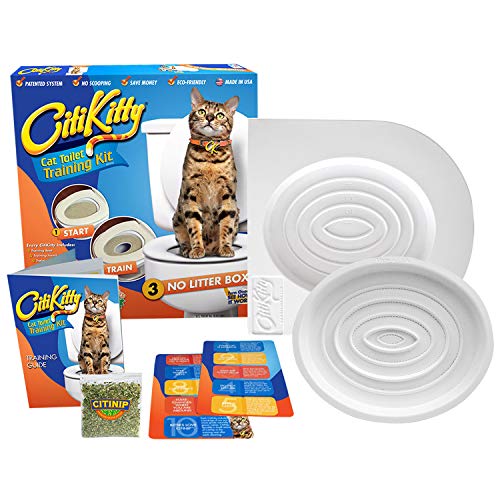
CitiKitty’s patented tray system is the most widely tested commercial toilet training option on the market
The original and most well-known commercial toilet training kit, CitiKitty uses a patented graduated tray system designed in consultation with veterinarians to minimize cat stress. It fits both standard and most elongated toilet seats, and includes a detailed training guide tailored to different cat temperaments. The BPA-free plastic is dishwasher safe for easy cleaning.
- Pros: Vet-designed to reduce stress, fits elongated seats, largest tray hole is 7 inches for cats up to 18 pounds, includes detailed training guide
- Cons: Higher price point than no-name kits, the training guide is generic and doesn’t address specific behavioral issues
To buy this product, click here for a vet-backed kit that works for cats of all sizes.
6. FIFIPETS Cat Toilet Training Kit

The included sand mat reduces litter tracking during the early stages of training
The FIFIPETS kit includes a unique sand box mat that fits under the trainer to trap litter and reduce tracking during the first few weeks of training, when your cat may still have litter on their paws. It fits standard toilet seats, and has a lightweight 2-pound build for easy removal.
- Pros: Includes litter-trapping sand mat, fits standard seats, lightweight, affordable
- Cons: The sand mat is not washable, so it will need to be replaced every 2–3 months, the plastic construction is less durable than premium kits, weight limit is 12 pounds
To buy this product, click here for a kit that minimizes mess during the early stages of training.
7. The Cat Throne System™

The Cat Throne System’s elongated design accommodates cats who prefer extra space on the toilet seat
The premium option for households with elongated toilet seats or senior cats with limited mobility, The Cat Throne System is vet-approved and made from recycled BPA-free plastic. Its extra-wide, elongated base provides extra stability for cats who struggle to balance on standard round seats, and includes a 30-day satisfaction guarantee.
- Pros: Fits elongated seats, extra-wide stable base, made from recycled materials, vet-approved for cats of all ages, 30-day guarantee
- Cons: Most expensive option on the market, requires a longer training timeline for cats over 10 years old, heavier 8.5-pound build is harder to move for cleaning
To buy this product, click here for a premium, humane option designed for cats with special needs or non-standard toilet setups.
8. Universal Reusable Cat Toilet Trainer Kit

The detachable design of this universal trainer makes deep cleaning quick and hassle-free
The Universal Reusable kit from Guzvexi is a great pick for owners who want a customizable, easy-to-clean option. Its detachable design lets you remove the tray for deep cleaning, and it’s compatible with most standard litter boxes if you want to use it as a transitional step before full toilet training.
- Pros: Detachable for easy cleaning, compatible with litter boxes for gradual transition, neutral gray color, reusable for multiple training rounds
- Cons: The tray is slightly smaller than standard kits, so it may not fit larger toilet seats, no included training guide for first-time owners
To buy this product, click here for a versatile trainer that works for both full toilet training and transitional litter box use.
Troubleshooting Common Training Setbacks
Even with a perfect setup, most cats will hit a few snags during training. Here’s how to fix the most common issues:
- Cat refuses to step on the trainer: Rub a small amount of your cat’s used litter on the trainer to transfer their familiar scent, or use a high-value treat to lure them onto the surface. If they’re scared of the toilet flushing, start training with the lid down, then gradually introduce the sound of flushing once they’re comfortable using the trainer.
- Frequent accidents outside the trainer: This is normal in the first 2 weeks of training, so don’t punish your cat. Clean accidents immediately with an enzymatic cleaner to remove all scent, so your cat doesn’t return to the same spot. For quick cleanups, keep dander reducing wipes on hand to eliminate odors and stains without harsh chemicals.
- Cat falls into the toilet: If your cat falls in, dry them off immediately, comfort them, and revert to the previous trainer size for a week before progressing. For cats that are particularly fearful of falling, add a small step stool next to the toilet to give them an extra boost of confidence when getting on and off the seat.
- Multi-cat household conflicts: Train cats one at a time, or use separate trainers in different bathrooms if you have multiple available. Some cats may never adjust to sharing a toilet, so keep a backup litter box in a quiet, low-traffic area for hesitant pets. For homes with multiple cats, a multi-cat compatible litter box may be a more practical interim solution while you assess each pet’s suitability for toilet training.
Long-Term Maintenance and Safety Tips
Once your cat is fully toilet trained, follow these tips to keep them safe and healthy:
- Keep the toilet lid up at all times when you’re home, and consider adding a lid lock to prevent guests or children from closing it accidentally.
- Clean the toilet bowl weekly with a pet-safe, non-toxic cleaner to avoid bacterial buildup and harsh chemical fumes that can irritate your cat’s respiratory system.
- Monitor your cat’s bathroom habits closely: since you no longer have litter to check for changes in urine color, frequency, or volume, note any signs of straining, blood in urine, or increased bathroom trips, and consult your vet immediately if you notice these changes.
- If you travel, bring a portable litter box for your cat, as they may be uncomfortable using a foreign toilet. For cats that refuse to use a portable box, limit travel to short trips, or arrange for a pet sitter to come to your home.
Frequently Asked Questions
How does a DIY cat toilet trainer work?
A DIY cat toilet trainer uses a graduated system to transition your cat from a litter box to a standard human toilet. Most setups use a plastic tray that fits over the toilet seat, with a small hole in the center that gets larger over time. As the hole grows, your cat gradually learns to balance on the seat and eliminate directly into the toilet, eliminating the need for litter entirely. DIY builds use affordable, easy-to-find materials like plastic trays and non-slip mats to replicate the function of commercial kits at a fraction of the cost.
Are cat toilet training kits safe for cats?
Yes, when used correctly, toilet training kits are safe for most cats. Look for kits made from BPA-free, non-toxic plastic with a non-slip base to prevent sliding. Never force your cat to use the trainer, as this can cause stress and aversion. The AVMA recommends introducing any new potty training method gradually to avoid anxiety. Cats with mobility issues like arthritis, missing limbs, or neurological conditions should not use toilet trainers, as they may struggle to balance on the seat.
Can all cats learn to use a toilet trainer?
Most healthy cats over 6 months old can learn to use a toilet trainer with consistent, patient training. Kittens under 6 months, senior cats with joint pain, and cats with severe litter box aversion or anxiety may not adapt well. Personality also plays a role: confident, food-motivated cats typically learn faster than shy or independent cats. If your cat doesn’t take to toilet training after 8 weeks of consistent effort, it’s better to stick with a high-quality litter box to avoid stress.
What are the benefits of using a reusable DIY cat toilet trainer?
A reusable DIY trainer is far more affordable than commercial kits, with most builds costing under $10 in materials. It’s also customizable: you can adjust the hole size and tray dimensions to fit your cat’s size and your toilet’s shape. Reusable trainers cut down on plastic waste from disposable litter, and eliminate the ongoing cost of cat litter, which averages $150–$300 per year for most households. They also reduce litter tracking and odor in your home, leading to a cleaner living space.
How long does it take to toilet train a cat with a DIY trainer?
Most cats take 4 to 8 weeks to fully transition to using the toilet with a DIY trainer, depending on their temperament and how consistently you follow the training schedule. Kittens and highly food-motivated cats may learn in as little as 3 weeks, while shy or older cats may take 10 weeks or longer. Avoid rushing the process: progressing too quickly is the most common cause of training setbacks and cat aversion.
Can a cat toilet training kit replace a litter box permanently?
Yes, for many cats, a toilet trainer can replace a litter box permanently once training is complete. However, it’s recommended to keep a backup litter box in a quiet, accessible area for at least 1 month post-training, in case your cat has an accident or feels stressed. Note that toilet training eliminates your ability to monitor your cat’s urinary health: you won’t be able to see changes in urine color, frequency, or volume that could signal health issues like urinary tract infections or kidney disease, so schedule regular vet checkups to catch any problems early.
Do I need to flush the toilet after every cat use?
Yes, to prevent odors and bacterial buildup, flush the toilet immediately after your cat uses it. If you have multiple cats, you may want to flush mid-day as well to keep the bowl fresh. Avoid using harsh chemical cleaners in the toilet bowl, as residual fumes can irritate your cat’s respiratory system. Stick to pet-safe, non-toxic toilet cleaners for regular maintenance.
Will toilet training work for cats in a home with dogs?
It can, but you’ll need to take extra steps to ensure your cat feels safe using the toilet. Keep the bathroom door closed when you’re not home to prevent dogs from harassing your cat while they’re on the toilet. You may also want to train your cat to use a separate toilet in a quiet, dog-free bathroom if your home has multiple bathrooms. If your dog is prone to drinking from the toilet, keep the lid down when not in use, and train your dog to avoid the bathroom entirely.
Conclusion
Toilet training your cat with a DIY trainer is a rewarding project that eliminates litter mess, cuts down on household waste, and saves you $200+ per year on litter costs. The key to success is picking a method that fits your cat’s temperament: a low-cost DIY build for handy owners, or a pre-sized commercial kit for those who want a faster start.
Stick to the gradual training schedule, reward your cat for every small win, and never force them to interact with the trainer if they’re hesitant. Remember that toilet training isn’t right for every cat: if your pet has mobility issues, severe anxiety, or doesn’t adapt after 8 weeks of consistent effort, a high-quality litter box is a perfectly acceptable alternative.
Ready to get started? Stock up on high-value training treats to keep your cat motivated, and pick a trainer kit or DIY build that matches your cat’s size and your bathroom setup. With patience and consistency, you’ll be on your way to a cleaner, litter-free home in just a few weeks.