
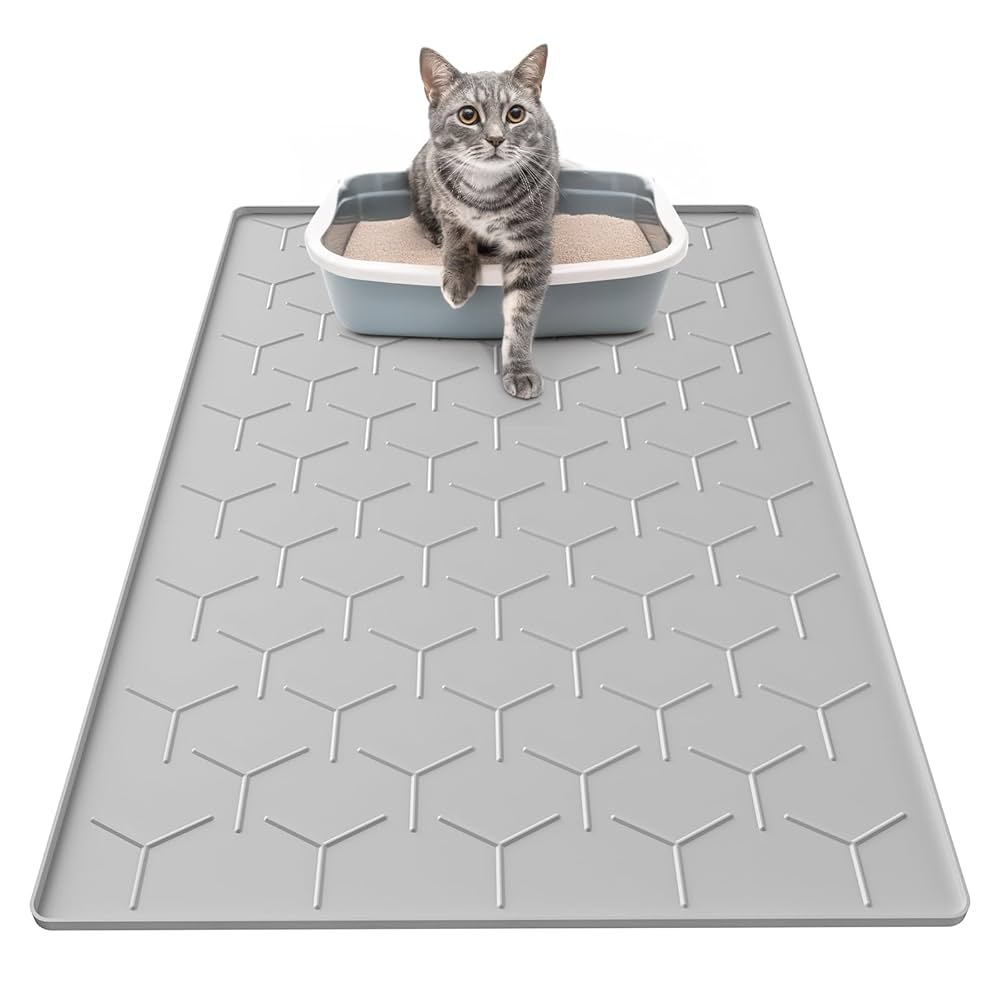
A litter box mat is one of the simplest upgrades you can make if you want cleaner floors and fewer stray granules underfoot. The right mat traps litter as your cat exits the box, protects flooring from moisture and scratches, and makes daily cleanup faster. The wrong one can slide around, hold odors, or feel uncomfortable enough that your cat avoids the area entirely.
This guide breaks down how litter tracking happens, which mat materials work best in real homes, what features actually matter, and how to choose the right size for your space. You will also get practical cleaning routines, DIY options, troubleshooting tips, and answers to the most common questions about keeping the litter area tidy. You can also read our guide on how to feed wet cat food.
Why Litter Tracks Everywhere in the First Place
Most litter mess is not random. It usually follows a predictable path from the box to the nearest walking route. Cats dig, cover, and sometimes kick litter with real enthusiasm. When they step out, granules cling to paw pads, fur between the toes, and sometimes the belly or tail on long-haired cats.
In practice, the biggest sources of tracking are:
- Exit-path carryout: litter stuck to paws drops first within a few steps of the box.
- Side flick: cats that dig near the edge scatter litter beyond the box rim.
- Static and dust: lightweight litter clings more easily, especially in dry rooms.
- Box design: low-sided boxes and top-entry boxes can both create different mess patterns.
- Floor type: hard floors show every granule, while carpet can hide litter until it becomes embedded.
A good mat does not just sit under the box. It intercepts litter where it falls most often: directly in front of the entry and along the sides. You can also read our guide on flea and tick collar cat.
Why a Cat Litter Box Mat Is Worth Using
A quality mat is not just about aesthetics. It improves hygiene, protects your home, and can make the litter area more comfortable for your cat.
Key benefits include:
- Less scattered litter: the mat catches granules before they spread across the room.
- Floor protection: it creates a barrier against moisture, scratches, and abrasive litter dust.
- Faster cleanup: shaking or vacuuming a mat is quicker than sweeping the whole floor.
- Better paw comfort: many cats prefer stepping onto a soft or textured surface after digging.
- Reduced odor spread: trapped litter is easier to remove, which helps keep the area fresher.
- Lower tracking into other rooms: fewer granules hitchhike on paws into bedrooms and hallways.
If you have ever stepped on a sharp piece of clay litter barefoot, you already know the value. A mat is one of the cheapest ways to make the whole litter zone more pleasant. You can also read our guide on cat flea and tick treatment.

Credit: www.amazon.com
A textured surface helps keep loose granules from spreading across hard floors.
Types of Cat Litter Box Mats in 2026
Mat choices have expanded well beyond basic rubber pads. Today’s most common styles include textured rubber mats, double-layer silicone honeycomb mats, soft fabric mats, and cut-to-size foam or runner options. The best choice depends on your cat’s habits, your flooring, and how much cleaning you are willing to do.
| Mat Type | How It Traps Litter | Best For | Main Trade-Off | Cleaning Needs |
|---|---|---|---|---|
| Rubber or textured PVC | Grooves and raised patterns hold granules | High-traffic homes, hard floors | Can look utilitarian | Wipe, rinse, or vacuum |
| Silicone honeycomb double-layer | Top layer lets litter fall into lower tray | Fine litter, heavy trackers | Needs periodic emptying | Rinse both layers |
| Microfiber or fabric | Soft pile catches litter and dust | Senior cats, comfort-focused homes | May hold odor if not washed | Machine wash or hand wash |
| Foam, EVA, or runner mats | Light texture and custom coverage | Large areas, budget setups | Less aggressive trapping | Wipe or vacuum |
Rubber and Textured PVC Mats
Rubber and PVC mats are among the most popular options because they are durable, waterproof, and easy to clean. Their raised patterns or grooves help capture litter as your cat walks across, and the firm surface usually stays flat without curling. You can also read our guide on cat grooming how to keep your cat clean and comfortable.
A common mistake is choosing a rubber mat with a slick finish. Smooth rubber may look tidy, but it often fails to trap much litter. Look for a pronounced texture, but not one so rough that sensitive cats hesitate to step on it. These mats work especially well on tile, vinyl, and sealed hardwood.
Silicone and Honeycomb Double-Layer Mats
Double-layer silicone mats use a perforated top layer and a solid bottom tray. Litter falls through the holes, then collects underneath until you pour it back into the box or discard it. This design is excellent for fine clumping litter and cats that track heavily. You can also read our guide on affordable flea and tick prevention for cats.
The trade-off is maintenance. If you do not empty the lower layer regularly, litter can build up and create odor. These mats are also best on hard floors, where they can lie flat and be rinsed easily. In practice, they work best for owners who want visible litter containment and do not mind a quick weekly rinse.
Microfiber and Fabric Mats
Fabric mats are softer and often more comfortable for cats, especially seniors or cats with sensitive paws. They can catch a surprising amount of litter and dust, and many blend into home decor better than industrial-looking rubber pads.
However, they need regular washing. If urine, moisture, or damp litter gets trapped in the fibers, odor can develop quickly. Choose a mat with a non-slip backing and a tight weave that releases litter easily. These are a good option if your cat dislikes firm rubber surfaces.
Foam, EVA, and Runner-Style Mats
Foam and EVA mats are lightweight, affordable, and often sold in larger sizes. Some can be trimmed to fit awkward corners or wide litter zones. They are not always the best at trapping fine litter, but they can protect a larger floor area from scratches and scattered debris.
Runner-style mats work well in front of closet-based or hallway litter stations. They are less effective for heavy diggers unless they have a textured surface. If you choose this type, prioritize a low-profile edge so your cat does not trip or avoid stepping onto it.
Key Features to Look for Before Buying
The best mat is not always the most expensive one. It is the one that fits your litter box layout, your flooring, and your cat’s behavior.
Size and Coverage
Size is the most overlooked feature. A mat that only covers the footprint of the box will miss most of the litter your cat carries out. Measure the box, then add extra coverage in the direction your cat exits.
Practical sizing guidance:
- For a standard open box, add 12 to 18 inches of mat coverage on each side.
- In front of the entry, leave 18 to 24 inches of runway.
- For top-entry boxes, cover the landing zone around the exit hole.
- For multiple boxes, use one long mat or overlapping mats under the full setup.
A larger mat almost always outperforms a small one, especially for cats that dig vigorously or jump out quickly.
Surface Texture and Paw Comfort
Texture determines how much litter the mat can grab. Deep grooves, honeycomb holes, and raised patterns trap more granules than flat surfaces. But texture also affects comfort.
Some cats dislike prickly or stiff surfaces, especially kittens, seniors, or cats with sore paws. If your cat steps around the mat instead of onto it, the texture may be too harsh. The goal is a surface that catches litter without discouraging use.
Non-Slip Backing and Edge Design
A sliding mat is frustrating for both you and your cat. Look for rubberized backing, suction-like grip, or a heavier base that stays put on hard floors. On carpet, a low-profile mat with a stable edge works better than a thick pad that can bunch.
Edges matter more than many people expect. Curled or thick edges can trap litter underneath, create a tripping hazard, or make the mat harder for older cats to cross. A beveled or flat edge is usually better.
Waterproofing and Odor Resistance
Waterproof mats are easier to clean and help protect floors from damp litter, tracked urine, or occasional accidents. Silicone, rubber, and sealed PVC are naturally water-resistant. Fabric mats can still work well, but they need a waterproof backing and frequent washing.
Odor resistance depends on both material and maintenance. Porous or heavily textured mats can trap dust and moisture if not cleaned regularly. If a mat starts to smell even after washing, it may be time to replace it.
Ease of Cleaning
The easiest mats to maintain are the ones you will actually clean. A mat that needs special handling will likely get neglected. Before buying, think about your routine.
Ask yourself:
- Can you shake it out easily?
- Can it be vacuumed without clogging the machine?
- Can it be rinsed in a sink, tub, or outdoors?
- Is it machine washable?
- Does it dry quickly?
A mat that dries slowly can develop mildew, especially in humid rooms. Quick-drying materials are usually more practical for busy households.

Credit: www.amazon.com
The mat should extend beyond the box exit, not just sit under the rim.
How to Choose the Best Mat for Your Home
The best choice changes depending on your flooring, number of cats, and your cat’s age or coat type. A setup that works beautifully in a tiled laundry room may fail in a carpeted bedroom.
Hard Floors Versus Carpet
On hardwood, tile, laminate, or vinyl, a waterproof rubber or silicone mat is usually the easiest option. It protects the floor from moisture and can be wiped clean quickly. Hard floors also make it easier to see when the mat needs attention.
On carpet, choose a low-profile mat that will not trap fibers or shift underfoot. Fabric-backed or rug-style mats may work, but they need more frequent washing. If carpet tracking is severe, a short indoor-outdoor runner with a non-slip pad can be a practical solution.
Multi-Cat Households
More cats mean more traffic, more litter, and more chance of overlap between clean and dirty zones. In multi-cat homes, small mats usually fail because they do not cover enough ground. Use a larger mat or combine two mats to cover the full approach path.
If you are adding another cat to the household, plan for extra cleanup from the start. More cats often means more boxes, more digging, and more carryout. A spare mat that can rotate through washing is also helpful.
Senior Cats, Kittens, and Cats With Mobility Issues
Older cats and kittens may struggle with thick mats, high edges, or uncomfortable textures. A thin, cushioned mat with a gentle surface is usually easier to use. The goal is to reduce mess without creating a barrier to the box.
For arthritic cats, avoid mats with steep transitions from floor to mat. A low-profile design that lies flat is safer and more inviting. Comfort matters because a mat that feels unstable can discourage litter box use.
Long-Haired and Dust-Sensitive Cats
Long-haired cats often track more litter because granules cling to fur around the legs, belly, and tail. A longer mat gives them more steps to shake loose before they reach the rest of the floor. Smooth-edged mats are often easier to keep clean in these homes.
Reducing shed fur with regular brushing also helps, because loose hair can mix with litter dust and create clumps on the floor. In dusty households, a mat with a washable surface is usually better than a deep fabric pile.
Pairing the Mat With the Right Box and Litter
A mat works best when it supports a well-managed litter box setup, not when it has to compensate for one. If your cat kicks litter over the rim every time, the mat helps, but the box may still be part of the problem.
A mat performs far better when it is paired with a well-designed box that limits kick-out at the source. High-sided boxes, covered boxes, and top-entry boxes can reduce scatter, but each changes how your cat exits and where litter lands. Match the mat to the exit point, not just the box shape.
Litter type also matters:
- Large pellets usually track less than fine clay litter.
- Fine clumping litter sticks to paws more easily.
- Silica crystals may bounce and scatter on hard floors.
- Low-dust formulas reduce residue on the mat and nearby surfaces.
If you change litter types, give your cat time to adjust. Sudden switches can cause avoidance, even if the new litter is less messy.
Placement Mistakes That Cause More Mess
Even a good mat can underperform if it is placed poorly. The most common errors are easy to fix once you know what to look for.
Watch for these problems:
- Mat too far from the box: litter drops before the cat reaches it.
- Mat only under the box: the exit path stays uncovered.
- Wrong orientation: the textured side faces down, or the tray layer is upside down.
- Edges curled upward: litter collects underneath and the mat becomes unstable.
- Uneven flooring: the mat shifts, slides, or bunches.
- Too-small coverage: the cat steps off the mat after one stride.
A simple test is to watch your cat exit the box a few times. Notice where the first litter drops land. Then adjust the mat so it covers that zone completely. In many homes, moving the mat six inches forward makes a noticeable difference.
Cleaning and Maintenance That Actually Work
A mat only stays useful if it is cleaned regularly. Trapped litter, dust, and moisture can create odor and make the surface less effective over time.
A practical schedule looks like this:
Daily
- Shake the mat into the trash or litter box if the litter is still clean.
- Pick up clumps or damp spots.
- Wipe visible moisture with a paper towel or cloth.
Weekly
- Vacuum the mat or rinse it with water.
- Empty double-layer trays completely.
- Check edges and backing for trapped debris.
Monthly
- Deep-clean with warm water and a mild, pet-safe detergent.
- Scrub textured grooves with a soft brush.
- Dry completely before putting it back.

Credit: www.amazon.com
Waterproof mats are easy to rinse, but they still need thorough drying.
Odor Control Without Overdoing Fragrance
Odor usually comes from trapped dust, moisture, or old litter residue. Baking soda can help on washable mats: sprinkle it lightly, let it sit briefly, then vacuum or rinse. Avoid heavily scented sprays, because strong fragrance can deter cats from using the box area.
If the mat smells after cleaning, the material may be holding onto residue. In that case, replacement is often more practical than repeated deep cleaning.
When to Replace a Litter Mat
Replace the mat if you notice:
- Cracking, tearing, or peeling surfaces
- Permanent odor that returns after washing
- Curling edges that no longer lie flat
- Loss of grip on hard floors
- Litter embedding in pores or fabric beyond removal
A worn mat can become less comfortable and less hygienic. Replacing it before it fails completely keeps the litter area cleaner and more inviting.
Health, Hygiene, and Household Safety
Litter area hygiene is not just about neat floors. It also affects household cleanliness, allergens, and parasite control. Good habits matter, especially in homes with young children, pregnant adults, or immunocompromised people.
If anyone in the home is pregnant or has a weakened immune system, review public health guidance on toxoplasmosis and safe litter handling. In many cases, daily cleaning and avoiding direct contact with used litter are sensible precautions.
Because fleas and other parasites can move through bedding, carpets, and floor areas, parasite prevention options deserve a place in the overall hygiene plan. A clean mat helps, but it does not replace routine parasite control.
For hairless or skin-sensitive cats, gentle paw wipes can remove oily residue before it smears onto flooring. Wipes are not a substitute for a clean mat, but they can reduce the sticky dust that sometimes collects around the litter zone.
DIY Cat Litter Box Mats: When They Make Sense
A DIY mat can be a good temporary or budget-friendly solution, especially if you need a custom size. It is also useful if you want to test whether your cat tolerates a certain surface before buying a premium mat.
Materials You Can Use
- Old bath mat or thick towel
- Non-slip rug pad
- Scissors
- Measuring tape
- Fabric glue or needle and thread
- Optional waterproof liner
The best DIY mats combine a soft top layer with a stable non-slip base. Avoid materials that fray easily or hold moisture for long periods.
Simple Step-by-Step Build
- Measure the area in front of and around the litter box.
- Cut the non-slip rug pad to the desired size.
- Cut the towel or bath mat slightly larger than the pad.
- Attach the top layer to the pad with fabric glue or stitching.
- Let glue dry fully before placing it near the box.
- Test for sliding, bunching, or edge curling.
If your cat kicks litter hard or tracks damp clumps, a DIY fabric mat may need frequent washing. In those cases, a waterproof rubber or silicone option is usually more practical.
Cost Comparison
| Option | Typical Cost Range | Best Use Case |
|---|---|---|
| DIY towel and rug pad mat | $10 to $15 | Temporary setup, custom sizing |
| Basic rubber or foam mat | $15 to $30 | Everyday hard-floor use |
| Premium silicone or double-layer mat | $30 to $50+ | Heavy tracking, fine litter |
DIY can save money, but it works best when you are willing to wash or replace the top layer regularly.
Frequently Asked Questions
Should I Put a Mat Under a Litter Box?
Yes, in most homes a mat under and in front of the litter box is a smart choice. It catches litter before it spreads, protects flooring from moisture and scratches, and makes cleanup faster. The most effective setup covers the box footprint plus the exit path, not just the area directly beneath the box.
Do Litter Mats Really Work?
They work well when they are the right size, have useful texture, and are placed correctly. A small, smooth mat may only catch a little litter, but a large textured mat can significantly reduce tracking. Regular cleaning also matters, because a clogged or dirty mat becomes less effective.
What Litter Mats Catch Litter Best?
Mats with deep grooves, honeycomb holes, or raised patterns usually catch the most litter. Rubber and silicone designs are often the easiest to clean, while fabric mats may feel softer for cats. The best choice depends on whether you prioritize trapping power, comfort, or easy washing.
Are Litter Box Liners Good for Cats?
Some cats tolerate liners well, while others dislike the feel or sound and may scratch at them. Liners can make box cleaning easier, but they are not a substitute for a good mat. If you use liners, watch for tearing and monitor whether your cat continues using the box comfortably.
How Often Should I Clean a Litter Mat?
A quick shake or vacuum should happen several times a week, and a deeper clean should happen at least monthly. Homes with multiple cats, dusty litter, or humid rooms may need more frequent washing. If the mat smells or feels gritty even after cleaning, it may need replacement.
Why Does My Cat Avoid the Mat?
Cats may avoid mats that feel prickly, unstable, too thick, or strongly scented. They may also avoid a mat if it moves underfoot or traps unpleasant odors. Try a softer texture, a flatter edge, and a thorough cleaning to see if the behavior improves.
Conclusion
The best cat litter box mat is the one that fits your cat’s habits, your flooring, and your cleaning routine. Look for generous coverage, a paw-friendly texture, a non-slip base, and materials that are easy to rinse or wash. When paired with the right box, litter, and placement, a good mat can dramatically reduce scattered litter and make your home feel cleaner.
Start with a large, washable mat and test the placement for one full week. Adjust it toward the exit path, keep it clean, and watch how much less litter ends up on your floors. That small change can save you daily sweeping and make the whole litter area more comfortable for both you and your cat.