

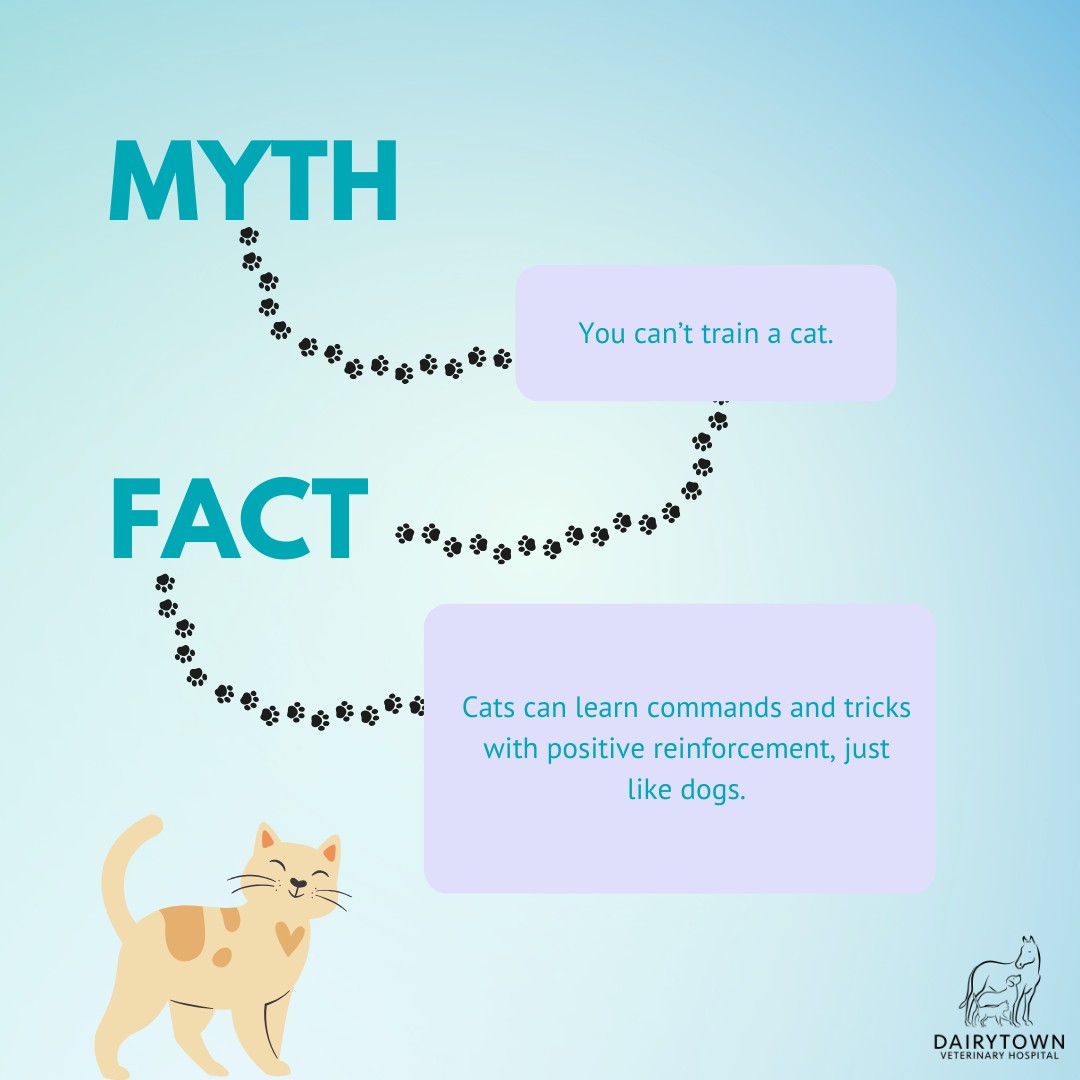
Yes — you can absolutely train a cat. Not "sort of," not "only if you get a weird cat." Cats learn the same way every other animal learns: behaviours that pay off get repeated, and behaviours that don't fade away. The myth that cats are untrainable survives mostly because people try to train them like dogs, using pressure, repetition and social approval — three things cats care very little about.
Change the currency to food, timing and choice, and most cats will offer you a sit within a single ten-minute session. Shelters and veterinary teams routinely train cats to walk into carriers, step onto scales, and hold still for nail trims. If a stressed shelter cat can learn that, your cat on your sofa certainly can.
This guide covers what actually works: the learning science in plain English, the gear worth owning, five foundation behaviours in step-by-step detail, how to fix real problems like scratching and 4 a.m. yowling, and the mistakes that quietly stall almost everyone's progress.
The Short Answer, and Why It's True
Cats are trained through operant conditioning — the same principle used with dolphins, parrots and service dogs. The animal does something, a consequence follows, and the likelihood of that behaviour changes.
The critical difference between cats and dogs is motivation, not intelligence:
| Factor | Typical dog | Typical cat |
|---|---|---|
| Social reinforcement (praise) | Often powerful on its own | Weak; rarely enough by itself |
| Food motivation | High, sustained | High but satiates fast |
| Session tolerance | 15–30 minutes | 2–5 minutes |
| Response to pressure/scolding | May comply | Shuts down, avoids you |
| Best reinforcer | Praise, food, play | Food, then play, then affection |
A dog will work for the sheer joy of your attention. A cat asks, essentially, what's in it for me right now? Answer that question clearly and consistently and you have a trainable animal. Veterinary behaviour resources from institutions such as the Cornell University College of Veterinary Medicine and practitioner guidance from the American Association of Feline Practitioners both emphasise the same core point: reward-based, low-stress handling works with cats, and punishment reliably backfires.
Punishment is the single biggest training killer. Spray bottles, shouting and scruffing do not teach a cat what to do instead — they teach the cat that you are unpredictable. Behaviour often continues the moment you leave the room, but now with added anxiety.
What Cats Can Realistically Learn
Set expectations before you start. Here's a rough difficulty ladder based on what most pet cats manage:
Easy (days to two weeks)
- Target/nose-touch to a stick or finger
- Sit
- Coming to a specific sound (shaken treat jar, clicker, whistle)
- Going to a mat or stool on cue ("station")
Moderate (two to eight weeks)
- Voluntary carrier entry
- High five / paw
- Spin, jump onto a designated surface
- Tolerating a harness indoors
- Standing still for brushing or ear checks
Advanced (months, and not every cat)
- Reliable recall outdoors
- Leash walking in unfamiliar environments
- Fetch on cue (retrieving is partly instinctive — Siamese and other Oriental types offer it more often)
- Toilet training
Not realistic
- Reliable "stay" while something exciting happens
- Obedience under high stress (a vet clinic on a bad day)
- Suppressing hardwired behaviours like scratching or hunting — you redirect these, you don't erase them
A cat's baseline personality matters too. Bold, food-driven, people-oriented cats learn fastest; some breed temperament differences are real, though individual variation within a breed is larger than the average difference between breeds.
Setting Up for Success Before Session One
Train a Hungry Cat
This is the most underused lever in feline training. A cat that has just eaten a full bowl has no reason to work. Schedule sessions just before a meal, and — this is the part people skip — deduct the training treats from that meal so you're not adding calories.
A practical approach: feed two measured meals a day rather than free-feeding a bowl of kibble. Appetite becomes predictable, and predictable appetite is trainable appetite. Households juggling odd hours often lean on timed portion dispensing to keep that rhythm steady, then train in the fifteen minutes before the machine runs.
Find the Reward Your Cat Will Actually Work For
Run a taste test. Put five small options on a plate — freeze-dried chicken, a lick of tuna, squeeze-tube purée, commercial training treats, a shred of plain cooked turkey — and see what disappears first. Rank them. Save the top-ranked item exclusively for hard behaviours like carrier entry or nail trims.
Rules that make treats work:
- Tiny. Pea-sized or smaller. A cat's daily calorie budget is small; treats should stay under about 10% of it.
- Fast to eat. Anything that requires chewing kills your training rhythm.
- Deliverable. Purées on a spoon or a lickable tube are ideal for cats that get grabby with fingers.
Dedicated reward-sized training snacks are usually worth buying over breaking up regular treats, simply because the pieces are already the right size. For wet-food-obsessed cats, a spoonful of a genuinely palatable pâté can outperform any treat on the market.
Build a Distraction-Free Zone
One room. Door closed. No other pets. TV off. Phone face-down. Cats are hypersensitive to environmental change, and a training session competing with a bird outside the window will lose every time.
The Two-Minute Rule
End the session before your cat wants to. Two to five minutes, three to five repetitions of a behaviour, then stop while the cat is still keen. Sessions that run long produce a cat that walks away — and walking away becomes a learned response to the sight of the clicker.
Reading Your Cat: The Skill That Makes Everything Else Work
You cannot train an animal you can't read. Before each session, take five seconds to check state.
| Signal | What it usually means | Training decision |
|---|---|---|
| Forward ears, upright tail with slight hook | Relaxed, engaged | Green light |
| Slow blink, loose body | Comfortable, low arousal | Green light |
| Tail tip flicking, ears rotating back | Building frustration | Simplify the task or stop |
| Skin rippling along back, dilated pupils | Overstimulated | Stop immediately |
| Flattened ears, crouch, tucked tail | Fear | Stop; reduce environmental pressure |
| Sudden grooming mid-session | Displacement behaviour — conflict or stress | Lower difficulty, shorter reps |
A common mistake is reading a tail flick as "excited" and pushing on. In practice, that flick is your two-second warning. Stop there and the cat comes back willingly tomorrow; push through it and you're rebuilding trust for a week. If your cat's signals still puzzle you, spending time decoding odd feline habits pays off more than any trick you'll teach.
Clicker Training, Step by Step

A basic box clicker — the sharp, identical sound is what makes it more precise than your voice.
Credit: www.amazon.com
Why a Marker Matters
Timing is everything in animal learning. Your cat performs the behaviour, and you have roughly half a second to tell it "that — that exact thing — earned the treat." You cannot get a treat into a cat's mouth that fast. A marker signal bridges the gap.
The click works because it's sharp, consistent and means nothing else in your cat's life. Your voice, by comparison, changes with your mood and is already attached to a hundred other situations.
If clicks startle your cat — some sound-sensitive cats flinch — muffle the clicker in a pocket, use a quieter button-style unit, or substitute a soft tongue click or a single spoken word like "yes." Choosing a marker device that suits your cat is worth five minutes of thought; the volume difference between models is significant.
Step 1: Charge the Clicker (1–2 sessions)
Click, then immediately deliver a treat. Do this 15–20 times, varying your position so the cat doesn't just learn "food comes from that chair." Charging is complete when the cat's head snaps toward you at the sound.
Step 2: Pick Your Method
There are three ways to get a behaviour to happen in the first place:
- Capturing — wait for the cat to do it naturally, then click. Best for sit, and for behaviours you don't want to physically prompt.
- Luring — move a treat to guide the body into position. Fast, but you must fade the lure within 3–5 repetitions or the cat only performs when food is visible.
- Shaping — click successive approximations. Essential for anything complex, like carrier entry: click for looking at the carrier, then a step toward it, then a paw inside, then full entry.
Step 3: Add the Cue Last
This is where most beginners go wrong. Do not say "sit" while the cat is still learning to sit. Get the behaviour happening reliably first — roughly 8 out of 10 repetitions — then start saying the word just before the cat offers it. Cue attached to a shaky behaviour produces a cue that means nothing.
Step 4: Fade the Food
Once a behaviour is solid, shift to variable reinforcement: reward roughly every second or third repetition, unpredictably. This actually strengthens the behaviour. Keep occasional jackpots — three treats at once for an unusually good response.
The Five Foundation Behaviours
Teach these in order. Each one builds handling skills you'll reuse for everything else.
1. Target (Nose Touch)
Why first: targeting is a remote control for your cat. It moves them onto scales, into carriers, off counters and through doorways without any physical handling.
- Hold a chopstick, pen, or your extended index finger about 5 cm from the cat's nose.
- Cats investigate novel objects — the moment the nose touches, click and treat.
- Repeat 5 times, then move the target 15 cm to one side so the cat takes a step.
- Over a week, extend to a metre, then around corners, then onto furniture.
Most cats have this in two or three sessions.
2. Sit
- Hold a treat just above and slightly behind the nose line.
- As the head tips back, the rear end drops. Click the instant the haunches touch down.
- After three or four successful lures, try the same hand motion with an empty hand and treat from the other hand.
- Once reliable, add the word "sit" a half-second before the hand signal.
If your cat backs up instead of sitting, you're holding the treat too high or too far back. Lower it.
3. Come When Called
Recall is the behaviour that can genuinely save a cat's life — a bolted cat, an open door, a smoke alarm.
- Pick a unique sound: a specific whistle, a shaken treat tin, or a two-syllable call.
- Start in the same room, one metre away. Make the sound, and the moment the cat moves toward you, click and pay generously.
- Increase distance, then move between rooms, then call from out of sight.
- Never call your cat to do something unpleasant. If a pill or a nail trim is coming, go and get the cat. Poisoning your recall cue takes one bad experience and months to repair.
Practise recall two or three times daily at unpredictable moments, always with a payment. A cue you only use in emergencies is a cue that fails in emergencies.
4. Carrier Training
Ask any vet nurse which single skill they wish every cat had — it's this one.
- Leave the carrier out permanently, door removed, with soft bedding inside. A carrier that only appears before vet trips is a predictor of doom.
- Scatter treats near it for a few days. Then just inside the entrance. Then at the back.
- Feed a meal beside it, then in the doorway, then fully inside.
- Add the door: close it for one second, click, open, treat. Build to 30 seconds, then a minute.
- Lift the carrier a few centimetres, set it down, treat. Then a short carry. Then a two-minute drive with no destination.
Budget three to six weeks. The payoff is a cat that walks into the carrier on cue for the next fifteen years.
5. Station (Go to Mat)
Place a mat or low stool on the floor. Click any interaction with it — a look, a sniff, a paw. Shape up to all four feet, then to sitting on it, then to holding position for a few seconds. Add the cue "place."
Stationing is the most practical behaviour in a multi-cat home: it separates cats at feeding time, keeps a cat off the counter while you cook, and gives an anxious cat a predictable job during visits.
Litter Box Training — and What "Failure" Really Means
Kittens are largely self-taught here. Their instinct is to eliminate in loose, diggable substrate, so success is usually a matter of removing obstacles rather than teaching anything.
Set-up rules that solve 80% of problems:
- Number: one box per cat, plus one spare. Three cats means four boxes.
- Size: the box should be about 1.5 times the cat's body length, nose to tail base. Most commercial boxes are too small — storage totes are a legitimate upgrade.
- Location: quiet, low-traffic, never next to a noisy appliance, never in a dead-end where a cat can be ambushed. Spread boxes across floors and rooms, not lined up in one bathroom.
- Litter: most cats prefer fine-grained, unscented clumping litter at a depth of 5–7 cm.
- Cleaning: scoop at least daily; full change and wash on a regular schedule.
Choosing an appropriately sized box matters more than any brand of litter. In homes with several cats, a layout that reduces territorial standoffs prevents most of the "he's going on the rug" complaints, and dedicated odour-control designs make daily maintenance less of a chore — which in turn means you actually do it.
Important: house soiling is not a training failure until a vet has ruled out medical causes. Urinary tract disease, bladder inflammation, kidney disease, arthritis (a cat with sore hips may refuse a high-sided box) and constipation all present as litter box avoidance. Any sudden change in elimination habits is a veterinary appointment, not a training project. Older cats with diagnosed renal issues often need both dietary support — a therapeutic renal formula is typically part of the plan — and a lower-sided, easier-access box.
If you're considering an automated setup, introduce it gradually: run it unplugged for a week so the cat accepts the shape, then switch it on and let the cat hear the cycle from a distance. Self-cleaning models work well for confident cats and poorly for timid ones.
Toilet Training: Honest Trade-Offs
Yes, it can be done. Whether it should be is another question.
The process moves the litter box progressively higher until it's level with the toilet seat, then swaps in a graduated insert with a hole that widens over several weeks. Expect six to twelve weeks minimum, and be prepared to go back a stage whenever accidents appear.
The drawbacks are real and rarely mentioned:
- You lose your best early-warning system. Litter clumps tell you about urine volume, blood, and frequency — the first signs of urinary and kidney disease.
- Toilets get closed by houseguests, and cats can't lift lids.
- Some cats never fully adapt to balancing on porcelain, and regression under stress is common.
- Arthritic and senior cats often can't manage it at all.
If you go ahead, use a purpose-built graduated seat insert rather than improvising with baking trays, and read through a full staged transition programme before you start so you know what each phase involves.
Advanced Skills: Harness, Fetch, and Tricks
Harness training gives indoor cats safe outdoor access — but the harness itself takes weeks of desensitisation before any walking happens.
Credit: www.facebook.com
Harness and Leash
The mistake almost everyone makes is putting the harness on and heading outside on day one. The cat flattens, "pancakes," and the whole project dies.
A workable timeline:
- Days 1–3: harness on the floor near the food bowl. Treats for sniffing it.
- Days 4–7: drape it over the cat's back for two seconds, treat, remove.
- Week 2: fasten it loosely for 30 seconds indoors, building to five minutes. Feed a meal while it's on.
- Week 3: attach the leash and let it drag under supervision indoors. Practise targeting so the cat learns to follow you.
- Week 4+: carry the cat to a quiet outdoor spot — a garden, not a pavement — and simply sit. Let the cat choose to move. Sessions of ten minutes, always ending before the cat is overwhelmed.
Fit test: two fingers should slide under the straps, no more. Cats are escape artists, and a harness that fits a relaxed cat may not hold a panicking one.
Outdoor access also means parasite exposure, so get prevention sorted first. Whether you use monthly spot-on protection, a long-wear protective collar, or another vet-recommended product, have it in place before the first outing. Some owners prefer collar-format prevention for cats that resent topical applications — discuss the choice with your vet, since not all products are safe for every cat.
High Five
Hold a treat in a closed fist just above paw height. Most cats will paw at the fist. Click the paw lift, treat from the other hand. Gradually open the hand into a flat palm, raise it slightly, and add the cue. Two weeks of one-minute daily sessions is typical.
Fetch
You can't install a retrieve, but you can strengthen an existing one. If your cat ever carries a toy in its mouth, you have raw material. Click and treat any pick-up. Then any pick-up plus a step toward you. Then delivery to your hand. Crumpled paper balls, hair ties and springs work better than plush toys for most cats.
Cooperative Care
The most valuable "advanced" skills aren't tricks — they're husbandry behaviours:
- Chin rest for eye and ear checks
- Paw hold for nail trims (start with one second, one nail per session)
- Voluntary brushing with a consent signal — the cat approaches, you brush; the cat steps away, you stop
Long-haired cats especially benefit from early brushing conditioning; the alternative is mats that require sedation to remove. If you outsource coat care, the handling your cat has learned at home makes a huge difference at the salon — grooming professionals can tell within thirty seconds which cats have been conditioned. Owners exploring professional coat and nail services will get better results (and calmer cats) with a few weeks of home desensitisation first. Flat-faced breeds also need routine face care, and gentle tear-stain cleaning becomes far easier once the cat has learned a chin-rest.
Training Your Way Out of Problem Behaviours
Punishment suppresses; training replaces. For every unwanted behaviour, identify the need it meets and provide a better route to the same outcome.
Furniture Scratching
Scratching is not misbehaviour — it maintains claws, stretches the spine, and leaves scent marks. The cat will scratch. Your job is to make your post more attractive than your sofa.
- Placement: beside the furniture being scratched, not hidden in a spare room. Cats scratch on waking and in socially significant spots.
- Height: tall enough for a full stretch — at least 75 cm for an average adult.
- Stability: a wobbly post is a rejected post. This is the number one reason cheap posts fail.
- Texture: offer both vertical sisal and horizontal corrugated cardboard. Cats have individual preferences.
- Reinforce it: click and treat every time you see the cat use the post for the first two weeks.
Move the post 5–10 cm per week toward its permanent location once the habit is established.
Counter Surfing
Cats seek height and food. Address both. Provide a legal high perch near the counter — a cat tree or shelf — and station-train the cat to it while you cook. Simultaneously, remove the reinforcement: no food, no crumbs, no dish water left on the counter. A behaviour that never pays off extinguishes; a behaviour that pays off once a week becomes permanent.
Play Biting and Ankle Ambushes
Almost always under-stimulation, especially in single kittens under two years old.
- Never use hands or feet as toys — ever, at any age.
- Run two structured wand-toy sessions daily, 10–15 minutes each, ending with a "kill" the cat can bite and a small meal. This follows the natural hunt-catch-eat-groom-sleep cycle.
- When teeth land on skin, freeze and disengage. No noise, no jerking away — movement triggers more biting.
- Redirect to a kicker toy the cat can grab with all four paws.
Sudden-onset aggression in an adult cat that was previously gentle warrants a vet visit; pain is a frequent cause.
4 a.m. Yowling
The hardest problem, because intermittent reinforcement is the strongest kind — feed the cat once at 4 a.m. and you've trained an alarm clock.
- Move the largest meal of the day to just before your bedtime.
- Add a long play session before that meal.
- Use a timed feeder set for pre-dawn, so the food arrives from the machine rather than from you.
- Ignore the vocalising completely, and expect an extinction burst — it gets worse for three to seven nights before it improves. Caving during the burst teaches the cat to escalate.
Persistent night vocalising in a cat over ten can indicate hyperthyroidism, hypertension or cognitive dysfunction. Get bloodwork before assuming it's behavioural.
Odour Complaints Masquerading as Behaviour Problems
Sometimes the "problem" is that the box smells bad enough that the cat won't use it. Before rewriting your training plan, upgrade your maintenance: scoop twice daily, replace boxes every year or two, and consider a box-safe deodorising additive rather than perfumed litter, which many cats reject outright.
Kittens, Adults and Seniors: Adjusting Your Approach
| Kittens (8 wks–6 mths) | Adults (1–10 yrs) | Seniors (11+) | |
|---|---|---|---|
| Attention span | 60–90 seconds | 3–5 minutes | 2–3 minutes |
| Sessions per day | 4–6 very short | 2–3 | 1–2 |
| Biggest advantage | Socialisation window is open | Emotional stability, better focus | Deeply bonded, food-motivated |
| Biggest obstacle | Distractibility, teething | Established habits | Pain, hearing/vision loss, cognitive change |
| Priority skills | Handling, carrier, car rides, nail trims, meeting new people | Recall, cooperative care, harness | Low-effort husbandry, gentle enrichment |
The socialisation window in kittens — roughly two to seven weeks, with the effects lasting well beyond — is the highest-value period of a cat's life. Every safe novel experience during that time buys resilience later. If you have a kitten, prioritise exposure over tricks: car rides, vacuum sounds, different floor surfaces, being touched on paws and ears, meeting calm strangers.
Adult cats are not "too old to learn." The genuine difference is that you're often competing with an established habit rather than starting on blank paper, which means the new behaviour needs to pay better than the old one.
For seniors, adapt rather than abandon. Use higher-value, softer treats. Train on non-slip surfaces. Use hand signals if hearing is fading, and stand where the cat can see you if vision is. A senior cat that suddenly "forgets" a trained behaviour is usually telling you something medical.
The Mistakes That Quietly Stall Progress
- Sessions that run too long. The most common error by a distance. Stop at two minutes.
- Marking late. A click a second after the behaviour reinforces whatever the cat did next — often standing up.
- Adding the cue too early. The word gets attached to a half-formed behaviour and permanently means "maybe."
- Free-feeding. A cat with a full bowl has no reason to work with you.
- Raising difficulty on two axes at once. Don't increase distance and add distractions in the same session. Change one thing at a time.
- Rewarding inconsistently between household members. Everyone must use the same cue words and the same criteria, or the cat learns that rules depend on who's in the room.
- Training a stressed cat. New house, new baby, new pet, recent vet visit — pause and rebuild the environment first.
- Skipping generalisation. A cat that sits in the kitchen has learned "sit in the kitchen." Practise in every room, from standing and seated positions, at different times of day.
A Realistic Four-Week Starter Plan

Short, frequent sessions in a familiar room outperform long weekend training marathons.
Credit: www.instagram.com
| Week | Focus | Daily time | Target outcome |
|---|---|---|---|
| 1 | Charge the clicker; teach nose-touch target | 2 × 2 min | Cat touches target 8/10 tries |
| 2 | Target at distance; introduce sit | 2 × 3 min | Sit on hand signal, 6/10 tries |
| 3 | Add verbal cues; begin recall in one room | 3 × 2 min | Comes from 3 m on cue |
| 4 | Generalise to other rooms; start carrier shaping | 2 × 3 min | Cat enters carrier voluntarily for food |
Keep a simple log — date, behaviour, success rate out of ten. It takes fifteen seconds and it's the only reliable way to see progress that's too gradual to notice day to day. When a success rate drops, you've raised criteria too fast; go back one step for two sessions.
Ready to start this week? Pick one behaviour — target is the easiest — buy nothing but a handful of high-value treats, and run two two-minute sessions today. Most cats give you their first clean repetition before the second session ends.
When to Call in a Professional
Training solves a great deal, but not everything. Seek help if you see:
- Aggression that draws blood, or aggression directed at a specific family member
- Sudden behaviour change in an adult cat — always a vet visit first
- Elimination outside the box that persists after medical clearance and box-setup fixes
- Compulsive behaviours: over-grooming to bald patches, wool-sucking, relentless pacing
- Severe fear that stops the cat from eating, using the box, or leaving a hiding spot
Look for a veterinary behaviourist, a certified cat behaviour consultant, or a Fear Free–certified veterinary practice. Ask what methods they use; if the answer includes spray bottles, alpha rolls, or "dominance," find someone else.
Frequently Asked Questions
Can you really train a cat, or is it a myth?
You really can. Cats learn through the same conditioning principles as any other trainable species. The reason the myth persists is that cats don't work for social approval the way dogs do, so trainers who rely on praise and repetition alone get nowhere. Switch to food-based positive reinforcement with precise timing and short sessions, and most cats learn a first behaviour within one or two sessions.
How long does it take to train a cat?
A simple behaviour like a nose-touch target usually takes two to three sessions. Sit takes about a week of daily two-minute sessions. Reliable recall takes three to four weeks. Carrier training takes three to six weeks. Toilet training takes two to three months, if it works at all. Fluency — the behaviour happening on cue in any room, with distractions — always takes longer than first learning.
How do you teach a cat "no"?
You mostly don't. "No" tells a cat that something bad is happening but not what to do instead, so it produces anxiety rather than learning. Instead, use an interrupter — a neutral sound like a soft "eh" or a hand clap — to break the behaviour, then immediately cue and reward an alternative. If your cat is on the counter, interrupt, then cue the station behaviour and pay for it there. Remove the payoff from the unwanted behaviour at the same time.
Should I use a spray bottle to discipline my cat?
No. Spray bottles suppress behaviour only while you're visible, damage your relationship, and can create generalised fear of you and of the room. Cats do not connect a punishment with a behaviour the way people assume; they connect it with the person and the context. Reward-based methods are both more humane and more effective.
What treats work best for cat training?
Small, soft, aromatic, and eaten in under two seconds. Freeze-dried chicken or fish, squeeze-tube purées, and commercial soft training treats all work well. Break anything larger than a pea in half. Keep total treats under about 10% of daily calories and reduce meal portions accordingly. Rank your cat's favourites and reserve the top one for the hardest tasks.
Can you train a cat to be an indoor-only cat?
Yes, and the key is enrichment rather than restriction. Provide vertical territory — cat trees, shelves, window perches — plus two structured play sessions daily, food puzzles instead of bowls for at least part of the diet, and rotating toys. Train a solid "back up from the door" behaviour by tossing a treat away from the door before you open it. Cats that get a genuinely stimulating indoor environment show much less door-dashing.
Do older cats forget their training?
Not usually. If a trained behaviour breaks down in a senior cat, suspect a physical cause first: arthritis making a jump painful, hearing loss making a verbal cue inaudible, or early cognitive dysfunction. Switch to hand signals, lower the physical demands, and get a veterinary check.
Is it harder to train more than one cat?
Slightly, but it's manageable. Train each cat separately in a closed room so the other can't steal rewards or distract. Once each cat knows a behaviour individually, you can introduce group work — station training on separate mats is the standard tool for multi-cat households, especially at feeding time.
The Bottom Line
Cats are trainable. What they're not is dog-shaped. They won't work for your approval, they won't tolerate long sessions, and they will quietly opt out of anything that feels coercive. But give them clear information, precise timing, a reward they genuinely want, and the freedom to walk away — and they learn fast.
Start with three things this week:
- Switch to measured meals so appetite becomes a usable training tool.
- Teach the nose-touch target in two two-minute sessions.
- Take the carrier door off and leave it out with treats inside.
Those three moves take under ten minutes a day and change the whole relationship. Six weeks from now you'll have a cat that comes when called, walks into its own carrier, and looks at you expectantly when you pick up the clicker — which is, in practice, what "trainable" actually looks like.
The tricks are the fun part. The real prize is a cat that trusts you enough to cooperate, and a home where you're both working from the same script.