
You’ve probably heard that cat ownership is relatively low-maintenance, but when it comes to dental care, that assumption can lead to serious trouble. The short answer to the question “do you have to brush cats teeth” is a resounding yes — and doing it regularly is one of the most impactful things you can do for your feline friend’s long-term health. Yet many cat parents skip it, either because they think it’s unnecessary or because the idea of brushing a cat’s teeth sounds impossible.
In reality, with the right tools, a gradual approach, and a little patience, brushing your cat’s teeth becomes a manageable — even bonding — routine. This guide walks you through every aspect of feline dental care, from why it matters and how to spot problems early, to step-by-step brushing instructions and the best alternatives when brushing just isn’t feasible. You can also read our guide on can you train cats like dogs.
Why Your Cat’s Dental Health Matters More Than You Think
Oral health in cats is often overlooked, but it’s directly tied to whole-body wellness. Dental disease isn’t just about bad breath; it’s a progressive condition that causes pain, tooth loss, and can send bacteria into the bloodstream, damaging vital organs.
The Hidden Dangers of Plaque and Tartar
Every time your cat eats, a sticky film called plaque coats the teeth. If not removed mechanically — by brushing — that plaque hardens into tartar within days. Tartar irritates the gums and creates the perfect environment for periodontal disease, which affects more than half of all cats by age three. Once tartar sets in, only a professional cleaning can remove it.
In practice, early stages often go unnoticed because cats instinctively hide pain. You might not see obvious symptoms until gingivitis or even tooth-root abscesses have developed.
How Oral Bacteria Affects Your Cat’s Body
Bacteria from an unhealthy mouth don’t stay in the mouth. They can enter the bloodstream and lodge in the heart, kidneys, or liver, potentially contributing to conditions like endocarditis or chronic kidney stress. This is not a theoretical risk — veterinary professionals see it regularly. That’s why providing specific nutritional support is often part of a recovery plan when a cat has been ill, because the body needs every advantage when fighting off systemic inflammation.
Signs Your Cat May Have Dental Problems
Catching dental issues early makes treatment simpler and less expensive. Learn to recognize both the visible clues and the subtle behavioral shifts.
Physical Symptoms to Check for
During a calm moment, gently lift your cat’s lip and inspect the teeth and gums. Look for:
- Red, swollen, or bleeding gums
- Yellowish-brown tartar buildup along the gum line
- Chipped or loose teeth
- Excessive drool, sometimes tinged with blood
- Persistent foul breath that doesn’t improve after eating
A common mistake is assuming bad breath is normal for cats. While mild “cat food” breath is typical, a strong, rotten smell nearly always points to dental disease.
Behavioral Red Flags
Because oral pain isn’t always visible, you should also watch for:
- Dropping food or turning away from dry kibble
- Pawing at the mouth or face
- Chewing only on one side
- Sudden irritability or withdrawal from petting around the head
- Decreased grooming, leading to a matted or unkempt coat

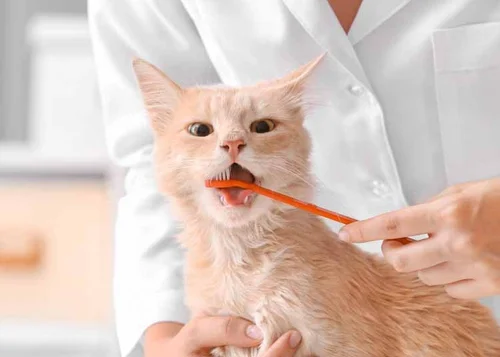
Photo credit: Purina — A veterinarian demonstrates proper brushing technique with a feline patient.
Yes, You Should Brush Your Cat’s Teeth — Here’s Why
So, do you have to brush cats teeth? Absolutely. While wild cats naturally clean their teeth somewhat by tearing through cartilage and bone, our domesticated cats eat processed foods that do little to scrub the teeth. Regular brushing replicates that mechanical cleaning effect.
How Brushing Prevents Common Diseases
The physical action of brushing disrupts the plaque film before it mineralizes into tartar. According to the American Veterinary Medical Association, daily brushing with a pet-safe toothpaste is the most effective way to maintain your cat’s oral health. This simple habit dramatically lowers the risk of:
- Gingivitis (reversible gum inflammation)
- Periodontitis (irreversible damage to tooth-supporting structures)
- Feline odontoclastic resorptive lesions (FORLs), painful cavity-like lesions at the gum line
The Connection Between Dental Health and Longevity
A younger cat with a clean mouth is more likely to eat comfortably, maintain healthy weight, and avoid costly medical interventions later. In practice, many cats who begin regular brushing early in life still have healthy teeth well into their senior years. It truly is an investment in quality of life.
Essential Tools for Brushing Your Cat’s Teeth
Using the right gear makes the process safer and more effective. Human oral products are not designed for cats and can be harmful.
Picking the Right Toothbrush
Cat-specific toothbrushes are small, with ultra-soft bristles that won’t injure delicate gum tissue. Common options include:
- Finger brushes: Silicone brushes that slip over your fingertip, offering more control and a softer feel — ideal for introducing the sensation.
- Long-handled cat brushes: Look like a miniature human toothbrush with a tiny head, better for reaching the back molars once your cat is comfortable.
- Dental wipes: For cats who absolutely refuse a brush, veterinarian-approved dental wipes can remove some plaque when rubbed along the teeth. They’re a helpful bridge, but less thorough than actual brushing.
Safe, Enzymatic Toothpaste for Cats
Never use human toothpaste — the fluoride, foaming agents, and sweeteners like xylitol are toxic to cats. Instead, choose an enzymatic cat toothpaste formulated to break down plaque chemically while you brush. These pastes come in appealing flavors like chicken, beef, or malt, which turns brushing into a treat-like experience for many cats.
Step-by-Step: How to Brush Your Cat’s Teeth at Home
Patience is everything. Rushing this process is the number one reason cats resist brushing. Plan on taking two to four weeks to get your cat fully on board.
Preparing Your Cat for the Routine
Start without the brush. For the first few days:
- Choose a quiet, calm environment — a cozy spot on the couch works well.
- Put a tiny dab of cat toothpaste on your fingertip and let your cat lick it off. Do this for a few days so the flavor becomes associated with a positive moment.
- Gently touch your cat’s lips and lift them without inserting anything, then immediately offer a rewarding tasty incentive. This step teaches that mouth handling leads to good things.
The Brushing Process
Once your cat accepts lip touching without fuss:
- Apply a pea-sized amount of toothpaste to a soft finger brush or cat toothbrush.
- Lift the lip on one side and gently brush the outer surfaces of the teeth where they meet the gums using small, circular motions. Focus on the cheek-facing side — that’s where plaque accumulates fastest.
- Start with just a few seconds on a couple of teeth, then stop and reward with praise and a treat. Over many sessions, gradually increase the number of teeth you cover.
- Don’t force the mouth open. Brushing the inside surfaces is rarely necessary, as the tongue helps keep those areas cleaner.
*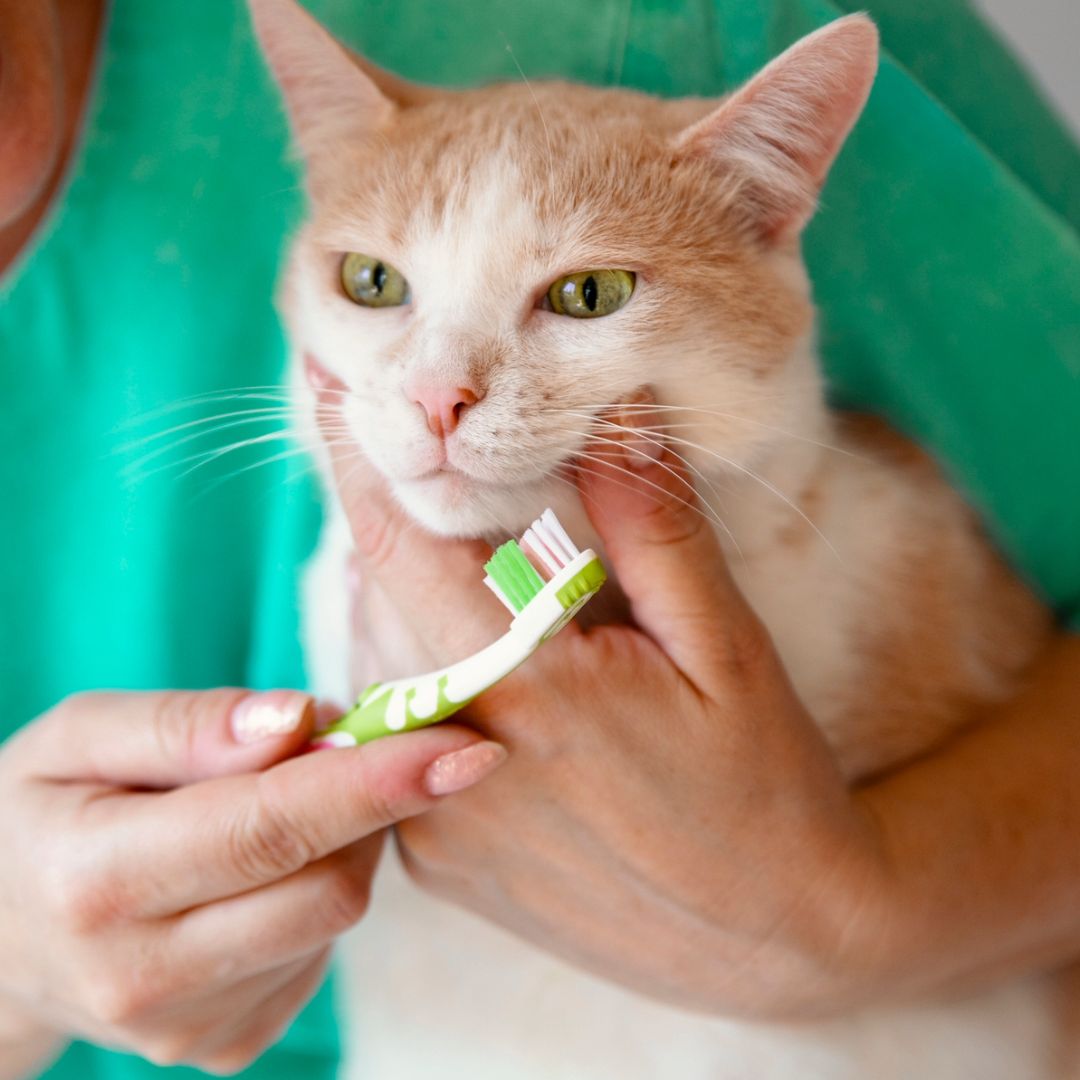
Photo credit: PetsRadar — With patience, most cats learn to accept gentle home brushing sessions.
Rewards and Positive Reinforcement
Every session, no matter how short, should end on a positive note. Use food-free rewards like chin scratches or play if you’re worried about dental treats interfering with the cleaning you just did. Effective training strategies based on building trust through gradual steps work for toothbrushing just as they do for other behaviors. The aim is to make brushing a predictable, stress-free part of life.
What If Your Cat Won’t Let You Brush? Alternative Dental Care Options
Not every cat will ever fully accept a toothbrush, and that’s okay. There are alternative methods that help, though none replace brushing’s mechanical action entirely.
Dental Treats and Chews
Dental treats are designed to be abrasive textures that scrape plaque as the cat chews. Look for products that carry the Veterinary Oral Health Council (VOHC) seal of acceptance — that indicates the treat has demonstrated plaque or tartar reduction in standardized trials. Keep in mind, many treats are high in calories, so adjust your cat’s daily food intake accordingly.
Water Additives and Dental Diets
Liquid water additives containing enzymes or mild antimicrobials can reduce bacterial load in the mouth. Veterinary dental diets feature large, fibrous kibble pieces that encourage tearing and chewing, providing a light abrasive effect. While useful, non-brushing cleaning techniques like these are best viewed as supplements, not substitutes, for mechanical plaque removal.
Professional Veterinary Cleanings
Even with diligent home care, most cats benefit from a professional dental cleaning every one to two years. These cleanings are performed under general anesthesia, allowing the vet to scale tartar below the gum line, take X-rays, and address any problems like resorptive lesions that can’t be detected awake. Your veterinarian will help you decide on the right cadence based on your cat’s individual oral health status.
Building a Long-Term Dental Care Routine
Consistency is what keeps dental disease at bay. This doesn’t have to be complicated — a few habits woven into your weekly routine make all the difference.
How Often to Brush
Daily brushing is the gold standard, but just three to four times per week significantly reduces plaque. If you can commit to a quick 30-second session most days, you’re doing great. Set a recurring reminder on your phone, and always brush at roughly the same time of day so it becomes a ritual.
Keeping an Eye on Oral Health at Home
Once a week, take a flashlight and do a quick mouth check. Look for:
- Any redness or bleeding along the gum line
- New brownish buildup
- Teeth that appear to be shifting or look longer than before (a sign of gum recession)

Photo credit: We Are All About Cats — Regular home inspections help you catch early signs of gingivitis or tartar buildup.
If you spot anything concerning, schedule a vet appointment rather than waiting. Dental pain advances quickly once it crosses a tipping point.
When to Schedule a Vet Dental Exam
An annual wellness exam normally includes a visual oral check, but if you notice bad breath, drooling, or a change in eating habits between visits, don’t wait. Older cats or breeds predisposed to dental issues (Siamese, Abyssinian, Persians) may need examinations every six months.
Common Myths About Cat Teeth Brushing
Let’s clear up a few persistent misunderstandings that lead people to overlook their cat’s dental needs.
Myth: Dry food cleans a cat’s teeth.
Most commercial dry kibble shatters on the tip of the tooth and provides negligible scrubbing action on the gum line where disease starts. While some specially formulated dental diets help, standard kibble is not a cleaning tool.
Myth: Cats in the wild don’t brush, so domestic cats don’t need to.
Wild cats consume whole prey, including abrasive fur, bones, and connective tissues that scrape teeth. Pet cats eating soft or processed food lack that natural mechanism, so they rely completely on their human for oral hygiene.
Myth: A cat will let you know when its mouth hurts.
Cats are masters at hiding pain. By the time they stop eating or paw at their face, the disease is often advanced. This is exactly why you shouldn’t skip this routine before you even get to that point.
Myth: Toothpaste and water additives alone are enough.
Enzyme pastes and rinses help reduce bacteria but can’t physically disrupt established plaque the way a brush does. Think of them as complementary, not stand-alone solutions.
Frequently Asked Questions
Do I really have to brush my cat’s teeth if I feed a raw or dental diet?
Even on special diets, hard-to-reach areas, especially along the gum line, still accumulate plaque. While these diets may reduce buildup, brushing remains the most reliable way to target every tooth surface. No commercially available food completely eliminates the need for mechanical cleaning.
What if my cat absolutely hates having its mouth touched?
Focus on the desensitization steps: mouth handling with rewards, followed by using a finger brush or even just a piece of gauze wrapped around your finger. Some cats will tolerate a brief wipe of the outer teeth. Combine that with VOHC-approved dental treats and yearly cleanings to keep things under control.
Is sedation-free dental cleaning a good option?
Non-anesthetic dental scaling (often offered at some clinics or groomers) only removes visible tartar above the gum line. It misses subgingival plaque — the kind that causes periodontal disease — and can be stressful for the cat. Comprehensive veterinary cleanings under anesthesia, with full-mouth X-rays, are the standard of care.
Can kittens get their teeth brushed?
Yes, and starting young makes the routine much easier. Begin handling your kitten’s mouth gently from the day they come home, using a soft finger brush without toothpaste initially. Once they’re comfortable, introduce an enzymatic paste and make it a positive, treat-filled experience.
Conclusion: A Small Effort for a Lifetime of Health
Brushing your cat’s teeth is not an optional extra — it’s a core part of responsible pet ownership. When you commit to a routine, even a few times a week, you’re actively preventing pain, tooth loss, and costly systemic health problems down the line. Start with the tools and techniques that fit your cat’s temperament, and go slow. Progress might feel painstaking, but every small step adds up.
Remember, your vet is your partner in this. Combine home care with regular professional check-ups, and you’ll give your cat the best shot at a comfortable, healthy smile for life. Ready to begin? Pick up a cat-specific toothbrush and an enzymatic toothpaste today, and take that first, gentle step — your cat’s purrs will thank you in the long run.