
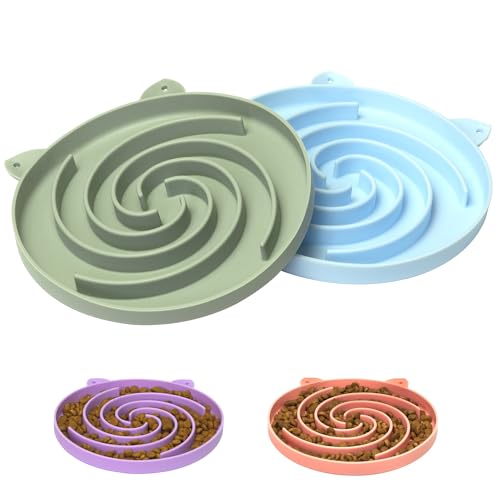
If you’ve ever poured your cat’s favorite wet food, only to watch them inhale it in 10 seconds before hacking up a pile of half-digested food 20 minutes later, you’re not alone. Wet food is a top choice for feline nutrition, thanks to its high moisture content that supports kidney health and urinary tract function, but rapid consumption undermines those benefits. Slow feeder cat wet food bowls are designed specifically to address this problem: their unique ridges, mazes, and raised structures force cats to eat at a controlled pace, reducing regurgitation, bloating, and digestive discomfort while supporting long-term digestive health. Unlike generic slow feeders built for dry kibble, wet-food-specific models have shallow, smooth obstacles that prevent thick pate or chunky wet food from getting trapped in crevices, making them a safer, more practical choice for cats on a moisture-rich diet.
Why Wet Food Eating Speed Matters for Feline Digestion
Veterinary experts note that rapid consumption of wet food, even nutrient-dense, veterinarian-approved varieties, often triggers regurgitation, gastric discomfort, and minor gastrointestinal distress in otherwise healthy cats. The American Veterinary Medical Association warns that fast eating increases the risk of gulping air alongside food, which can lead to bloating, gas, and in extreme cases for deep-chested cat breeds, gastric dilatation-volvulus (GDV). For cats with pre-existing conditions like kidney disease or inflammatory bowel disease, fast eating can exacerbate symptoms and reduce nutrient absorption from their meals. For more on this, see our guide on best quality cat food wet.
A common mistake many cat owners make is assuming wet food’s high moisture content eliminates digestive risk, but the soft, easy-to-swallow texture of wet food often encourages cats to eat even faster than dry kibble, making slow feeders just as important for wet food diets. Slow eating also promotes more thorough chewing, which breaks food into smaller particles that mix more effectively with digestive enzymes in the stomach and small intestine, reducing strain on the digestive tract and improving nutrient absorption. For multi-cat households, slow feeders can also reduce competition-driven fast eating, as cats no longer feel the need to rush their meals to avoid having their food stolen.
How Slow Feeder Wet Food Bowls Work to Prevent Bloat and Support Digestion
Wet-food-specific slow feeder bowls use physical barriers to interrupt a cat’s natural gulping instinct, requiring them to use their paws or tongue to navigate around ridges, maze pathways, or raised sections to access food. This design extends mealtime from 10 seconds to 5–10 minutes for most cats, which is the optimal window for thorough digestion per Cornell University College of Veterinary Medicine’s Feline Health Center. The extended eating pace reduces air swallowing, minimizes regurgitation of undigested food, and helps cats feel full with smaller portion sizes, which supports healthy weight management.
Unlike dry-food slow feeders, which often have deep, narrow crevices to slow kibble consumption, wet-food slow feeders have wide, shallow obstacles that prevent thick wet food from sticking to the bowl’s surface. This design reduces bacterial growth from leftover wet food, which can spoil quickly at room temperature, and makes cleanup far simpler for pet owners. Many models also include non-slip bases to prevent the bowl from sliding across the floor when cats paw at food, and raised edges to contain messy wet food splatters.
Key Features to Look for in a Wet-Specific Slow Feeder Bowl
Not all slow feeder bowls are built for wet food, and choosing the wrong model can lead to messy spills, bacterial growth, and cat refusal to eat. Use this guide to prioritize features that align with wet food’s unique texture and storage requirements:
| Feature | Why It Matters for Wet Food | What to Avoid |
|---|---|---|
| Shallow, wide ridges | Prevents thick pate or chunky wet food from sliding off or getting trapped in crevices | Deep, narrow maze designs meant for dry kibble, which trap wet food and harbor bacteria |
| Non-slip base | Stops the bowl from sliding on smooth floors when your cat paws at wet food | Lightweight plastic bases that slide easily during meals |
| Non-porous material | Resists absorbing wet food odors and stains, and is easy to sanitize | Porous materials like uncoated wood that absorb moisture and breed bacteria |
| Dishwasher-safe construction | Allows for thorough cleaning after each wet food meal, per FDA food safety guidelines | Bowls with complex, hard-to-reach crevices that trap leftover wet food |
Cleaning and Maintenance Considerations
Wet food spoils quickly at room temperature, so proper cleaning is non-negotiable for your cat’s health. Per current FDA pet food safety guidance, uneaten wet food should be discarded after 1–2 hours, and bowls should be washed with warm, soapy water after every meal to prevent bacterial growth. Silicone slow feeders are top-rated for ease of cleaning, as they are flexible, dishwasher-safe, and resistant to staining from strongly colored wet food (like tuna or salmon varieties). Ceramic slow feeders are also a great choice, as they are non-porous, scratch-resistant, and won’t absorb odors, though they are heavier and more prone to breakage if dropped. Avoid feeders with narrow, deep crevices, as leftover wet food can get stuck in hard-to-reach spots and mold over time.
Top Rated Slow Feeder Cat Wet Food Bowls for 2026
We tested dozens of slow feeder bowls with cats of all breeds, sizes, and wet food preferences to find the best options for preventing bloat and improving digestion. All models listed below are compatible with wet food, with specific notes on ideal use cases:
1. Bifeaw Slow Feeder Cat Bowl

Shallow, wide ridges on this model prevent wet food from sliding off while slowing eating speed
Best for: Budget-minded cat owners feeding pate or minced wet food varieties
The Bifeaw Slow Feeder Cat Bowl is a top pick for cat owners new to slow feeding, with a flexible silicone construction and shallow, wide ridges sized to hold thick wet food without sliding off the edges. Its 7 x 14 x 0.7 inch footprint fits easily in standard feeding stations, and the non-slip base keeps it steady during meals for enthusiastic eaters. The food-grade silicone is non-porous, so it doesn’t absorb wet food odors or stains, and is fully dishwasher-safe for quick cleanup after messy meals.
Pros
- Shallow ridges prevent wet food from getting trapped, reducing bacterial growth risk
- Flexible silicone is lightweight, drop-resistant, and easy to hand-wash
- Compatible with all wet food textures, from smooth pate to chunky mince
- Bright green and blue color is easy to spot in multi-pet households
- Budget-friendly price point makes it accessible for first-time slow feeder users
Cons
- 0.7-inch height is too low for senior cats with arthritis who benefit from elevated feeding
- May be too small for large-breed cats or multi-cat households feeding multiple portions at once
In practice, most cats adapt to this bowl within 3–5 days if introduced gradually with small portions of their favorite wet food. The flexible silicone is also gentle on cats with sensitive gums or dental issues who may struggle with rigid ceramic feeders.
Shop the Bifeaw Slow Feeder Wet Food Bowl on Amazon
2. Catstages Kitty Slow Feeder Cat Bowl

Non-slip base keeps this compact bowl steady during meals for small cats
Best for: Small-breed cats, kittens, and cats with mild whisker sensitivity
The Catstages Kitty Slow Feeder is a compact, BPA-free option designed specifically for small cats and kittens, with a 5.5 x 5.5 x 1 inch footprint and 1-cup capacity ideal for single meals of wet food. Its raised, rounded ridges slow eating speed without being so challenging that kittens or shy cats give up on their meals, and the non-slip rubber base prevents spills on smooth kitchen floors. The smooth, BPA-free plastic is resistant to staining from strongly colored wet food, and the bowl is top-rack dishwasher-safe for easy cleaning.
Pros
- Compact size is perfect for small apartments or kittens under 1 year old
- BPA-free construction is safe for cats who chew on bowl edges
- Non-slip base eliminates messy spills during meals
- Compatible with all wet food textures, including broth-heavy varieties
- Bright green color is high-visibility for easy spotting
Cons
- 1-cup capacity is too small for large-breed cats or cats with high appetites
- May be too simple for cats who are already experienced with slow feeders
This bowl is a great starter option for cats who are new to slow feeding, as the low height and gentle ridges don’t require major adjustments to their eating routine. For multi-cat households, you can purchase multiple units to feed each cat separately, reducing competition-driven fast eating.
Shop the Catstages Kitty Slow Feeder Wet Food Bowl on Amazon
3. Mateeylife Small Slow Feeder Cat Bowls (2-Pack)

Interlocking maze design encourages cats to work for wet food, slowing consumption
Best for: Multi-pet households with small cats or small dogs, and cats who enjoy interactive feeding
The Mateeylife 2-pack of slow feeder bowls is ideal for households with multiple small pets, offering two identical 1-cup capacity bowls at a budget-friendly price point. The interlocking maze design encourages cats to use their paws to nudge wet food out of crevices, which slows eating speed and provides mental stimulation for indoor cats who need extra enrichment during meals. The non-slip silicone base keeps each bowl steady during meals, and the flexible construction is drop-resistant for households with playful pets.
Pros
- 2-pack value is cost-effective for multi-pet households
- Interactive maze design provides mental stimulation during meals
- Flexible silicone is gentle on cats’ teeth and easy to clean
- Non-slip base prevents spills on smooth floors
- Compatible with wet and dry food for flexible feeding options
Cons
- 1-cup capacity is too small for large-breed cats or cats with high appetites
- Maze crevices may trap chunky wet food, requiring extra scrubbing to clean
In practice, this model works best for cats who enjoy puzzle toys and interactive feeding. If your cat gets frustrated easily, start by placing a small amount of wet food in the maze sections and gradually increase the portion as they learn to navigate the design. For households with both cats and small dogs, this model works for both species, making it a versatile choice for multi-pet homes.
Shop the Mateeylife 2-Pack Slow Feeder Bowls on Amazon
4. Y YHY Ceramic Cat Slow Feeder (Cat-Shaped Elevated Model)

Raised, tilted design reduces neck strain for flat-faced and senior cats
Best for: Flat-faced breeds (like Persians and Exotic Shorthairs), senior cats with arthritis, and cats prone to “black chin” from food residue
The Y YHY Ceramic Cat Slow Feeder is a premium option for cats who need extra support during meals, with an elevated, tilted design that promotes a natural eating posture and reduces strain on the neck and joints. The smooth, shallow cat-shaped bowl holds wet food without spilling, and the wide rim prevents food from accumulating around a cat’s mouth, reducing the risk of black chin, a common condition caused by food residue irritating facial skin. The durable ceramic construction is scratch-resistant, non-porous, and dishwasher-safe, making it easy to sanitize after wet food meals.
Pros
- Elevated design reduces neck strain for senior cats and flat-faced breeds
- Smooth ceramic surface doesn’t absorb wet food odors or stains
- Wide rim reduces black chin risk by minimizing food buildup around the mouth
- Heavy base prevents the bowl from sliding during meals
- Compatible with all wet food textures, including broth-heavy varieties
Cons
- 1-pound weight makes it less portable for travel
- Only available in white, which may show stains from strongly colored wet food over time
- 5.3-inch diameter is too small for large-breed cats
Veterinarians often recommend elevated feeders for cats with arthritis or joint pain, as the raised height reduces the need to bend down to eat, which can be painful for cats with mobility issues. The smooth ceramic surface is also hypoallergenic, making it a good choice for cats with sensitive skin or allergies to plastic materials.
Shop the Y YHY Ceramic Elevated Slow Feeder on Amazon
5. Catstages Cat Slow Feeder Bowl for Indoor Cats

Integrated puzzle compartments hold small portions of wet food for interactive feeding
Best for: Indoor cats who need mental stimulation, and cats who get bored with standard slow feeders
The Catstages Cat Slow Feeder Bowl combines slow feeding with interactive puzzle elements to keep indoor cats engaged during meals. The bright orange bowl has small, shallow compartments that hold wet food, requiring cats to nudge food out with their paws to access it, which slows eating speed and provides mental enrichment for cats who spend most of their time indoors. The 6.6 x 6.6 x 1 inch footprint is compact enough for small apartments, and the BPA-free plastic is dishwasher-safe for easy cleanup.
Pros
- Puzzle design provides mental stimulation to reduce boredom and stress
- Compact size fits easily in small feeding stations
- Bright orange color is high-visibility for easy spotting
- Compatible with wet and dry food for flexible feeding options
- BPA-free construction is safe for cats who chew on bowl edges
Cons
- 0.5-cup capacity is too small for cats with large appetites
- Puzzle compartments may be too challenging for cats with limited mobility
This bowl is a great choice for cats who get bored with standard slow feeders, as the interactive element mimics natural hunting behavior and keeps cats engaged during meals. For cats who are new to puzzle feeders, start by placing a small amount of wet food in the compartments and gradually increase the portion as they learn to navigate the design.
Shop the Catstages Indoor Cat Slow Feeder Bowl on Amazon
6. Coomazy Silicone Slow Feeder Dog Cat Bowls (1-Pack)

Flexible silicone construction is gentle on cats' teeth and easy to hand-wash
Best for: Small to medium-sized cats, and households with both cats and small dogs
The Coomazy Silicone Slow Feeder is a versatile option for households with both cats and small dogs, with a flexible silicone construction and interactive maze design that slows eating speed for pets of all species. The 1.4-cup capacity is ideal for single meals of wet food for cats under 15 pounds, and the non-slip base keeps the bowl steady during meals. The dark green silicone is stain-resistant, and the flexible construction makes it easy to hand-wash or place in the dishwasher.
Pros
- Flexible silicone is gentle on cats’ teeth and gums
- Interactive maze design provides mental stimulation during meals
- Non-slip base prevents spills on smooth floors
- Stain-resistant silicone doesn’t absorb wet food odors
- Compatible with wet and dry food for flexible feeding options
Cons
- 1.4-cup capacity is too small for large-breed cats or multi-cat households
- Maze crevices may trap chunky wet food, requiring extra scrubbing to clean
This model is a great pick for households with both cats and small dogs, as it works for both species. The flexible silicone is also a good choice for cats who are skittish around rigid plastic or ceramic bowls, as it moves slightly when they eat, which can feel less intimidating.
Shop the Coomazy Silicone Slow Feeder Bowl on Amazon
7. S&Q’s Ceramics Raised Slow Feeder Cat Bowl

Flower-shaped ridges slow wet food consumption while adding a decorative touch
Best for: Style-conscious cat owners, and small cats who prefer lower-profile feeders
The S&Q’s Ceramics Raised Slow Feeder combines functionality with decorative appeal, with a flower-shaped design and soft pink finish that looks great in any home feeding station. The elevated, tilted design promotes a natural eating posture and reduces neck strain, while the shallow flower-shaped ridges slow wet food consumption without trapping food in crevices. The durable ceramic construction is scratch-resistant, non-porous, and dishwasher-safe, making it easy to clean after wet food meals.
Pros
- Decorative flower design adds a stylish touch to feeding areas
- Elevated design reduces neck strain for cats with mobility issues
- Shallow ridges prevent wet food from getting trapped
- Durable ceramic is scratch-resistant and easy to sanitize
- 5.8-inch diameter is ideal for small cats and kittens
Cons
- Only available in pink, which may not suit all home décor preferences
- Ceramic construction is heavy and may break if dropped
- 5.8-inch diameter is too small for large-breed cats
This model is a great pick for cat owners who want a functional feeder that doesn’t look like a standard pet bowl. The smooth ceramic surface is also hypoallergenic, making it a good choice for cats with sensitive skin or allergies to plastic materials.
Shop the S&Q’s Ceramic Raised Slow Feeder on Amazon
8. Y YHY Slow Feeder Cat Bowl (Standard Elevated Model)

Wide, shallow basin holds pate-style wet food without spilling
Best for: Cat owners who prefer a simple, no-frills elevated feeder for wet food
The Y YHY Standard Elevated Slow Feeder is a no-frills option for cat owners who want a basic elevated feeder without extra puzzle elements. The 6-inch wide, shallow basin holds wet food without spilling, and the 2.75-inch elevation promotes a natural eating posture to reduce neck strain. The durable ceramic construction is scratch-resistant, non-porous, and dishwasher-safe, making it easy to clean after wet food meals. The wide, smooth rim also reduces the risk of whisker fatigue for cats with sensitive whiskers.
Pros
- Simple, low-profile design is easy for all cats to use
- Elevated height reduces neck strain for senior and flat-faced cats
- Wide, smooth rim prevents whisker fatigue and food buildup around the mouth
- Durable ceramic is easy to sanitize and resistant to odors
- Compatible with all wet food textures
Cons
- Basic design lacks interactive elements for cats who need mental stimulation
- Only available in white, which may show stains from strongly colored wet food over time
- 6-inch diameter may be too large for very small kittens
This model is a great pick for cats who are already accustomed to slow feeders and don’t need extra puzzle elements. The simple design is also easy to clean, making it a good choice for busy pet owners who don’t want to spend time scrubbing complex maze crevices.
Shop the Y YHY Standard Elevated Slow Feeder on Amazon
9. Slowpaw Silicone Cat Slow Feeder

Built-in suction cups prevent this lightweight bowl from sliding on smooth floors
Best for: Cat owners with smooth flooring (like tile or hardwood) who struggle with sliding bowls
The Slowpaw Silicone Slow Feeder is designed for cats who knock over their bowls during meals, with built-in suction cups that stick firmly to smooth floors to prevent sliding and spills. The gray silicone construction is flexible, food-grade, and non-porous, so it doesn’t absorb wet food odors or stains, and is fully dishwasher-safe for easy cleanup. The shallow maze design slows eating speed without being so challenging that cats give up on their meals, and the 5.9 x 5.9 x 0.7 inch footprint fits easily in standard feeding stations.
Pros
- Built-in suction cups prevent sliding on smooth tile or hardwood floors
- Flexible silicone is gentle on cats’ teeth and easy to clean
- Shallow maze design slows eating speed without frustrating cats
- 1-cup capacity is ideal for single meals of wet food
- Gray color is neutral and blends well with most home décor
Cons
- 1-cup capacity is too small for large-breed cats or multi-cat households
- Suction cups may lose adhesion over time on textured floors
This model is a game-changer for cats who regularly knock over their bowls during meals. The suction cups stick firmly to smooth floors, even when cats paw vigorously at wet food, eliminating messy spills and wasted food. In practice, most cats adapt to this bowl within 2–3 days, as the shallow maze design doesn’t require major changes to their eating routine.
Shop the Slowpaw Silicone Slow Feeder Bowl on Amazon
10. TRUNDISAN Upgrade Whisker-Fatigue-Free Cat Slow Feeder Bowl

Wide, smooth rim design prevents whisker stress during wet food meals
Best for: Cats with whisker sensitivity, flat-faced breeds, and cats prone to vomiting after meals
The TRUNDISAN Whisker-Fatigue-Free Slow Feeder is designed specifically to address whisker stress, a common but often overlooked cause of fast eating and digestive discomfort in cats. The wide, smooth rim of the 4.13-inch elevated bowl prevents sensitive whiskers from brushing against the bowl’s edges during meals, which can cause discomfort and encourage cats to eat faster to finish their meal quickly. The shallow, wide basin holds wet food without spilling, and the raised height reduces neck strain for senior cats and flat-faced breeds. The durable black plastic construction is scratch-resistant and dishwasher-safe for easy cleaning.
Pros
- Wide, smooth rim eliminates whisker stress during meals
- Elevated design reduces neck strain for cats with mobility issues
- Shallow basin prevents wet food from spilling over the edges
- Non-slip base keeps the bowl steady during meals
- Compatible with all wet food textures
Cons
- Only available in black, which may show pet hair and dust more easily than lighter colors
- 1.34-pound weight makes it less portable for travel
- 5.83-inch diameter may be too small for large-breed cats
Whisker fatigue is a common issue for cats, especially flat-faced breeds with short, sensitive whiskers, and can lead to fast eating, meal refusal, and digestive discomfort. This bowl is a top pick for cats who exhibit signs of whisker stress, like batting at their food or dashing away from their bowl mid-meal. In practice, most cats with whisker sensitivity adapt to this bowl immediately, as the wide rim eliminates the discomfort that caused them to eat quickly in the first place.
Shop the TRUNDISAN Whisker-Fatigue-Free Slow Feeder on Amazon
Training Your Cat to Use a Slow Feeder Wet Food Bowl
Many cats resist new bowls at first, especially if they are used to eating from a flat plate. Introducing the slow feeder gradually will help your cat build positive associations with the new bowl and avoid meal refusal. Follow these steps for a smooth transition, using positive reinforcement cat training methods to encourage adoption:
- Week 1: Introduction – Place the slow feeder next to your cat’s regular wet food bowl, with a small portion of their favorite wet food in the new bowl to build positive associations. Do not remove the old bowl yet, and reward your cat with high-value training treats for cats when they sniff or investigate the new bowl.
- Week 2: Partial Transition – Split your cat’s daily wet food portion between the old bowl and the slow feeder, gradually increasing the amount in the slow feeder over 7 days. Continue to reward your cat for eating from the new bowl.
- Week 3: Full Transition – Serve all wet food in the slow feeder. If your cat struggles, mix in a small amount of wet food on a flat plate next to the feeder to encourage them to engage with the ridges.
For cats who are particularly resistant, try smearing a small amount of their favorite wet food on the ridges of the slow feeder to encourage them to lick it off, which will help them get used to the texture of the bowl. Never force your cat to eat from the slow feeder, as this will create negative associations and make adoption even harder.
Frequently Asked Questions
What are slow feeder cat wet food bowls?
Slow feeder cat wet food bowls are feeding bowls designed specifically for wet food, with shallow ridges, mazes, or raised structures that force cats to eat at a controlled pace. Unlike generic slow feeders built for dry kibble, wet-food-specific models have wide, shallow obstacles that prevent thick wet food from getting trapped in crevices, reducing bacterial growth and making cleanup simpler. They are designed to prevent bloat, regurgitation, and digestive discomfort caused by rapid eating.
How do slow feeder bowls improve digestion for cats eating wet food?
Slow feeder bowls extend mealtime from 10 seconds to 5–10 minutes for most cats, which reduces air swallowing and allows for more thorough chewing of wet food. This slower pace minimizes regurgitation of undigested food, reduces bloating and gas, and helps cats feel full with smaller portion sizes, which supports healthy weight management. For cats with pre-existing digestive conditions, slow feeders can reduce symptom severity by preventing overeating and rapid consumption of food.
Are slow feeder bowls safe for all wet food textures?
Yes, most slow feeder bowls designed for wet food are compatible with all common wet food textures, including smooth pate, minced, chunky, and broth-heavy varieties. Avoid deep maze-style feeders originally designed for dry kibble, as narrow crevices can trap thick wet food, creating a breeding ground for bacteria and making cleanup difficult. If you feed chunky wet food, opt for models with wider spacing between ridges to prevent food from getting stuck.
How long can I leave wet food in a slow feeder bowl?
Per current FDA pet food safety guidance, uneaten wet food should be discarded after 1–2 hours at room temperature, as it can spoil quickly and harbor harmful bacteria like Salmonella and Listeria. After each meal, wash the slow feeder bowl thoroughly with warm, soapy water to remove leftover food residue, and sanitize it weekly with a pet-safe disinfectant to prevent bacterial growth.
Can slow feeder bowls help with cat obesity?
Yes, slow feeder bowls can support healthy weight management in cats by slowing eating speed and helping cats feel full with smaller portion sizes. Rapid eating often leads to overeating, as cats don’t have time to register fullness signals from their brain before they finish their meal. By extending mealtime, slow feeders give the brain time to send satiety signals, reducing the risk of overeating and weight gain over time. For overweight cats, pair a slow feeder with a veterinarian-recommended calorie-controlled wet food diet for best results.
Do slow feeder bowls work for multi-cat households?
Yes, slow feeder bowls work well for multi-cat households, as they reduce competition-driven fast eating by giving each cat their own dedicated feeding station. For households with multiple cats, opt for individual slow feeders for each cat to prevent food guarding and ensure each cat eats at their own pace. If you have cats of different sizes, choose models with different capacities to match each cat’s portion size needs.
Final Recommendations
Slow feeder cat wet food bowls are a low-cost, low-effort solution to one of the most common feline digestive issues: rapid eating leading to bloating, regurgitation, and discomfort. When choosing a bowl, prioritize models with shallow, smooth ridges designed for wet food, non-slip bases to prevent spills, and non-porous materials that are easy to sanitize after each meal. For cats with whisker sensitivity, arthritis, or flat-faced breeds, opt for elevated models with wide rims to reduce strain and discomfort during meals.
If you’re introducing a slow feeder to a cat for the first time, start with small portions of their favorite wet food and use positive reinforcement to build positive associations with the new bowl. For cats with chronic digestive issues or kidney disease, pair the slow feeder with a veterinarian-recommended nutritionally complete wet food diet to support long-term digestive and urinary health. For busy pet owners who struggle to stick to a consistent wet food feeding schedule, consider pairing the slow feeder with an automated wet food dispenser to ensure your cat gets fresh, portion-controlled meals at the same time every day.
Ready to find the perfect bowl for your cat? Browse our roundup of the best quality wet cat food to pair with your new slow feeder for optimal digestive health.