
"Scary noises" for cat training refer to mild, startling but non-harmful auditory cues designed to grab your cat’s attention and interrupt unwanted behavior without causing fear, anxiety, or trauma. When paired consistently with positive reinforcement, these cues speed up learning for everything from stopping furniture scratching to teaching new tricks like recall or fist bumps. Unlike punishment-based methods that damage the cat-owner bond, humane auditory training creates clear, consistent associations between actions and positive outcomes, making it one of the most effective, low-stress ways to enhance your pet’s learning experience.
What Are "Scary Noises" in Cat Training, Anyway?
It is critical to distinguish between training-appropriate startle cues and harmful, fear-inducing noises. Effective "scary" training sounds are low-volume, unexpected, and never paired with pain: examples include a sharp clicker sound, a short firm beep from a recordable button, or a mild vibration from a training collar. The goal is to startle your cat just enough to pause the unwanted behavior, so you can redirect them to a desired action and reward them immediately.
Harsh noises like yelling, slamming doors, or ultrasonic deterrents set to high volume are not appropriate for training, as they cause long-term fear and stress. All effective auditory training relies on neutral, consistent cues that your cat learns to associate with positive outcomes, not punishment.
How Do Auditory Cues Enhance Cat Learning?
Cats have an acute sense of hearing, with a frequency range of 45–64 kHz (compared to humans’ 20 kHz upper limit), meaning they detect subtle sounds we completely miss Cornell University Feline Health Center. This makes auditory cues far more reliable for training than verbal commands alone, which can vary in tone, volume, and emotion from session to session.
Auditory markers create an unambiguous link between your cat’s action and the reward they receive, eliminating the confusion that comes with inconsistent verbal cues. Over time, cats learn to repeat desired behaviors to earn the positive cue and associated treat, praise, or play. This method works for both discouraging unwanted habits and teaching new, complex tricks, and is recommended by veterinary behaviorists as a low-stress, high-reward training approach.
Safe, Effective Auditory Tools for Cat Training
A range of tools can be used to deliver consistent, humane auditory cues for cat training. The right choice depends on your cat’s temperament, the behaviors you are addressing, and your training goals.
Clickers: The Gold Standard for Positive Reinforcement
Clickers are small, handheld devices that produce a sharp, consistent clicking sound when pressed. They are the most widely recommended training tool for cats, as the sound is neutral, never associated with pain, and identical every time it is used. Clickers are ideal for marking desired behaviors the second they happen, so your cat knows exactly which action earned their reward.
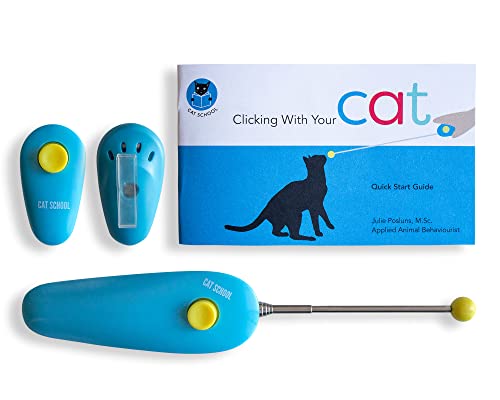
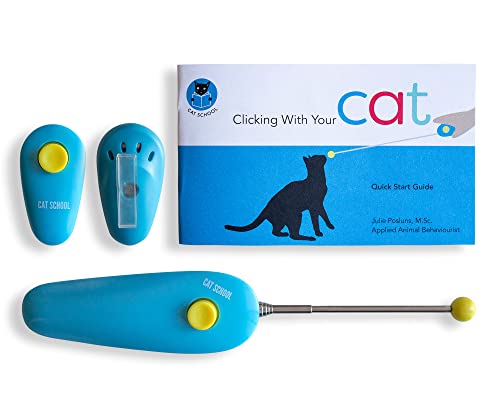
A beginner-friendly clicker kit with a target stick for guiding cats during training sessions.
The CAT SCHOOL Clicker Training Kit is a great option for first-time trainers: it includes a target stick to guide cats into position for tricks or redirection, plus a step-by-step instruction booklet that breaks down basic training techniques for beginners. Its compact 6.5-inch design and lightweight 0.29-pound build make it easy to carry around the house for on-the-go training. The bright blue color also helps cats visually associate the tool with training sessions.
For multi-pet households, the SunGrow 7-Pack Clicker Set is a cost-effective choice: it includes seven color-coded clickers so you can assign a unique cue to each cat, plus wrist straps for hands-free use during training. The 2-inch compact size fits easily in a pocket, and the durable plastic build holds up to repeated use.

Color-coded clickers ideal for households training multiple pets at once.
If you’re new to clicker training, our roundup of trusted clicker options breaks down beginner-friendly kits by use case, including options for cats with sensitive hearing.

Ergonomic clickers in bright colors for consistent positive reinforcement cues.
The OYEFLY 2-Pack Clicker Set is another affordable, durable option for everyday training: the bright red and blue colors make it easy to keep one clicker by your cat’s scratching post and another in the kitchen for mealtime training, and the included wrist strap lets you keep the cue accessible without fumbling during sessions.
Recordable Voice Buttons: For Custom, Consistent Verbal Cues
Recordable voice buttons let you pre-record a specific word or phrase (like "no scratch" for furniture scratching, or "come" for recall) and play it back with a press. They are ideal for cats that respond well to verbal cues, or for owners who want to use a consistent, calm tone for commands, eliminating the problem of varying pitch and volume in natural speech.

Customizable voice recording buttons for teaching cats consistent verbal cues.
The FINEST+ 4-Pack Recordable Buttons offer 30 seconds of recording time per button, pre-installed batteries for immediate use, and a lightweight 0.62-pound build that is easy to place around your home for different training needs. You can record separate cues for different behaviors (e.g., "play" for interactive sessions, "no" for unwanted actions) to create a consistent communication system for your cat.

Small, lightweight buttons easy for cats to press during training sessions.
The CEYOVISION 2-Pack Talking Buttons are a compact, affordable option for basic training: their small 1.1-inch height and lightweight 0.09-pound build make them easy for cats to press, and their long standby time means you won’t need to replace batteries frequently. They are also great for teaching cats to communicate their own needs, like pressing a button to request food or play.

Recordable buttons paired with tactile mats to teach pets to communicate needs.
The FluentPet Speak Up! Get Started Kit is a premium option for owners looking to build two-way communication with their cat: it includes six pre-loaded recordable buttons with upward-facing sound design to project cues clearly, plus three HexTile tactile mats to organize buttons by category (e.g., food, play, outside) to reduce confusion for cats learning to use them.
Vibration and Sound-Only Collars: For Long-Range Behavior Correction
Vibration and sound-only collars are ideal for cats that are highly distracted by outdoor wildlife, or for behaviors that occur when you are not in the same room (like excessive meowing when you are working in another room). These collars produce a mild vibration or beep that startles the cat just enough to interrupt the behavior, without causing pain or fear.
Important note: Shock modes on training collars are not recommended for cats by veterinary behaviorists, as they can cause chronic anxiety, fear of the owner, and worsening unwanted behaviors. Always opt for models that only use vibration and sound correction for humane training.
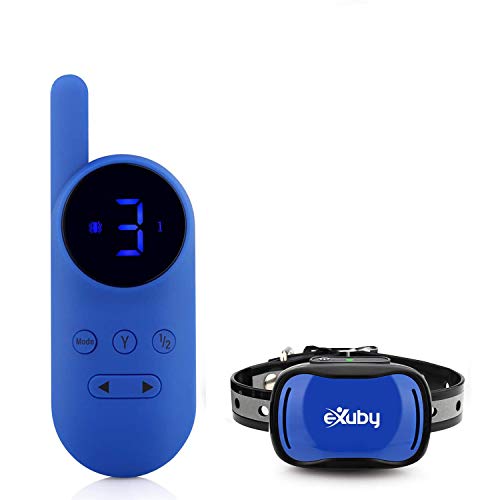
Adjustable vibration collar suitable for kittens to adult cats with no shock option.
The eXuby Vibrating Cat Collar is a great entry-level option: it offers 9 adjustable intensity levels to suit cats of all sensitivities, a 1,000-foot remote range for training in large homes or yards, and a rechargeable battery that lasts for weeks on a single charge. Its lightweight, compact design fits kittens to adult cats comfortably, and its IPX7 waterproof rating makes it suitable for outdoor use.

Waterproof training collar with 3,300ft range for off-leash behavior cues.
The Dali Energy 3,300ft Range Cat Collar is a good choice for owners of outdoor cats: its 3,300-foot remote range lets you correct behavior from across your property, and its IP67 waterproof rating holds up to rain and splashes. It offers beep and vibration modes only, with no shock option, and its slim carbon black design stays low-profile on your cat’s neck.
What Noises to Avoid During Cat Training
Using the wrong auditory cues can do more harm than good, undoing training progress and damaging your cat’s trust. Avoid these noises entirely:
- Yelling or harsh verbal tones: These cause fear and anxiety, and do not teach your cat what behavior is desired. Instead of stopping the behavior long-term, they often make cats hide or act out more when you are not around.
- Loud, sudden bangs (slamming doors, dropping objects): These cause unnecessary trauma and can make cats fearful of everyday household noises, leading to stress-related behaviors like inappropriate elimination.
- High-volume ultrasonic deterrents: While some low-volume ultrasonic devices are safe for training, high-volume versions can damage cats’ sensitive hearing, as they detect frequencies well above the human range.
- Any cue paired with pain or shock: As noted earlier, pairing sounds with discomfort leads to fear-based compliance, not learned behavior, and increases the risk of aggression or anxiety.
The ASPCA strongly cautions against using auditory cues paired with pain or fear, as this can lead to chronic anxiety, avoidance of you, and worsening unwanted behaviors ASPCA Cat Behavior Guide. All effective auditory training relies on pairing cues with positive outcomes, not punishment.
Step-by-Step: Using Auditory Cues for Common Cat Behaviors
Auditory cues work best when paired with clear redirection and positive rewards. Follow these steps for three of the most common cat behavior issues:
Stop Scratching Furniture
- Place a sturdy scratching post directly next to the furniture your cat scratches most.
- When you see your cat scratch the furniture, use a mild startle cue (a sharp clicker sound, a short "no scratch" from a recordable button, or a low vibration from a collar if they are highly distracted).
- Immediately redirect them to the scratching post, and use the auditory cue again the second they scratch the post.
- Reward immediately with a treat and praise. For high-value rewards your cat will love, check out our guide to high-value training treats.
- Repeat consistently for 2–3 weeks, and the association between scratching the post and the positive cue will override the furniture scratching habit.
Reduce Excessive Meowing
- First, rule out medical causes: excessive meowing can be a sign of pain, hyperthyroidism, or cognitive decline in older cats, so consult your vet before starting training.
- If the meowing is attention-seeking, ignore the meowing completely (do not make eye contact, talk, or give treats) until there is 2–3 seconds of silence.
- The second the cat goes quiet, use your auditory cue (clicker, beep, or vibration) and immediately give a treat or attention.
- Over time, the cat will learn that quiet behavior earns the positive cue and reward, while meowing does not.
Train Appropriate Litter Box Use
- Ensure you have appropriate litter box setups placed in quiet, low-traffic areas of your home, as inappropriate elimination is often a sign of stress or dislike of the box.
- When you see your cat using the litter box, use your auditory cue the second they finish, and reward immediately.
- If you catch your cat eliminating outside the box, use a mild startle cue to interrupt them, then immediately redirect them to the litter box.
- For cats learning to use a toilet instead of a litter box, pair consistent auditory cues with toilet training tools to mark each step of the process.
Common Mistakes to Avoid When Using Auditory Training
Even with the right tools, small errors can derail training progress. Avoid these common pitfalls:
- Inconsistent timing: The auditory cue must mark the exact second the desired (or undesired) behavior happens. If you click after the cat has already stopped scratching, they will not associate the sound with the action. In practice, many new trainers find it helpful to practice clicking the second their cat performs a simple behavior (like sitting) before using cues for more complex training.
- Using cues as punishment: Never use the scary noise to scare or punish your cat. The cue is only meant to interrupt the behavior, then redirect to a desired action and reward. Punishment-based training leads to fear, not learning.
- Using tools that are too intense: Some cats are more sensitive than others. If your cat hides, hisses, or avoids training sessions after hearing a cue, switch to a quieter clicker or lower vibration intensity. For multi-cat homes, you may need different cue intensities for each cat’s temperament.
- Skipping the reward: Auditory cues are only markers, not rewards on their own. If you do not pair every cue with a treat, praise, or play, the cat will stop responding to the sound over time.
- Expecting instant results: Training takes time, especially for adult cats with established habits. Most cats need 5–10 short (1–2 minute) training sessions per week for 3–4 weeks to form a consistent association.
Frequently Asked Questions
What Are The Best Clicker Training Kits For Cats?
Top-rated clicker kits for cats include the CAT SCHOOL beginner kit (which includes a target stick and step-by-step guide for first-time trainers) and the SunGrow 7-pack (ideal for multi-pet homes, with color-coded clickers to assign to individual cats). All recommended clickers produce a consistent, sharp sound that is easy for cats to detect, and work best when paired with high-value treats for positive reinforcement. Avoid clickers with overly quiet or muffled sounds, as cats may not register the cue.
How Do Voice Recording Buttons Aid Cat Training?
Recordable voice buttons let you assign a specific, consistent verbal cue to each behavior or need, eliminating the problem of varying tone and volume in your natural speech. For example, you can record a firm but calm "no scratch" to use when your cat scratches furniture, or a cheerful "come" for recall training. Cats learn to associate the recorded sound with a specific outcome far faster than they do with inconsistent verbal commands, making training more efficient. They are also useful for teaching cats to communicate their own needs, like pressing a "dinner" button when they are hungry.
Are Vibrating Cat Collars Better Than Shock Collars?
Yes, for cat training, vibration and sound-only collars are strongly preferred over shock collars by veterinary behaviorists. Vibrating collars deliver a mild, startling sensation that interrupts unwanted behavior without causing pain, fear, or trauma. They also offer adjustable intensity levels to suit sensitive cats, and many have long remote ranges for correcting behavior when you are not in the same room. Shock collars, by contrast, can cause chronic anxiety, fear of the owner, and even aggression, and are not recommended for use with cats.
What Training Modes Are Included In Cat Training Collars?
Most humane cat training collars include two to three modes: a beep or tone mode, a vibration mode, and (in some models) a low-intensity static shock mode. For cat training, only the beep and vibration modes are recommended, as they are sufficient to interrupt unwanted behavior without causing distress. Always opt for a collar with adjustable intensity levels to match your cat’s sensitivity, and avoid models that only offer shock correction.
Can Clickers Be Used For Multiple Pet Types?
Yes, clickers are a versatile training tool that works for cats, dogs, birds, horses, and even small mammals like rabbits. The consistent, neutral sound is universally recognized as a marker for positive reinforcement across species, making it a great option for multi-pet households. When training multiple pets, use separate clickers for each animal to avoid confusion, and adjust your reward schedule to each pet’s learning pace.
How Do Recordable Buttons Improve Pet Communication?
Recordable buttons go beyond basic training to build two-way communication between you and your cat. By assigning specific words to needs (e.g., "play", "outside", "cuddles"), you can teach your cat to press the button to request what they want, reducing frustration for both of you. This interactive training also strengthens your bond, as it shows your cat that their needs are being heard and responded to. Kits like the FluentPet Speak Up! set include tactile mats to organize buttons by category, making it easier for cats to learn which button corresponds to which need.
Final Tips for Humane, Effective Auditory Training
- Always pair every auditory cue with a positive reward (treat, praise, play) to build a positive association.
- Start with short, 1–2 minute training sessions to avoid overwhelming your cat.
- Be consistent: use the same cue for the same behavior every time, and involve all members of the household in the training process to avoid mixed signals.
- If your cat shows signs of stress (hiding, hissing, avoidance) during training, slow down, use a quieter cue, and consult a certified cat behaviorist for personalized guidance.
- For a full breakdown of positive reinforcement training frameworks, refer to our guide to structured cat training methods.
Conclusion
When used correctly, mild "scary noises" are a powerful, humane tool to enhance your cat’s learning experience, speed up behavior modification, and strengthen your bond. Unlike punishment-based methods that rely on fear, these auditory cues work by creating clear, consistent associations between actions and positive outcomes, which cats learn faster than verbal commands alone.
The right tool for your cat depends on their temperament and the behaviors you are addressing: clickers are ideal for marking desired actions and teaching new tricks, recordable buttons work well for consistent verbal cues and two-way communication, and vibration collars are a good option for long-range redirection of highly distracted cats. No matter which tool you choose, the key to success is consistency, precise timing, and pairing every cue with a reward your cat values.
Avoid harsh, fear-inducing noises at all costs, as these will damage your cat’s trust and lead to long-term anxiety. With patience and positive reinforcement, you can use auditory cues to teach your cat everything from using a scratching post to pressing a button to ask for dinner. For more tips on building a positive training routine with your cat, check out our other cat behavior guides.