
Low-carbohydrate wet cat food is one of the most biologically appropriate dietary choices for domestic cats, aligning with their status as obligate carnivores that thrive on high-protein, low-starch meals. Unlike high-carb dry kibble, which often relies on grain and plant-based fillers as binding agents, low-carb wet food prioritizes animal-based nutrition and high moisture content to support healthy weight, stable energy levels, and reduced risk of chronic conditions like diabetes and kidney disease. This guide breaks down what to look for in a quality low-carb wet food, top picks for every feline need, and answers to common owner questions to help you make an informed choice for your cat.
According to the Cornell University College of Veterinary Medicine, cats lack the metabolic enzymes needed to efficiently process carbohydrates, making excess starch a leading contributor to obesity and insulin resistance in sedentary indoor cats Cornell CVM feline nutrition guidance.
Why Low-Carbohydrate Wet Food Aligns With Feline Biology
Cats’ digestive systems are designed to derive nearly all their energy from animal protein and fat, not carbohydrates. In the wild, a cat’s natural prey (small rodents, birds, insects) contains less than 5% carbohydrates on a dry matter basis, a profile that domestic cats’ bodies have evolved to process efficiently. High-carbohydrate diets, common in cheap dry kibble, force cats to convert excess starch to fat, increasing risks of obesity, type 2 diabetes, and hepatic lipidosis (fatty liver disease).
Wet food’s 75–82% moisture content also addresses cats’ naturally low thirst drive. Domestic cats often fail to drink enough water from bowls, leading to chronic mild dehydration that is linked to urinary crystals, constipation, and progressive kidney damage. For cats with existing renal conditions, a high-moisture, low-carb diet is often recommended by veterinarians to support long-term renal health.
Key Factors to Evaluate When Choosing Low-Carb Wet Cat Food
Not all wet foods labeled "grain-free" are truly low-carb, so use these criteria to vet options before purchasing:
- Guaranteed analysis: Calculate dry matter carbohydrate content by subtracting protein, fat, fiber, and moisture percentages from 100% on the label. Aim for foods with under 10% dry matter carbs for a true low-carb profile.
- Ingredient quality: Look for named animal proteins (chicken, salmon, duck, etc.) listed as the first ingredient, with no unnamed meat byproducts, corn, wheat, soy, or artificial preservatives.
- AAFCO compliance: Always select formulas that meet the nutritional standards set by the Association of American Feed Control Officials (AAFCO) to ensure they provide complete, balanced nutrition for your cat's life stage AAFCO pet food standards, and cross-reference claims against independent nutritional guidance to avoid marketing hype.
- Life stage suitability: Kittens require higher protein and fat for growth, while senior cats may benefit from reduced phosphorus to support kidney function. Choose a formula labeled for your cat’s specific life stage.
- Texture and portion size: Cats have strong texture preferences, with options including pate, flaked, cuts in gravy, and consomme. Match can size (3oz, 5.5oz, 6oz) to your cat’s daily calorie needs to avoid waste.
Top Low-Carbohydrate Wet Cat Food Picks
We’ve curated these picks based on carbohydrate content, ingredient quality, and suitability for common feline needs:
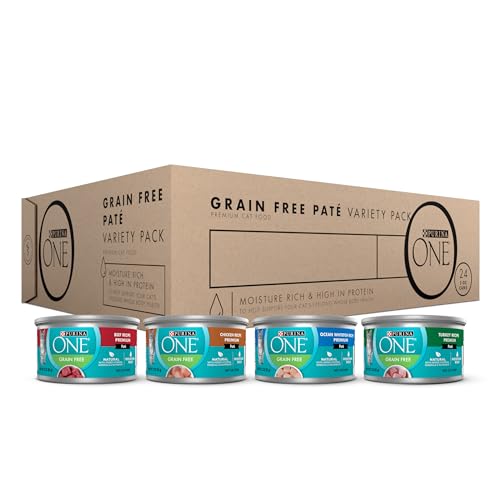
1. Purina ONE High Protein Grain Free Pate Variety Pack
Best for multi-cat households with picky eaters
This affordable premium option has a guaranteed analysis of 12% minimum protein, 4.5% fat, 2% fiber, and 78% moisture, working out to ~3.5% dry matter carbohydrates. It is AAFCO-certified complete and balanced for all life stages, with no artificial preservatives or fillers. The 24-can variety pack includes four flavors (chicken, turkey, salmon, beef) to reduce mealtime boredom, and the 3oz single-serve cans are compatible with most automated wet food feeders for consistent portion control.

24-can variety pack with four protein-rich flavors for picky eaters
Pros:
- Grain-free formula suitable for cats with grain sensitivities
- High protein content supports muscle maintenance and sustained energy
- Four flavors to satisfy picky eaters
- Affordable for a premium low-carb option
- Made by Nestlé Purina, a brand with decades of pet nutrition research
Cons:
- Some varieties contain carrageenan, a common thickener that may irritate cats with severe stomach sensitivities
- Not suitable for cats with poultry allergies if selecting chicken or turkey flavors
- 3oz cans may require multiple servings for large, active cats
2. Tiki Cat Luau Grain-Free Chicken Consomme
Best for cats with sensitive stomachs or urinary tract issues
This ultra-low-carb option has a guaranteed analysis of 15% minimum protein, 5% fat, 1% maximum fiber, and 82% moisture, working out to just 2% dry matter carbohydrates—near the profile of a cat’s natural prey. It features shredded real chicken in a savory consomme base, with no fillers, carrageenan, or artificial additives. The high moisture content and low starch make it ideal for cats prone to urinary crystals, diabetes, or chronic dehydration.

Shredded chicken in savory consomme with 2% dry matter carbohydrates for obligate carnivores
Pros:
- Extremely low carbohydrate content, suitable for cats with severe carb restrictions (e.g., diabetic cats)
- No fillers, carrageenan, or artificial additives
- High moisture content supports urinary and kidney health
- Suitable for all life stages, from kittens to seniors
Cons:
- Higher price point than grocery store wet food brands
- This specific pack only includes chicken flavor, so not ideal for cats with poultry allergies
- 6oz cans may be too large for cats with small appetites, requiring refrigeration after opening
3. Tiki Cat Aloha Friends Seafood Variety Pack
Best for cats that love seafood flavors
With a guaranteed analysis of 12% minimum protein, 5% fat, 1.5% maximum fiber, and 80% moisture ( ~3.5% dry matter carbs), this variety pack includes six seafood flavors (tuna, salmon, sardine, mackerel, whitefish, and shrimp) enhanced with pumpkin, a prebiotic that supports healthy gut bacteria. It is AAFCO-certified for all life stages, making it a long-term dietary option that grows with your cat.

Seafood-flavored low-carb wet food with added pumpkin for digestive health
Pros:
- Wide variety of seafood flavors to satisfy even the pickiest eaters
- Added pumpkin supports healthy digestion and reduces hairball risk
- Grain-free and free of artificial preservatives
- 3oz cans are perfectly portioned for single cats
Cons:
- Seafood-only formula is not suitable for cats with fish allergies
- Strong fish aroma may be off-putting to some owners
- Higher price point than standard grain-free wet foods
4. Blue Buffalo Wilderness High Protein Pate Variety Pack
Best for active cats seeking natural, nutrient-dense meals
This pate-style food has a guaranteed analysis of 11% minimum protein, 6.5% fat, 2.5% fiber, and 78% moisture (~4% dry matter carbs). It features deboned chicken, salmon, and duck as the first ingredients, with no corn, wheat, soy, artificial preservatives, or colors. Added taurine, omega-3 fatty acids, and chelated minerals support heart health, a shiny coat, and strong immune function, making it a great choice for active adult cats.

Three protein-rich pate flavors with no grains or artificial additives
Pros:
- Three novel protein options to reduce allergy risk
- High in omega-3s for coat and heart health
- No artificial additives or fillers
- Smooth pate texture is gentle on cats with dental sensitivities
Cons:
- Higher fat content may not be suitable for cats with pancreatitis or severe obesity
- Pate texture may not appeal to cats that prefer flaked or gravy-based food
- Some formulas contain trace amounts of peas, a high-starch ingredient that may add to carb counts for strictly low-carb diets
5. Sheba Perfect Portions Cuts in Gravy Variety Pack
Best for budget-conscious owners seeking zero-waste portioning
This mid-range low-carb option has a guaranteed analysis of 10% minimum protein, 5% fat, 1% maximum fiber, and 78% moisture (~6% dry matter carbs)—still 60% lower in carbs than the average grocery store wet food. The pre-portioned 2.6oz twin-pack trays eliminate measuring and reduce food waste, while the savory gravy base encourages picky cats to eat. It is formulated with real roasted chicken and tender turkey, with no artificial flavors or preservatives.

Pre-portioned twin-pack trays to eliminate food waste and simplify feeding
Pros:
- Pre-portioned trays require no measuring and reduce leftover waste
- Gravy base enhances palatability for picky eaters
- Affordable premium option for multi-cat households
- No refrigeration needed until opening
Cons:
- Higher carb content than other picks on this list, so not suitable for diabetic cats or those with severe carb restrictions
- Gravy contains added thickeners that may irritate cats with sensitive stomachs
- Only available in poultry flavors, so not ideal for cats with poultry allergies
6. Reveal Natural Limited Ingredient Wet Food Variety Pack
Best for cats with food sensitivities or allergies
With a guaranteed analysis of 11% minimum protein, 5% fat, 1% maximum fiber, and 78% moisture (~5% dry matter carbs), this limited-ingredient formula features only 5 core ingredients per flavor, with no fillers, artificial additives, or common allergens. The broth base encourages hydration, and the transparent ingredient list makes it easy to avoid triggers for cats with itchy skin, vomiting, or diarrhea related to food allergies.

Limited-ingredient low-carb wet food with a transparent ingredient list for sensitive cats
Pros:
- Limited ingredient list reduces risk of allergic reactions
- Grain-free and free of artificial preservatives
- Broth base supports hydration and palatability
- Wide variety of protein options (chicken, turkey, cod, tuna, salmon)
Cons:
- 2.47oz cans are small, requiring multiple servings for large cats
- Higher price point than standard grain-free wet foods
- Limited flavor complexity may not appeal to cats used to more seasoned foods
7. I AND LOVE AND YOU Cat Food Variety Pack
Best for eco-conscious owners seeking non-GMO ingredients
This low-carb option has a guaranteed analysis of 12% minimum protein, 5% fat, 1.5% maximum fiber, and 78% moisture (~3.5% dry matter carbs). It is made with 100% non-GMO ingredients, no artificial preservatives, and BPA-free pouches instead of cans, reducing plastic waste. The variety pack includes chicken, turkey, and cod flavors, all formulated to meet AAFCO standards for all life stages.

Non-GMO low-carb wet food in BPA-free pouches for eco-conscious owners
Pros:
- 100% non-GMO ingredients with no artificial additives
- BPA-free packaging reduces exposure to harmful chemicals
- High protein content from lean, ethically sourced proteins
- Grain-free and suitable for cats with grain sensitivities
Cons:
- Higher price point than mainstream wet food brands
- Only available in 3oz servings, which may not be sufficient for large cats in a single meal
- Limited retail availability in some regions
8. Blue Buffalo Tastefuls Flaked Wet Cat Food Variety Pack
Best for cats that dislike pate texture
This flaked-style food has a guaranteed analysis of 10.5% minimum protein, 5% fat, 1.5% maximum fiber, and 78% moisture (~5% dry matter carbs). It features real tuna, chicken, fish, and shrimp in tender flakes, with no artificial preservatives or colors. The flaked texture appeals to cats that turn up their noses at pate-style food, while the high moisture content supports hydration. It is formulated for adult cats with added vitamins and minerals to support overall health.
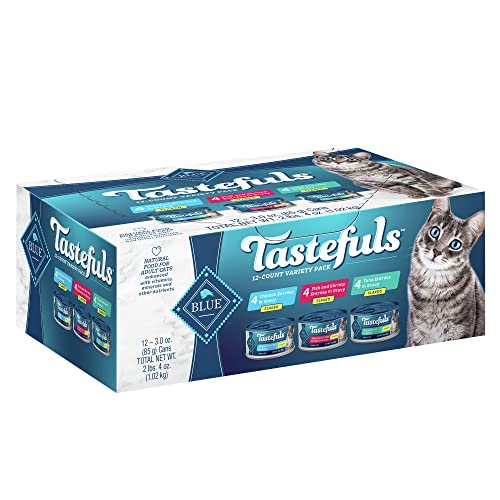
Flaked low-carb wet food in a variety of seafood and poultry flavors for texture-sensitive cats
Pros:
- Flaked texture appeals to cats that dislike pate
- Variety of flavors to reduce mealtime boredom
- Grain-free and made with natural ingredients
- High moisture content supports urinary health
Cons:
- Flaked texture may be difficult for cats with dental disease or missing teeth to eat
- Some cats may pick out only the flakes and leave the gravy behind
- Contains small amounts of tapioca starch as a thickener, adding minimal carbs to the total count
Common Mistakes to Avoid When Switching to Low-Carb Wet Food
Switching your cat’s diet too quickly or making common feeding errors can lead to digestive upset or refusal to eat. Avoid these pitfalls:
- Switching cold turkey: Cats have sensitive gut bacteria, so transition to new food gradually over 7–10 days. Start by mixing 25% new food with 75% old food, then increase the new food ratio by 25% every 2–3 days until your cat is eating 100% low-carb wet food. For cats that are hesitant to try new foods, small positive reinforcement rewards can be used to reward them for tasting the new meal.
- Overfeeding: Wet food is more calorie-dense than dry kibble, with 3oz of typical wet food containing 70–90 calories. The average adult cat needs 200–250 calories per day, so calculate your cat’s portion sizes based on their weight, age, and activity level to avoid unintended weight gain. For cats needing to lose weight, pair a low-carb wet diet with premium nutrient-dense options that avoid empty calories from fillers.
- Ignoring life stage needs: Kitten, adult, and senior cats have different nutritional requirements. Kitten food has higher protein and fat to support growth, while senior food often has reduced phosphorus to protect kidney function. Never feed a kitten adult formula, as it will lack the calories and nutrients needed for healthy development.
- Skipping vet consultations: If your cat has existing health conditions like diabetes, kidney disease, or pancreatitis, consult your veterinarian before switching to a low-carb diet. They can recommend specific formulations and help you monitor your cat’s response to the new food.
Special Considerations for Cats With Health Conditions
Low-carb wet food can be a therapeutic tool for cats with specific health issues, but requires extra care:
- Diabetic cats: Opt for foods with under 5% dry matter carbs and no added sugars. Work with your vet to adjust insulin dosing as needed when switching diets, as reduced carb intake can lower blood sugar levels.
- Cats with kidney disease: Choose low-phosphorus, high-moisture low-carb formulas to reduce strain on the kidneys. Avoid foods with added sodium or plant-based proteins, which can be harder for compromised kidneys to process.
- Cats with food allergies: Opt for limited-ingredient, single-protein formulas to identify and avoid triggers. Common allergens include chicken, fish, beef, and dairy, so novel proteins like venison or rabbit may be needed for cats with severe sensitivities.
Frequently Asked Questions
What are the benefits of low-carbohydrate wet cat food?
Low-carbohydrate wet cat food offers three core benefits aligned with feline biology: first, it mirrors the high-protein, low-carb diet of a cat's natural prey, supporting healthy muscle mass and stable energy levels. Second, the high moisture content (typically 75–82%) helps cats meet their daily hydration needs, reducing the risk of chronic kidney disease, urinary crystals, and constipation. Third, limiting excess carbohydrates reduces the risk of obesity, insulin resistance, and type 2 diabetes, especially in sedentary indoor cats. Unlike high-carb dry kibble, low-carb wet food does not rely on starch as a binding agent, so it contains fewer unnecessary fillers.
Which brands offer grain-free, low-carb wet cat food?
Many reputable brands offer grain-free low-carb wet cat food options, including Purina ONE, Tiki Cat, Blue Buffalo, Sheba, Reveal Natural, and I AND LOVE AND YOU. Grain-free formulas eliminate common carb-heavy fillers like corn, wheat, and soy, making them a good choice for cats with food sensitivities or allergies. Always check the guaranteed analysis on the label to confirm carbohydrate content, as not all grain-free foods are automatically low-carb.
How does high protein content benefit cats?
As obligate carnivores, cats require animal-based protein to produce essential amino acids like taurine, which supports heart health, vision, and reproductive function. High-protein wet food provides these amino acids in their most bioavailable form, supporting lean muscle maintenance, healthy skin and coat, and a strong immune system. Unlike carbohydrates, protein does not cause spikes in blood sugar, making it a safer energy source for cats prone to diabetes or weight gain.
Can low-carbohydrate wet cat food help with weight control?
Yes, low-carbohydrate wet cat food is an effective tool for weight management when paired with proper portion control. Excess carbohydrates are converted to fat in a cat's body, so reducing carb intake limits unnecessary calorie storage. The high protein content promotes satiety, so cats feel full longer and are less likely to beg for extra food. For cats with obesity, vets often recommend a low-carb wet diet paired with increased activity to support safe, sustainable weight loss. Note that some brands, like Purina ONE's weight control line, are specifically formulated with reduced calories to support weight management goals.
Are these wet cat foods suitable for all life stages?
Many low-carb wet foods are formulated for all life stages, meaning they meet the nutritional needs of kittens, adult cats, and seniors. However, some formulas are life-stage specific: kitten foods have higher protein and fat to support growth, while senior foods may have reduced phosphorus to support kidney health. Always check the label for an AAFCO statement confirming the food is complete and balanced for your cat's specific life stage.
How does moisture in wet cat food benefit cats?
Cats have a naturally low thirst drive, as their wild ancestors obtained most of their moisture from prey. Wet cat food is 75–82% moisture, which helps cats stay hydrated without relying on them to drink enough water from a bowl. Adequate hydration supports kidney function, reduces the risk of urinary tract infections and crystals, and aids in digestion. For cats with chronic kidney disease, a high-moisture diet is often a core part of treatment plans to slow disease progression.
How do I calculate the carbohydrate content of wet cat food?
To calculate dry matter carbohydrate content (the standard for comparing all pet foods), subtract the percentages of protein, fat, fiber, and moisture from 100% on the guaranteed analysis label. For example, a food with 12% protein, 5% fat, 1% fiber, and 78% moisture has 4% dry matter carbs (100 - 12 - 5 - 1 - 78 = 4). Aim for foods with under 10% dry matter carbs for a true low-carb option.
Conclusion
Low-carbohydrate wet cat food is a powerful tool for supporting your cat’s long-term health, aligning with their evolutionary biology to reduce risks of obesity, diabetes, and chronic dehydration. The top picks above cover a range of needs, from ultra-low-carb options for cats with health conditions to budget-friendly pre-portioned meals for multi-cat households, and limited-ingredient formulas for cats with allergies.
When switching your cat’s diet, transition gradually over 7–10 days to avoid digestive upset, and monitor their energy, coat quality, and litter box habits over 4–6 weeks to assess how they respond to the new food. For cats with existing health conditions like diabetes or kidney disease, consult your veterinarian before making dietary changes to ensure the new food supports their specific care plan. If you’re ready to switch your cat to a low-carb wet diet, start by trying a variety pack to find a flavor and texture your cat loves.