

Are you tired of watching your beloved furniture turn into a scratching post for your cat? You're not alone.
Many cat owners face the challenge of managing their feline friend's natural urge to scratch everything in sight. But what if there was a way to redirect that energy and keep your home intact? Imagine a peaceful environment where your cat is happy, and your furniture remains scratch-free.
This is not just a dream; it's achievable! In this guide, you'll discover effective strategies to train your cat not to scratch in unwanted places. Get ready to transform your home and enhance the bond with your furry friend. Keep reading to find out how you can make this a reality!

Credit: www.walmart.com
Understanding Cat Scratching Behavior
Training your cat not to scratch involves providing alternatives like scratching posts. Reward good behavior with treats and praise. Redirect your cat when it scratches furniture.
Understanding why cats scratch can help train them effectively. Scratching is natural for cats. It serves various purposes that are essential to their well-being. By learning these reasons, you can guide your cat to scratch in appropriate places.
Reasons Cats Scratch
Cats scratch to mark their territory. They release scent markers from glands in their paws. This behavior is a way to communicate with other animals. Scratching also helps them stretch their muscles. It keeps their claws in good condition by removing dead layers.
Natural Instincts And Needs
Scratching satisfies a cat's instinctual needs. It is a form of exercise that relieves stress. Cats scratch surfaces to express their emotions. Whether they feel excited, frustrated, or happy, scratching is a natural outlet. Understanding these instincts can help you redirect the scratching behavior.
Choosing The Right Tools
Choosing the right tools helps train your cat not to scratch furniture. Use cat-friendly scratch posts and deterrent sprays. These tools guide your pet towards acceptable scratching behavior.
Choosing the Right Tools Training a cat not to scratch can be challenging. The right tools make a big difference. Choosing them carefully can help reduce unwanted scratching. Cats need a place to scratch. Proper tools can satisfy this need.
Scratch Posts And Pads
Scratch posts are essential. They provide a safe space for scratching. Cats love vertical surfaces. A tall scratch post is ideal. It should be sturdy. Wobbly posts are not appealing to cats. Stability encourages regular use. Scratch pads are another option. Place them near favorite scratching spots. They are compact. Easy to move around. Cats appreciate variety. Having both posts and pads is beneficial.
Material Preferences
Cats have material preferences. Sisal is a popular choice. It mimics tree bark. Cats find it satisfying. Carpet is another option. Some cats prefer its texture. Experiment with different materials. Observe your cat. Notice what they like to scratch. Offer similar materials. This ensures they use the tools provided. It reduces damage to furniture. Happy cats make happy homes.
Training Techniques
Training your cat not to scratch involves using positive reinforcement. Provide a scratching post nearby and reward your cat with treats when they use it. Redirect their attention away from furniture with toys, ensuring they stay entertained and content.
Training your cat not to scratch involves patience and consistency. Cats scratch to mark territory, stretch, and maintain nail health. Redirecting their behavior requires understanding and gentle guidance. Let's explore effective techniques to teach your cat better habits.
Positive Reinforcement
Positive reinforcement encourages your cat to repeat good behavior. Reward your cat with treats or affection when it scratches a designated post. Timing is crucial. Offer rewards immediately after the desired action. This helps your cat associate scratching the post with a positive outcome. Praise with a soft voice. A gentle tone reassures your cat and strengthens the bond.
Redirecting Scratching
Redirect scratching by providing suitable alternatives. Place scratching posts near areas your cat frequents. This increases the likelihood of use. Use different textures and heights to find what your cat prefers. If your cat scratches furniture, gently guide it to the post. Cover undesired surfaces with double-sided tape or aluminum foil. These materials discourage scratching. Consistency is key. Repeat the redirection calmly each time.
Creating A Cat-friendly Environment
Provide scratching posts and pads to satisfy your cat's natural urge. Encourage use with toys or treats near them. Trim nails regularly to reduce damage and discomfort.
Creating a cat-friendly environment involves understanding your cat's needs. Cats scratch to mark territory and exercise. It's instinctive and important for their health. Providing the right environment can reduce unwanted scratching. Here's how you can create a space where your cat feels comfortable and secure.
Strategic Placement Of Scratchers
Place scratchers near areas your cat frequents. This encourages them to use scratchers instead of furniture. Consider placing them near windows or sunny spots. Cats love observing their surroundings. Scratching posts near their resting places can be effective. Keep scratchers in multiple rooms for easy access. This variety helps keep their interest alive.
Comfortable Resting Areas
Create cozy spots for your cat to relax. Use soft blankets and cushions. These spots should be quiet and away from noise. High perches make great resting areas. Cats feel safe when elevated. Provide cat beds in different locations. This gives your cat choices to find the perfect nap spot. Make sure these areas are easily accessible and welcoming.
Using Deterrents Safely
Training your cat not to scratch can be challenging. Using deterrents safely can help. It is essential to choose methods that protect your cat's well-being. Cats scratch to mark territory and exercise. Providing alternatives is crucial. Deterrents should guide behavior without causing harm.
Safe Deterrents Options
Consider using double-sided tape on furniture. Cats dislike sticky surfaces. A citrus spray can also deter them. Cats often avoid citrus smells. You can try aluminum foil on surfaces. The sound and texture bother them. Provide scratching posts near off-limit items. Redirect their natural need to scratch. Use motion-activated air sprays in problem areas. They startle but do not harm. Encourage scratching on approved surfaces with catnip. Reward positive behavior with treats and praise.
Avoiding Harmful Methods
Never use declawing as a solution. It is painful and unnecessary. Avoid spraying water at your cat. It causes fear and stress. Do not yell or punish physically. This breaks trust and increases anxiety. Using safe deterrents maintains a healthy relationship. Ensure the environment remains stress-free and positive. Always prioritize your cat's safety and comfort. Choose kindness and patience over harsh methods. Your cat will appreciate the care and understanding. Cats respond best to gentle guidance and consistency.
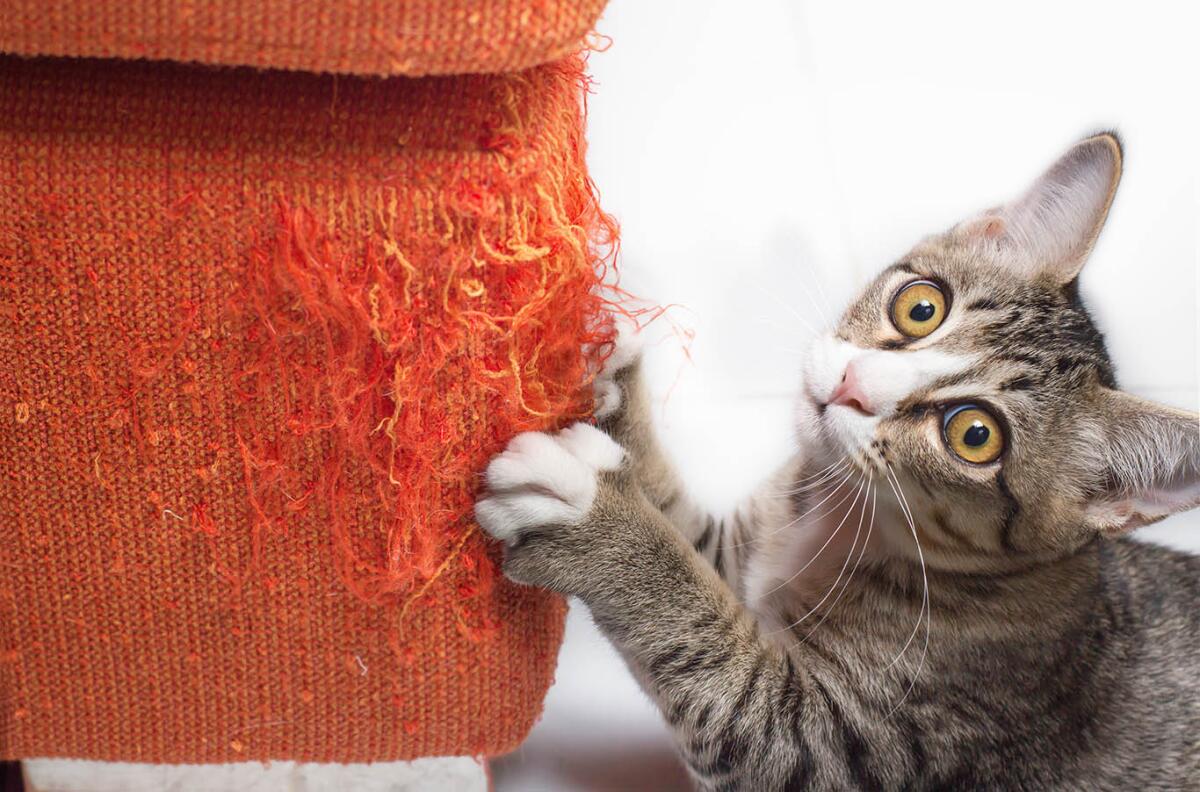
Credit: www.latimes.com
Consistency And Patience
Training a cat not to scratch demands consistency and patience. Reward positive behavior with treats or affection. Redirect scratching to designated posts and gradually reinforce this habit.
Training your cat not to scratch furniture or other unwanted surfaces is a task that requires both consistency and patience. Cats are creatures of habit, and altering these habits necessitates a steady approach over time. It can be easy to get frustrated, but remember that progress comes with a gentle, persistent effort.
Daily Training Routines
Creating a daily routine for your cat can work wonders in preventing unwanted scratching. Start by dedicating a small portion of each day to training and reinforcing positive behavior. Use treats and praise when your cat uses a scratching post instead of your couch. Introduce alternatives like scratching posts or pads in areas your cat frequently scratches. Consistently redirect them to these approved surfaces. Over time, they will associate the scratching post with positive reinforcement.
Long-term Commitment
Training your cat is not a one-time event but a long-term commitment. Just as you wouldn't expect a child to learn a new habit overnight, your cat will also need time. Stick with the routine, even if progress seems slow. Reflect on your own habits—are there areas where you could be more consistent? Your dedication will eventually pay off. Patience is key, and eventually, your cat will learn the behavior you desire. Consistency and patience are crucial in any training effort. Are you ready to embark on this journey with your feline friend? Remember, every small victory is a step towards success.
Seeking Professional Help
Sometimes, despite your best efforts, your cat continues to scratch everything in sight, leaving you frustrated and your furniture in shambles. Seeking professional help might be the next step to consider. Professionals can offer tailored solutions and insights that might not be apparent to the untrained eye. But when exactly should you seek a vet's advice, or contact a behavioral specialist?
When To Consult A Vet
If your cat's scratching seems excessive or paired with other unusual behaviors, it's wise to consult a vet. Cats can scratch due to underlying health issues, such as skin irritations or stress. A vet can rule out medical problems and ensure your cat is in good health.
Consider if your cat's scratching began suddenly or if it’s worsening. These changes may indicate a need for a professional evaluation. Remember, it's always better to err on the side of caution when it comes to your pet’s health.
Behavioral Specialists
Behavioral specialists can provide invaluable insights into your cat's scratching habits. They understand feline psychology and can suggest strategies tailored to your cat's unique personality and environment.
Have you tried multiple solutions without success? A behavioral specialist can offer guidance on specific training techniques and environmental modifications. They can also teach you how to effectively communicate with your cat to discourage unwanted scratching.
Ultimately, seeking professional help can save you time and prevent damage to your home. Don't hesitate to reach out for expert advice if your cat's scratching persists. What solutions have you tried so far, and are you ready to explore professional advice to find a lasting solution?
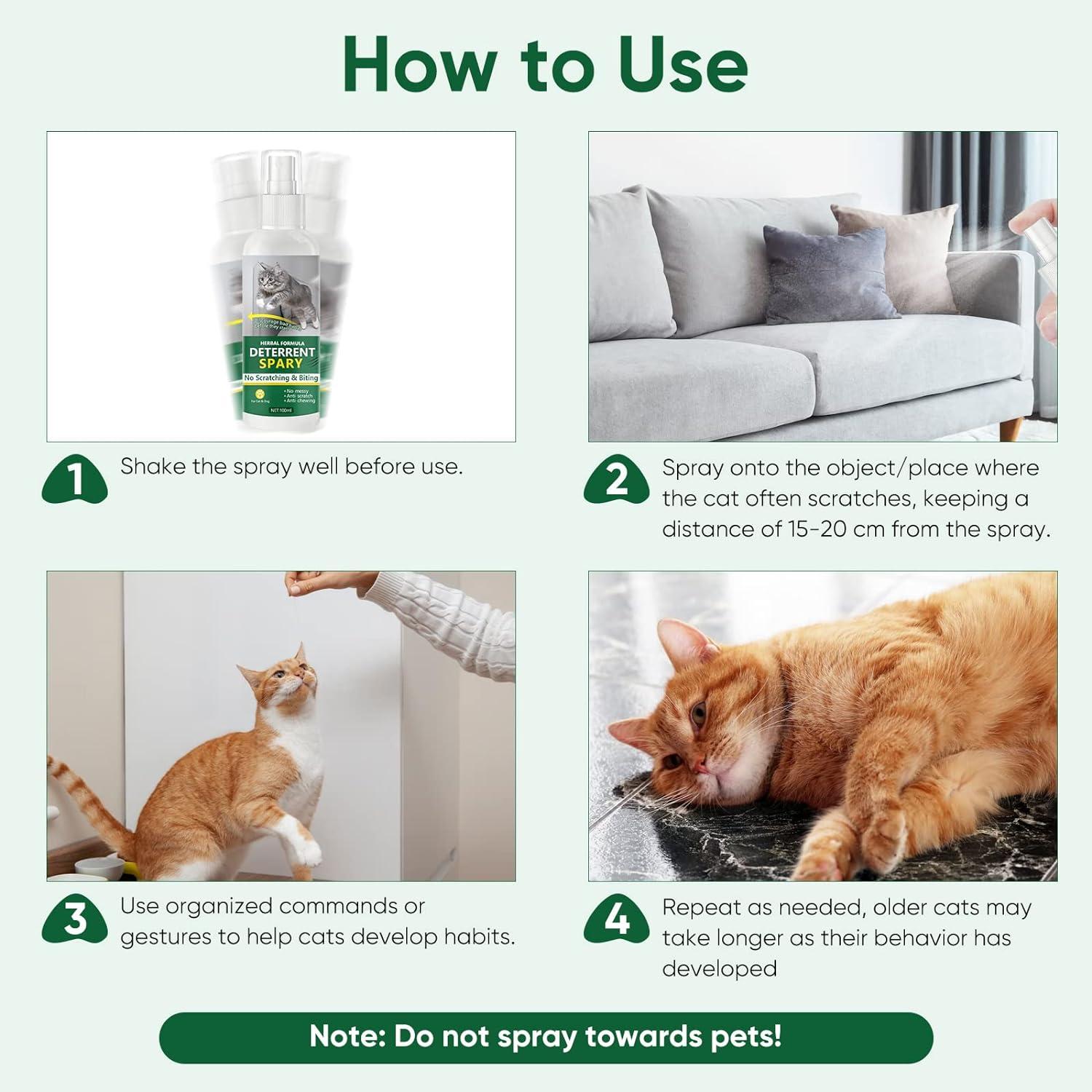
Credit: www.gosupps.com
Frequently Asked Questions
Can Cats Be Trained To Not Scratch?
Yes, cats can be trained to not scratch furniture. Use positive reinforcement techniques, like treats and praise. Provide scratching posts to redirect their behavior. Consistent training helps them learn acceptable alternatives. Trim their nails regularly to minimize damage. Patience and persistence are key in training cats effectively.
How To Discipline A Cat Not To Scratch?
Redirect scratching to a scratching post. Reward your cat for using it. Keep nails trimmed. Use deterrent sprays on furniture. Provide plenty of toys and playtime to reduce boredom.
How Do I Stop My Cat From Scratching?
Trim your cat's nails regularly to reduce scratching. Provide scratching posts to redirect their behavior. Use deterrent sprays on furniture. Reward positive behavior with treats and praise. Consider soft nail caps to prevent damage.
Can I Redirect Scratching Behavior?
Yes, you can redirect scratching behavior. Provide scratching posts near the furniture they scratch. Reward them when they use the posts. Use pheromone sprays to reduce stress. Trim their nails regularly. Ensure they have enough playtime to reduce boredom.
Conclusion
Teaching your cat not to scratch takes patience and consistency. Praise and reward good behavior. Distract them when they start scratching. Offer scratching posts as alternatives. Use deterrents like double-sided tape. Be gentle but firm in your approach. Cats respond well to positive reinforcement.
They need time to learn. Stay calm and persistent. Every cat is different. Adjust methods to fit your cat’s personality. Training strengthens your bond. You will enjoy a happier home. A scratch-free environment is possible with effort. Keep practicing these techniques.
Your cat will learn to behave better over time.
