

If you’re tired of daily litter scooping, stray litter grains tracked across your floors, and the constant cost of replacing cat litter, toilet training your cat is a game-changing solution. The CitiKitty Cat Toilet Training Kit is one of the most popular, low-stress options on the market, designed to guide your cat from litter box to toilet in just a few weeks with a simple, staged system that respects your cat’s natural instincts. Unlike DIY training methods that often lead to accidents, fear, and regression, the CitiKitty kit uses adjustable rings to gradually reduce the size of your cat’s bathroom surface, so they can adapt at their own pace without stress. In this guide, we’ll walk through exactly how to use the CitiKitty kit, common mistakes to avoid, who it’s best suited for, and how it compares to other top training systems to help you decide if it’s the right fit for your home.
What Is the CitiKitty Cat Toilet Training Kit, and How Does It Work?
The CitiKitty kit is a reusable, tool-free training system built to fit all standard 12–14 inch residential toilet seats. The core package includes a BPA-free, non-slip plastic training tray, 4 adjustable circular rings that attach to the tray to create a larger litter surface at the start of training, an extra identical training pan for backup or multi-cat households, and a small cat feather toy to encourage hesitant cats to approach the toilet. For more on this, see our guide on best cat toilet training kit 2.
The system works by leveraging your cat’s existing litter box habits: you start with all 4 rings attached, so the tray is roughly the same size as a standard small litter box, filled with 1–2 inches of your cat’s regular litter. Every 3–5 days, once your cat is consistently using the tray without accidents, you remove one ring to shrink the litter surface. This gradual process lets your cat build confidence balancing on the edge of the tray until only a small central hole remains, at which point you can remove the tray entirely and your cat will use the toilet directly. The staged design eliminates the shock of a sudden transition, which is the biggest cause of training failure with unassisted methods.
Step-by-Step Guide to Toilet Training Your Cat With CitiKitty
Follow this structured process to minimize stress for you and your cat, and avoid common training pitfalls:
Step 1: Prep Your Cat and Bathroom (1–2 Weeks Before Training)
Before setting up the CitiKitty tray, move your cat’s existing litter box into the bathroom you’ll use for training, so they associate the space with bathroom needs. If your cat currently uses a covered litter box, switch to an uncovered one for this period to help them get comfortable with the open, well-lit environment. Avoid changing your cat’s litter type or brand during this time — stick to the same clumping, unscented litter they’re used to, as sudden changes can cause avoidance. Stock up on high-value training rewards to use as positive reinforcement during sessions. For more on this, see our guide on best cat toilet training kit 3.
Step 2: Set Up the CitiKitty Tray
Place the CitiKitty tray on the toilet seat with all 4 rings attached, and fill it with 1–2 inches of your cat’s regular litter. To speed up acceptance, sprinkle a small amount of used litter from their old box on top of the fresh litter to transfer familiar scents. If your cat is hesitant to jump onto the toilet seat, place a small, stable step stool next to the toilet to give them easier access. A common mistake here is filling the tray with too much litter — 1–2 inches is enough for your cat to dig and cover waste, just like their regular box.
Step 3: Gradual Ring Removal (2–4 Weeks)
Once your cat is consistently using the full tray without accidents (usually 3–5 days), remove the outermost ring. Wait another 3–5 days, then remove the next ring, and so on, until only the central ring with the small hole remains. Only move to the next step if your cat is using the tray reliably — if they have accidents or avoid the tray, go back to the previous ring configuration for a few more days. Rushing this process is the most common cause of training failure, as cats need time to adjust to the shrinking surface and build confidence balancing on the edge of the tray. For more on this, see our guide on best cat toilet training kit.
Step 4: Full Transition to the Toilet
When you remove the last ring, your cat will be using the small central hole in the tray. Leave the tray in place for 3–5 days with no rings to let your cat get used to balancing over the hole and eliminating directly into the toilet. Once they’re consistent, you can remove the tray entirely, leaving only the toilet seat. For cats that are nervous about the open hole, you can place a small piece of double-sided tape on the edge of the seat to give them more traction, or use a non-slip bath mat under their paws to prevent slipping on the porcelain.
Step 5: Reinforce the Habit
For at least 2–3 weeks after full training, reward your cat with treats and praise every time they use the toilet successfully, to lock in the behavior. Keep the bathroom door open at all times so your cat can access the toilet whenever they need to, and avoid closing the toilet lid, as this will confuse them and lead to accidents. If you have multiple cats, you may need to train them separately to avoid competition for the toilet spot. For more on this, see our guide on cat potty training toilet seat.
Who Is the CitiKitty Kit Best Suited For?
Toilet training is not the right choice for every cat or household. The CitiKitty kit works best for:
- Cats over 6 months old that are already comfortable using a litter box
- Cats without arthritis, mobility issues, or severe anxiety
- Single-cat households, or multi-cat households where you can train cats one at a time
- Owners who want to eliminate litter waste, reduce household odors, and save money on litter costs long-term (most users save $200–$400 per year on litter)
- Apartment dwellers or small-home owners with limited space for litter boxes
If your cat has joint pain or limited mobility, a low-entry litter box is a more comfortable alternative that won’t cause them physical stress. For households with multiple cats that don’t adapt to toilet training, a larger multi-cat litter box can accommodate all pets without conflict. Making sure your cat stays hydrated with nutrient-dense wet food can also support consistent, healthy bathroom routines during training, reducing the risk of constipation or urinary issues that could derail your progress.
Common Toilet Training Mistakes (And How CitiKitty Helps Avoid Them)
Even with a high-quality kit, many owners run into avoidable pitfalls. As noted by the ASPCA’s cat behavior experts, forcing a cat to skip their natural litter-digging instincts can cause avoidance behaviors and long-term bathroom issues, which is why the staged CitiKitty system is so effective — it lets your cat adjust at their own pace without stress. The most common mistakes to avoid include:
- Rushing the training timeline: The CitiKitty ring system is designed to let you go at your cat’s pace, not a set schedule. If your cat hesitates to move to the next ring, wait an extra 2–3 days before progressing — forcing the issue will only make them fearful of the toilet.
- Using scented litter or changing litter brands: Stick to the same clumping, unscented litter your cat already uses for the entire training process. Scented litters or sudden brand changes can deter cats from using the tray, as their sense of smell is far more sensitive than yours.
- Punishing accidents: Never yell at or scold your cat if they have an accident outside the tray. Punishment will make them anxious and associate the bathroom with negative experiences, leading to long-term avoidance. Instead, clean accidents with an enzymatic cleaner to remove scents, and go back a step in the training process if needed.
- Forgetting to keep the toilet accessible: Always leave the bathroom door open and the toilet lid up during training and for several weeks after your cat is fully trained. Closing the lid or door will confuse your cat and lead to accidents around the house. If you’re also looking to cut down on litter box odor, pairing training with a high-quality deodorizer can help reinforce positive associations with the bathroom space.
- Skipping positive reinforcement: Rewarding your cat with treats and praise every time they use the CitiKitty tray or toilet is critical to reinforcing the behavior. Without positive reinforcement, your cat may not see the benefit of using the toilet over their old litter box.
How Does CitiKitty Compare to Other Popular Toilet Training Kits?
The CitiKitty kit is one of the longest-standing options on the market, but it’s not the only choice. Below is a breakdown of top-rated systems to help you find the best fit for your cat and home:
CitiKitty Cat Toilet Training Kit
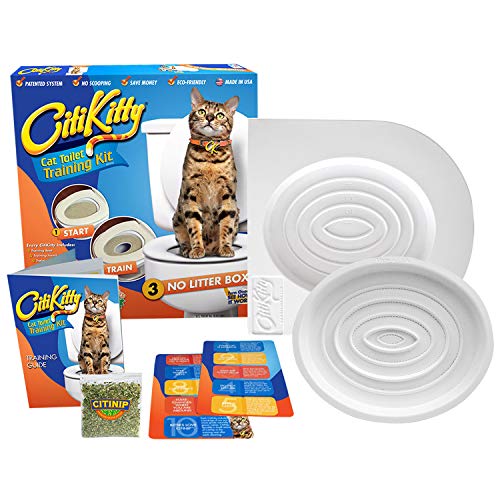
The core CitiKitty kit includes the staged training tray and a cat toy to encourage use
The best all-around pick for most first-time trainers, the CitiKitty kit features 4 adjustable staged rings, a BPA-free non-slip build, and an extra training pan for backup. It fits all standard 12–14 inch toilet seats and works for most cats over 6 months old without mobility issues. Grab your CitiKitty kit here to start training this week. For more on this, see our guide on cat litter for toilet training.
FuzzyMilky Cat Toilet Training System 2022

This alternative trainer includes a backup pan for extended training periods
A budget-friendly pick that includes a second training pan, making it ideal for multi-cat households or owners who want a spare tray on hand. Its lightweight build is easy to install and remove, though its ring progression is slightly less adjustable than CitiKitty’s, so it’s best for cats that adapt to change quickly. Shop the FuzzyMilky 2022 system here to save on litter costs long-term.
IFASHIHOME Cat Toilet Training Kit

This budget-friendly option includes a playful toy to engage hesitant cats during training
The most affordable option on our list, this kit comes with a replaceable feather toy to encourage hesitant cats to approach the toilet. Its reusable plastic build is durable enough for regular use, though it’s slightly thinner than CitiKitty’s BPA-free construction. Get the IFASHIHOME kit here if you’re on a tight budget.
Readaeer Cat Toilet Training Kit

The Readaeer kit features a slim, stable design for cats of average weight
A slim, low-profile option that works well for small cats or compact bathrooms with limited space. Its stable build stays securely in place on most toilet seats, and its simple design makes it easy to clean. Buy the Readaeer kit here for a no-fuss training solution.
FuzzyMilky Cat Toilet Trainer Kit

This kit uses removable rings to gradually reduce the size of the training surface
A variant of the FuzzyMilky system with removable training rings for more gradual progression, ideal for cautious cats that need extra time to adjust. Its lightweight build is easy to move and store when not in use. Shop this FuzzyMilky trainer here if your cat is slow to adapt to change.
Fresh Step Litter Box Attractant Powder

This attractant can help hesitant cats adjust to new bathroom setups during training
Not a training kit itself, this all-natural attractant powder can be sprinkled on the CitiKitty tray or your cat’s litter box to encourage use during the transition period. It’s safe for kittens and cats of all ages, and its compact 9-ounce size lasts for weeks of regular use. Pick up the attractant powder here to ease training for hesitant pets.
Cat Toilet Seat Training Kit (Grey)

This model includes a removable, washable pad for easy cleaning after accidents
A portable, travel-friendly option with a removable, washable cleaning pad for easy maintenance after accidents. Its neutral grey design blends seamlessly with most bathroom decor, and its lightweight build makes it easy to take to pet-friendly hotels or vacation homes. Shop this portable kit here if you need a trainer you can take on the go.
Kitty's Loo™ Patented Training Seat

The original patented Kitty's Loo design is made in the USA for durability
A premium, USA-made option with a patented non-slip base and ultra-durable plastic build, designed to hold up to years of regular use by large or active cats. Its unique design gradually trains cats to balance over the toilet hole without the need for removable rings. Purchase Kitty's Loo here if you want a long-term, heavy-duty trainer.
Ejoyous Cat Toilet Training Kit

This universal-fit kit works with most standard residential toilet sizes
A universal-fit option designed to work with unusual or non-standard toilet sizes that other kits don’t accommodate. Its white tray and gray inner support provide a stable, secure surface for cats of most sizes. Get the Ejoyous kit here if your home has non-standard toilet dimensions.
Maintaining Your CitiKitty Kit for Long-Term Use
The CitiKitty tray is made of durable, BPA-free plastic that’s easy to clean and built to last for years of regular use. After each use, wipe the tray down with mild soap and warm water to remove any litter residue or waste — avoid harsh chemical cleaners, as strong scents can deter your cat from using the tray. The extra training pan that comes with the kit is perfect for backup if the main tray gets damaged, or for training a second cat down the line. When not in use, store the tray flat in a closet or under the bathroom sink — its lightweight 1.25 pound build makes it easy to move and store without taking up space. If you have a long-haired cat, keeping up with regular grooming routines can prevent loose fur from clogging the toilet or making your cat uncomfortable while balancing on the seat.
Frequently Asked Questions
How Does a Cat Toilet Training Kit Work?
A cat toilet training kit like CitiKitty uses a staged, gradual approach to replace your cat’s litter box with the toilet. The kit sits on top of your toilet seat, filled with a small amount of litter at first. Over 2–4 weeks, you remove one circular ring from the tray every 3–5 days, slowly reducing the size of the litter surface until your cat is comfortable balancing over the small central hole and using the toilet directly. This method respects your cat’s natural instinct to dig and cover waste, avoiding the stress of a sudden, unplanned transition.
Can All Cats Be Toilet Trained Successfully?
No, toilet training is not suitable for every cat. Kittens under 6 months old, cats with arthritis, mobility issues, or anxiety disorders, and cats that are strongly attached to their litter box are unlikely to adapt successfully. Cats that are fearful of water or loud bathroom noises (like toilet flushes) may also struggle. Always prioritize your cat’s comfort — if they show signs of stress like avoiding the bathroom, urinating outside the toilet, or hiding, pause or stop training entirely.
What Are the Benefits of Using a Cat Toilet Training Kit?
The biggest benefits are eliminating the need to buy, scoop, and dispose of cat litter, which saves most owners $200–$400 per year on litter costs. You’ll also eliminate litter tracking around your home, reduce household odors, and cut down on plastic waste from disposable litter bags. For pet owners with limited space, like apartment dwellers, it frees up closet or floor space that would otherwise be taken up by a litter box.
How Long Does Cat Toilet Training Take?
Most cats take 2–4 weeks to fully transition to using the toilet with a staged kit like CitiKitty, though some adaptable cats may learn in as little as 10 days, while more cautious cats may take 6 weeks or longer. The timeline depends entirely on your cat’s personality — never rush the process, as moving too fast is the most common cause of training regression. Consistency is far more important than speed.
Is a Cat Toilet Training Kit Safe for My Pet?
Yes, when used correctly. The CitiKitty tray is made of BPA-free, non-slip plastic that stays securely in place on standard toilet seats, so there’s no risk of the tray tipping over during use. The only safety risk comes from rushing training: if you remove rings too quickly, your cat may lose their balance and fall into the toilet, which can make them fearful of the bathroom long-term. Always supervise your cat during the first 1–2 weeks of training, and keep the toilet lid up to avoid accidental falls when the tray is not in place.
Conclusion
The CitiKitty Cat Toilet Training Kit is one of the most reliable, low-stress options for transitioning your cat to toilet use, thanks to its staged ring system, durable construction, and proven track record with cat owners nationwide. While the process requires patience and consistency, the long-term benefits of eliminating litter mess, cutting down on waste, and creating a cleaner home for you and your cat make it a worthwhile investment for the right pet. If you’re ready to ditch the litter box for good, the CitiKitty kit provides all the tools you need to make the transition smooth for both you and your feline companion. Ready to get started? Grab your CitiKitty kit today and say goodbye to litter scooping forever.