
Litter box avoidance and accidents are among the most common behavioral issues reported by cat owners, and they are a leading cause of feline surrender to shelters across the U.S. If you’re dealing with missed eliminations, territorial marking, or a cat that flatly refuses to use their box, you’re not alone—and most of these issues are fully resolvable with targeted adjustments to your setup, routine, and training approach. This guide breaks down the root causes of common litter box problems, step-by-step troubleshooting strategies, evidence-based product solutions, and clear guidance on when to bring in a veterinary professional. Whether you’re training a new kitten, adjusting to a newly adopted adult cat, or troubleshooting long-standing habits, these actionable steps will help you build a reliable, stress-free litter routine for you and your feline.
Common Root Causes of Litter Box Training Problems
Before jumping to solutions, it’s critical to identify why your cat is avoiding their box, as the fix will vary entirely based on the underlying trigger.
Medical Issues
According to the Cornell University College of Veterinary Medicine, medical conditions are the most overlooked cause of litter box problems, especially in cats who have previously used their box reliably. Common culprits include urinary tract infections (UTIs), kidney disease, arthritis, diabetes, and gastrointestinal issues. Pain during elimination (from arthritis or a UTI) can cause cats to associate the box with discomfort, leading them to avoid it entirely. Cats with kidney disease may experience increased urinary urgency, leading to accidents if they can’t reach the box in time. If your cat’s avoidance is sudden, paired with changes in water intake, appetite, or vocalization during elimination, a vet visit is the first and most important step. For cats diagnosed with chronic kidney disease, a veterinary-recommended renal diet can reduce urinary urgency and support overall urinary tract health.
Environmental & Setup Problems
Even if your cat is healthy, a poorly designed litter box setup will drive even the most well-trained cat to eliminate elsewhere. The most common setup mistakes include:
- A box that is too small for your cat to turn around comfortably (most experts recommend a box at least 1.5x the length of your cat from nose to tail base)
- Placing the box in a high-traffic, loud, or hard-to-reach area (e.g., next to a washing machine, in a dark basement, or near your cat’s food and water bowls)
- Failing to scoop waste daily and fully change litter weekly, leading to overwhelming odors that deter cats
- Using scented litter or harsh cleaning products that leave residual chemical smells cats find offensive
- Not providing enough boxes for multi-cat households: the American Veterinary Medical Association recommends a minimum of one box per cat, plus one spare, to reduce territorial competition and prevent one cat from blocking another from accessing the box. For households with multiple felines, a multi-cat litter box with separate compartments can be a space-saving solution that gives each cat their own designated area.
Behavioral Triggers
Cats are creatures of habit, and even minor changes to their routine or environment can trigger litter box avoidance. Common behavioral triggers include:
- Stress from household changes (new pet, new baby, moving, renovations)
- Multi-cat conflict or bullying near the litter box area
- Past negative experiences associated with the box (e.g., being scolded for an accident near the box, a loud noise startling them while they were using it)
- Lack of positive reinforcement for using the box correctly, especially during kitten training
Step-by-Step Troubleshooting for Litter Box Training Issues
Follow this structured workflow to diagnose and resolve most common litter box problems in 1–2 weeks, assuming no underlying medical issues are present.
Step 1: Rule Out Medical Causes First
Before making any changes to your setup or training routine, schedule a vet checkup to rule out pain, infection, or chronic illness. Bring a fresh stool sample if possible, and note any changes in your cat’s urination frequency, stool consistency, or behavior during elimination. If your vet clears your cat of medical issues, move on to environmental and behavioral adjustments.
Step 2: Optimize Your Litter Box Setup
Small tweaks to your box placement, type, and maintenance routine will resolve most common litter box issues, per the AVMA. Start with these adjustments:
- Ensure you have enough boxes: follow the 1+1 rule (one box per cat, plus one spare) to reduce competition.
- Place boxes in quiet, low-traffic areas with multiple escape routes, away from food, water, and sleeping areas. Avoid confined spaces like tiny closets or basement corners that make your cat feel trapped. A common mistake new cat owners make is tucking the box in a hidden, hard-to-reach spot; in practice, cats will often avoid a box that requires navigating stairs or dark, unfamiliar spaces, even if it’s "out of the way" for humans.
- Choose a box sized appropriately for your cat: large breeds like Maine Coons need extra-large boxes, while kittens and senior cats benefit from low-entry models to reduce strain.
- Use unscented, clumping litter (most cats prefer this texture) and maintain a 1–2 inch depth—too much litter will be kicked out of the box, while too little won’t cover waste adequately.
- Scoop waste daily and fully empty and clean the box with mild, unscented soap and hot water once a week. For busy owners, a self-cleaning litter box can automate scooping and reduce odor buildup, which is especially helpful for cats who are sensitive to dirty boxes. If odor is a persistent turnoff for your cat, upgrading to a low-odor, easy-to-clean model designed with high sides and odor-filtering technology can make the box more appealing.
Step 3: Address Behavioral & Environmental Stressors
If your setup is optimized but issues persist, look for underlying stressors:
- Use Feliway or other species-specific pheromone diffusers in the area around the litter box to reduce anxiety.
- Ensure your cat has safe, elevated hiding spots away from perceived threats (other pets, loud noises, unfamiliar visitors).
- If you have multiple cats, monitor for bullying near the box area; if one cat is blocking access, add extra boxes in separate locations.
- Reinforce positive litter box behavior with high-value training treats and praise immediately after you see your cat use the box. Avoid punishing your cat for accidents, as this will only increase their stress and make them more likely to avoid the box. Follow positive reinforcement training principles to build positive associations with the litter box, rather than punishing negative behavior.
Step 4: Use Training Aids Strategically
If environmental and behavioral adjustments aren’t enough, targeted training aids can help reinforce good habits. These include litter attractants for cats with mild avoidance, and toilet training kits for owners seeking a litter-free home.
Top Litter Attractants for Habit Building
Litter attractants are scented additives designed to appeal to a cat’s natural instinct to eliminate in sandy, earthy spaces. They are most effective for kittens, newly adopted cats who haven’t learned a litter routine, and cats with mild, non-medical avoidance. Note that attractants are not a substitute for addressing medical issues or poor box setup—they work best as a complementary tool to reinforce good habits.
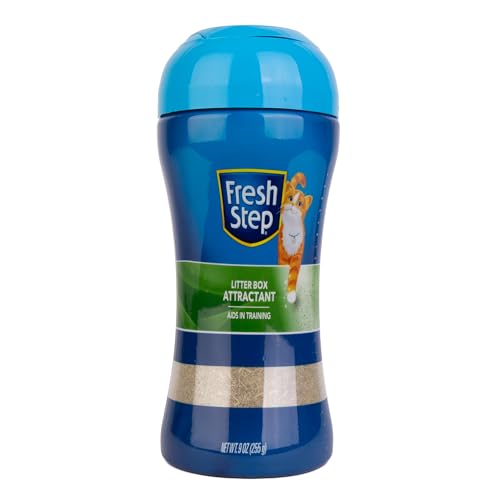
Fresh Step Litter Box Attractant Powder
This all-natural, unscented powder is a popular choice for training kittens and newly adopted cats who haven’t developed a consistent litter habit. Sprinkled in a thin layer on top of clean litter, it uses a mild, cat-friendly scent to draw hesitant cats to the box.
- Pros: Made with all-natural ingredients, compatible with all clumping and non-clumping litter, compact 9-ounce size lasts for dozens of uses, safe for kittens and adult cats.
- Cons: Effectiveness varies by cat’s individual preference, requires reapplication after each full litter change, not a fix for medical or severe behavioral avoidance.
Best for: Kittens and newly adopted cats with no underlying health issues who need a gentle nudge to use the box consistently. You can find the Fresh Step Litter Box Attractant Powder here for a low-cost first step to reinforce box use.

A natural attractant additive can encourage hesitant cats to use their litter box consistently.
JorVet Feline Litter Magnet
This all-natural herbal attractant uses a blend of earthy, cat-appealing scents to draw cats to their box, and is formulated to treat over 100 pounds of clumping litter, making it a cost-effective choice for multi-cat households. Unlike scented powders, it has no added fragrances that might bother sensitive cats.
- Pros: All-natural, plant-based formula, long-lasting (treats 100+ lbs of litter), low scent that doesn’t bother human household members, safe for all cats.
- Cons: May take 2–3 days for cats to respond to the scent, not effective for cats with severe avoidance triggered by pain or stress.
Best for: Multi-cat households and cats who are sensitive to strong artificial scents. You can pick up the JorVet Feline Litter Magnet here.

All-natural herbal attractants are a low-stress option for cats with mild litter box avoidance.
WORLD'S BEST CAT LITTER Boosters Good Habits
This plant-based, sustainable attractant is designed for eco-conscious cat owners who want to avoid harsh chemicals. It mixes directly into litter to enhance its appeal, and is made by a trusted brand with decades of pet care product experience.
- Pros: Sustainable, plant-based formula, compatible with all litter types, 18-ounce canister lasts for multiple full litter changes, reduces accidents by encouraging consistent box use.
- Cons: Requires regular reapplication after litter changes, may take a few days for cats to adjust to the scent.
Best for: Eco-friendly households and cats who respond well to natural, plant-based scents. You can find the WORLD'S BEST CAT LITTER Boosters Good Habits here.
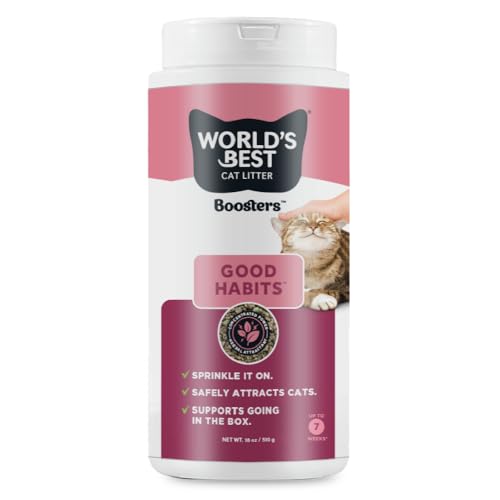
Plant-based litter additives are a sustainable option for encouraging consistent litter box use.
Cat Toilet Training Kits: A Litter-Free Alternative
Toilet training eliminates the need for litter entirely, reducing waste, odors, and ongoing litter costs. However, it is not the right choice for every cat or household: it requires a 4–8 week commitment, and many veterinarians advise against it for cats with a history of urinary tract issues, as you will lose the ability to monitor their urine and stool for early signs of illness. Toilet training also requires a backup litter box during the transition period, in case your cat rejects the toilet.
Who Toilet Training Works For (And Who It Doesn’t)
Ideal candidates for toilet training include:
- Cats over 6 months old (kittens under 6 months are still developing litter habits and may struggle with the balance required for toilet use)
- Cats with no mobility issues (arthritis, injury, or obesity can make balancing on a toilet seat difficult or painful)
- Single-cat households or households where all cats are willing to participate in training
- Owners committed to the gradual training process and willing to keep a backup litter box for several weeks
Cats who should not be toilet trained include kittens under 6 months, senior cats with arthritis or mobility issues, cats with a history of FLUTD, and cats who are already stressed by household changes.
Top Toilet Training Kits to Consider
All of the kits below use a gradual, staged approach to transition your cat from litter to the toilet, reducing stress and increasing success rates.
CitiKitty Cat Toilet Training Kit
One of the most popular and well-reviewed toilet training systems on the market, the CitiKitty kit uses four graduated trays that fit over your standard toilet seat. You start with a tray filled with a small amount of litter, and gradually cut larger holes in the tray over 2–3 weeks until your cat is comfortable using the toilet with no tray at all.
- Pros: Vet-approved, four staged trays for gradual transition, fits most standard toilets, compact and easy to store, eliminates litter waste and odors long-term.
- Cons: Requires consistent daily training, may not fit elongated or unusually shaped toilet seats, not suitable for cats with mobility issues.
Best for: First-time toilet training owners and cats who respond well to gradual, low-stress transitions. You can pick up the CitiKitty Cat Toilet Training Kit here.
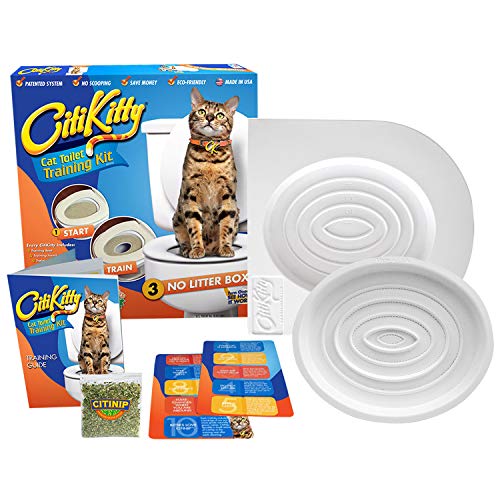
Graduated training trays slowly reduce litter exposure to help cats adjust to toilet use.
FuzzyMilky Cat Toilet Training System
This kit includes two training pans (one starter, one advanced) and a built-in step for cats who need extra help balancing on the toilet seat. It’s designed for cats who may be hesitant to jump directly onto the toilet, and the extra pan makes it easy to clean without interrupting your cat’s training progress.
- Pros: Includes two training pans and a non-slip step for hesitant cats, fits most standard toilets, lightweight (1.7 lbs) for easy removal and cleaning, white design blends with most bathroom decor.
- Cons: Requires patience and consistent training, not suitable for cats with mobility issues, may take longer for skittish cats to adjust.
Best for: Nervous or larger cats who need extra stability during training. You can find the FuzzyMilky Cat Toilet Training System here.

Multi-stage training kits include extra pans to make transitions smoother for cats and owners.
Readaeer Cat Toilet Training Kit
A budget-friendly, no-frills option for owners who want to test toilet training before investing in a more expensive system. This lightweight, ergonomic tray fits securely over standard toilet seats and has a non-slip base to prevent sliding while your cat balances.
- Pros: Affordable, lightweight and easy to install, non-slip base for safety, compatible with most standard toilets, reduces litter waste long-term.
- Cons: No staged training trays included, so you will need to modify the tray yourself to gradually reduce litter, may not fit larger or elongated toilets.
Best for: Budget-conscious owners testing toilet training for the first time. You can pick up the Readaeer Cat Toilet Training Kit here.

Compact, lightweight trays fit most standard residential toilets.
The Cat Throne System™
This vet-approved, elongated training system is designed for larger breeds or households with oversized toilets. It features a wider, more stable base than standard round trays, making it more comfortable for big cats to balance on, and includes clear, step-by-step instructions for gradual training.
- Pros: Vet-approved, elongated design fits oversized and comfort-height toilets, stable base for large or nervous cats, permanent solution that eliminates litter waste long-term.
- Cons: Higher price point, may require adjustments to fit non-standard toilet sizes, not suitable for cats with mobility issues.
Best for: Large-breed cats and households with non-standard toilet sizes. You can find The Cat Throne System™ here.

Vet-approved training systems prioritize cat comfort during the transition to toilet use.
Xeyrlo Removable Cat Toilet Training Kit
This portable, bright yellow training tray is designed for owners who want a removable option they can take when traveling or moving. It’s fully washable, so you can easily clean it between uses, and its high sides prevent litter from scattering during training.
- Pros: Removable and fully washable, portable for travel, bright color makes it easy for cats to identify, high sides reduce mess during training.
- Cons: May not fit all toilet sizes, requires consistent training, not suitable for very large cats.
Best for: Frequent travelers and renters who need a portable training solution. You can pick up the Xeyrlo Removable Cat Toilet Training Kit here.

Washable, portable trays make training and cleanup simple for busy households.
Training Aids for Kittens & Small Pets
Kittens under 6 months old and small pets (rabbits, guinea pigs) have unique litter box needs that standard adult boxes don’t meet. Low-entry pans are critical for kittens who haven’t developed the strength to climb over high box walls, and small, portable pans are ideal for travel or limited living spaces.
3 Pcs Kitten Litter Box Set
This set of three compact, low-entry litter pans is designed for kittens and small pets, with entry heights as low as 0.9 inches, so even the tiniest kittens can access the box without struggle. The pans are made of durable, non-stick plastic that’s easy to wipe clean, and their small size makes them perfect for travel crates, apartment living, or keeping in multiple rooms of your home.
- Pros: Ultra-low entry for kittens and small pets, waterproof non-stick surface for easy cleaning, compact size fits tight spaces and travel crates, available in multiple bright colors to help cats identify the box.
- Cons: Small size not suitable for adult cats or large breeds, shallow depth may require more frequent cleaning for heavy urinators.
Best for: Kittens under 4 months old, small pets, and owners who travel frequently with their pets. You can pick up the 3 Pcs Kitten Litter Box Set here.

Low-entry pans are ideal for kittens and small pets with limited mobility.
When to Seek Professional Help
If you’ve optimized your litter box setup, addressed stressors, and used training aids for 2+ weeks with no improvement, it’s time to bring in a professional. Ignoring persistent litter box problems can lead to chronic stress for your cat, and may indicate an underlying health issue that will worsen without treatment.
Red Flags That Require a Vet Visit
Contact your veterinarian immediately if your cat shows any of the following symptoms alongside litter box avoidance:
- Straining to urinate, crying during elimination, or blood in urine or stool
- Increased water intake or urination frequency
- Sudden changes in appetite, weight, or energy levels
- Litter box avoidance after years of consistent use
- Accidents that occur while your cat is sleeping or resting (a sign of loss of bladder control)
Your vet can run tests to rule out UTIs, kidney disease, arthritis, and other medical causes of avoidance. For cats diagnosed with chronic kidney disease, a veterinary-recommended renal diet can reduce urinary urgency and support long-term urinary tract health.
Working with a Feline Behaviorist
If your vet clears your cat of medical issues, a certified feline behaviorist can help identify hidden stressors or negative associations driving avoidance. Behaviorists can create a customized training plan for your cat’s specific needs, and are especially helpful for cats with a history of trauma or multi-cat household conflict.
Frequently Asked Questions
We’ve expanded the original FAQs with more detailed, actionable guidance to address the most common concerns cat owners have about litter box training.
How Do I Solve Cat Litter Box Training Problems?
Start by ruling out medical causes with a vet visit, then optimize your litter box setup (follow the 1+1 box rule, place boxes in quiet, accessible areas, scoop daily) and address any behavioral stressors like household changes or multi-cat conflict. For mild avoidance, add a natural litter attractant to reinforce positive box associations. Punishing accidents will increase stress and make the problem worse, so focus on positive reinforcement with treats and praise when your cat uses the box correctly.
What Is The Best Attractant Powder For Cat Training?
The best attractant for your cat will depend on their preferences: Fresh Step Litter Box Attractant Powder is a popular all-natural option for kittens and newly adopted cats, while JorVet Feline Litter Magnet is a better choice for sensitive cats who are bothered by strong artificial scents. WORLD'S BEST CAT LITTER Boosters Good Habits is a sustainable, plant-based option for eco-friendly households. All attractants work best when paired with a clean, well-placed litter box.
Can Cat Toilet Training Kits Replace Litter Boxes?
Yes, toilet training kits can completely eliminate the need for litter boxes, but they are not right for every cat. They work best for cats over 6 months old with no mobility or urinary health issues, and owners who are committed to the 4–8 week training process. You will need to keep a backup litter box during training, and note that toilet training eliminates your ability to monitor your cat’s urine and stool for early signs of illness, which is a key consideration for cats with a history of urinary problems.
How Do I Use A Reusable Cat Potty Trainer?
Start by placing the trainer over your toilet seat with a small amount of litter in the tray. Let your cat get used to using the trainer for 3–5 days, then gradually cut a small hole in the center of the tray to let litter fall into the toilet. Increase the size of the hole every few days until your cat is comfortable using the toilet with no tray. Clean the trainer regularly with mild soap and hot water to prevent odor buildup, and reward your cat with treats each time they use it successfully.
Are Herbal Solutions Effective For Litter Training Cats?
Yes, all-natural herbal attractants like JorVet Feline Litter Magnet are effective for cats with mild litter box avoidance caused by litter scent or texture preferences. They use cat-friendly herbal scents to draw cats to the box without harsh chemicals, and are safe for all cats. However, they are not a fix for medical issues or severe behavioral avoidance, so they should be used as a complementary tool alongside setup and behavioral adjustments.
What Causes Cats To Avoid Their Litter Boxes?
Cats avoid litter boxes for four main reasons: medical pain or illness, poor box setup (dirty box, wrong location, wrong size), behavioral stress (household changes, multi-cat conflict), or past negative experiences. Identifying the root cause is the first step to resolving the issue, as the fix will vary entirely based on the trigger.
Final Tips for Long-Term Litter Box Success
Litter box training is not a one-time task—it requires consistent maintenance and adjustments as your cat’s needs change. Keep these tips in mind to avoid future issues:
- Scoop waste daily and fully change litter weekly, even if you use a self-cleaning box
- Replace litter boxes every 1–2 years, as scratched plastic can hold odors that deter cats
- Adjust your setup as your cat ages: senior cats may need lower-entry boxes, while kittens will need larger boxes as they grow
- Avoid changing litter types suddenly; if you need to switch litter, mix the new litter in gradually over 1–2 weeks to let your cat adjust
- Keep a backup litter box during any household changes (moving, new pet, renovations) to give your cat a familiar, safe elimination option
Conclusion
Litter box training problems are almost always fixable with patience, consistent adjustments, and the right tools. The most common mistake cat owners make is jumping to product solutions before ruling out medical issues or optimizing their box setup—addressing these foundational factors first will resolve most issues without extra cost. For cats with mild avoidance, natural attractants are a low-stress, affordable way to reinforce positive habits, while toilet training kits offer a litter-free alternative for committed owners with the right cat. If issues persist after 2 weeks of adjustments, don’t hesitate to consult your vet or a certified feline behaviorist to rule out hidden health or stress triggers. With the right approach, you can build a reliable, stress-free litter routine that works for both you and your feline companion.