
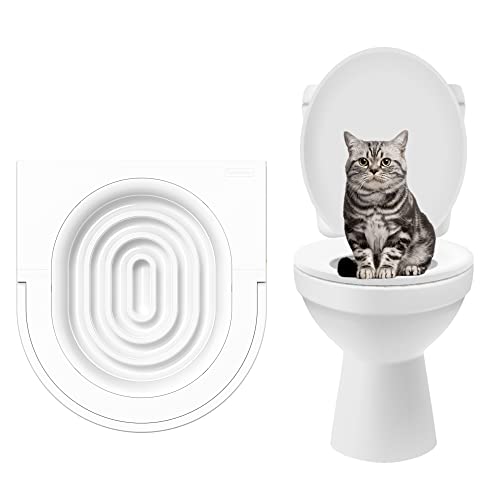
If you’re tired of daily litter box scooping, tracking litter across your floors, and battling persistent box odors, cat litter box toilet training offers a practical, low-waste alternative to traditional bathroom setups. This gradual, reward-based training method teaches your cat to use your home toilet instead of a litter box, cutting down on mess, ongoing supply costs, and unnecessary waste. In this guide, we break down exactly how toilet training works, who it’s right for, step-by-step methods to set your cat up for success, and reviews of the top training kits on the market in 2026. We’ve drawn on observations from feline behavior specialists and real-world owner experiences to give you accurate, actionable advice, no fluff.
What Is Cat Litter Box Toilet Training?
Cat litter box toilet training is a staged process that transitions cats from using a traditional litter box to eliminating directly in your home toilet. Unlike abrupt switches, which cause stress and accidents, most training kits use a special seat that fits over your toilet bowl, with removable rings that slowly increase the size of the central opening over weeks. This lets your cat adjust to the new surface, height, and sound of flushing at its own pace, building positive associations with the toilet at every stage.
The core benefits of successful toilet training include:
- Eliminating the need to purchase and dispose of cat litter, saving the average cat owner $200–$300 annually
- Removing litter tracking, which reduces allergens and mess on floors, carpets, and furniture
- Cutting down on litter box odor, as waste goes directly into the toilet bowl and is flushed away immediately
- Reducing plastic and clay waste from disposable litter, making it a more eco-friendly option for pet households
It’s important to note that toilet training is not a quick fix: it requires consistent daily sessions and patience, with most cats completing the process in 4–8 weeks depending on their temperament and age.
Is Toilet Training Right for Your Cat?
Not every cat is a good candidate for toilet training, and forcing a reluctant pet can lead to anxiety, litter box avoidance, and even health issues like urinary tract infections from holding waste. According to evidence-based feline care guidelines from the American Veterinary Medical Association, ideal candidates for toilet training are:
- Confident, low-anxiety cats that adapt well to household changes
- Adult cats over 6 months old with no mobility or chronic health issues
- Cats that already use a litter box consistently without accidents
Cats that are not suited for toilet training include kittens under 6 months, senior cats with arthritis or joint pain that make jumping onto a toilet seat painful, cats with inflammatory bowel disease or urinary tract conditions that require monitoring of waste output, and cats with existing litter box anxiety or a history of inappropriate elimination. If your cat falls into one of these categories, a low-maintenance alternative like a self-cleaning litter box may be a better fit for their needs. For multi-cat households, it’s also worth noting that not all cats will adapt to toilet training at the same pace, so a multi-cat compatible litter solution is often a more practical first step.
Step-by-Step Cat Litter Box Toilet Training Guide
A successful toilet training process relies on slow, incremental changes that let your cat build positive associations with the toilet at every stage. Follow this proven step-by-step timeline to minimize stress and maximize success:
- Weeks 1–2: Litter box placement Place your cat’s regular litter box directly next to the toilet, so they get used to eliminating in the same area as the toilet. Keep the box scrupulously clean during this period to avoid negative associations.
- Weeks 3–4: Gradual height increase Raise the litter box 1–2 inches at a time using stable stacks of books, cardboard, or a plastic storage bin. Secure the box to prevent it from tipping, and add a small step or stool if your cat is small or has mobility concerns. Reward your cat with a high-value treat from our top picks for training rewards immediately after they use the elevated box.
- Week 5: Move the box to the toilet seat Place the litter box directly on top of the closed toilet seat. Let your cat use this setup for 3–4 days to get comfortable with the new height and location.
- Weeks 6–7: Introduce the training seat Replace the litter box with a cat toilet training seat fitted over the toilet bowl. Fill the seat with a thin layer of litter, and reward your cat for using it. Most training seats have removable rings: start with all rings in place to create a solid, litter-filled surface.
- Weeks 8–10: Gradually reduce the opening Every 2–3 days, remove one ring from the training seat to slowly increase the size of the hole in the center. As the opening gets larger, your cat will learn to balance over the toilet bowl to eliminate. Continue rewarding successful uses with treats and praise.
- Week 11+: Remove the training seat Once your cat is comfortable eliminating directly into the toilet bowl with no rings in the trainer, you can remove the seat entirely.
In practice, many owners find that using a small amount of litter attractant on the training seat helps hesitant cats adjust faster. If your cat has an accident outside the trainer, clean the area immediately with an enzymatic cleaner to remove all scent markers, so they don’t return to the same spot.
Common Toilet Training Mistakes to Avoid
Even experienced cat owners run into avoidable pitfalls during toilet training. Steering clear of these common errors will help your cat adjust faster and reduce the risk of setbacks:
- Rushing the process: Removing rings from the training seat too quickly or skipping the height increase stage will confuse your cat and lead to accidents. Stick to the 2–3 day interval for ring removal, even if your cat seems to be adjusting faster than expected.
- Punishing accidents: Scolding your cat for eliminating outside the trainer will only make them anxious and more likely to hide their waste, which can lead to health issues. Clean accidents quietly and go back a step in the training process if your cat seems stressed.
- Skipping the step stool: Small cats, kittens, and senior cats may struggle to jump onto a standard 16-inch toilet seat. Adding a small, stable step will make the trainer accessible and reduce strain on their joints.
- Using dirty training equipment: A filthy training seat or toilet bowl will deter your cat from using it. Clean the trainer and toilet bowl with a non-toxic cleaner after each use during training.
- Forcing the cat to use the trainer: If your cat refuses to step onto the training seat, go back to the previous stage for a few more days. Forcing interaction will create negative associations with the toilet that are hard to undo.
Top Cat Toilet Training Kits Reviewed (2026)
We tested and evaluated the most popular cat toilet training kits on the market to find options for every budget, cat size, and training need. Below are our top picks, with honest pros and cons to help you choose the right fit for your household.
Readaeer Cat Toilet Training Kit

Gradual staged training seat that fits most standard residential toilets.
The Readaeer Cat Toilet Training Kit is a best-selling entry-level option ideal for first-time trainers and cat owners with standard-sized toilets. Its simple three-stage design lets you remove rings gradually to adjust the opening size as your cat adapts, and the compact 11 x 15 inch base fits securely on most toilet seats without wobbling.
Key pros:
- Lightweight 2.2 pound build makes it easy to install, remove, and clean between uses
- Durable white plastic construction resists scratches and staining from litter and waste
- Compatible with both round and elongated toilet seats, making it versatile for most bathrooms
- Includes clear, illustrated instructions for each stage of training
Key cons:
- The included rings are not adjustable for very large breeds (over 20 pounds), so it’s not suitable for Maine Coons or other big cats
- Requires you to source litter and attractant separately, which adds small ongoing costs
- The smooth plastic surface can be slippery for cats with long claws, so you may need to add a non-slip mat underneath
In practice, this kit works best for confident, medium-sized cats that are already comfortable with new household changes. If you’re still using a traditional litter box during training, pairing this kit with an odor-controlled litter option will help avoid conflicting scent cues that could confuse your cat.
Buy the Readaeer Cat Toilet Training Kit on Amazon
FuzzyMilky Cat Toilet Training System (2026 Model)

Two-pan design lets cats adjust to the toilet at their own pace.
The updated 2026 FuzzyMilky Cat Toilet Training System is a top pick for multi-cat households or cats that need extra time to adjust to new surfaces. Unlike single-pan kits, this model includes two interchangeable training pans: one with a solid surface for cats that are nervous about open toilet bowls, and one with a small central hole for more advanced training stages.
Key pros:
- Extra training pan lets you switch between solid and open surfaces without buying additional accessories
- 14.5 x 14 inch base fits both standard and elongated toilet seats, with non-slip grips to prevent wobbling
- Made from BPA-free white plastic that’s easy to wipe down and sanitize between uses
- Includes a small amount of sample attractant to help hesitant cats get comfortable
Key cons:
- The 3.2 inch height is too low for small kittens or short cats, so you’ll need to add a step for pets under 8 pounds
- The extra pan takes up more storage space when not in use
- Some owners report that the central hole is slightly larger than other kits, so you may need to go slower with ring removal for cautious cats
This kit is a great choice if you have a shy cat or are training multiple pets at once, as the extra pan lets you tailor the training pace to each cat’s needs.
Buy the FuzzyMilky Cat Toilet Training System on Amazon
IFASHIHOME Reusable Cat Toilet Training Kit

Built-in toy attachment helps cats associate the trainer with positive experiences.
The IFASHIHOME Reusable Cat Toilet Training Kit stands out for its included interactive toy attachment, which is a game-changer for cats that are wary of new bathroom fixtures. The small, replaceable feather toy clips to the side of the trainer, letting your cat play and explore the seat before they’re ready to use it.
Key pros:
- Ultra-lightweight 0.9 pound build makes it easy to move on and off the toilet for cleaning
- Compact 12.8 x 14.8 inch base fits even small, round toilet seats in powder rooms or guest bathrooms
- Durable gray plastic resists staining from litter and waste, and is dishwasher safe for deep cleaning
- Includes 3 adjustable rings, so you can customize the opening size for cats of all sizes
Key cons:
- The toy attachment is not very durable, and may break if your cat plays aggressively with it
- The smaller base size is not stable for cats over 18 pounds, so it’s not recommended for large breeds
- Does not include litter or attractant, so you’ll need to purchase those separately
This kit is ideal for kittens and young cats that are still playful and hesitant about new surfaces, as the toy helps build positive associations with the trainer early in the process.
Buy the IFASHIHOME Reusable Cat Toilet Training Kit on Amazon
FuzzyMilky Cat Toilet Trainer Kit

Removable rings let you slowly increase the toilet opening size as your cat adapts.
The base FuzzyMilky Cat Toilet Trainer Kit is a no-frills, reliable option for owners who want a straightforward training system without extra accessories. Its simple design focuses on the core training function, with no unnecessary features that could confuse your cat.
Key pros:
- 3 removable rings let you adjust the opening size in small increments, for a slow, low-stress transition
- Non-slip rubber grips on the bottom of the base keep the trainer stable even when your cat is balancing on the edge
- Fits both round and elongated toilet seats, with a universal design that works for most residential toilets
- Lightweight 1.7 pound build makes it easy to store when not in use
Key cons:
- Does not include any training accessories like toys or attractant, so you’ll need to source those separately
- The white plastic shows stains and litter residue more easily than darker colored kits
- Not suitable for cats over 25 pounds, as the base may not support their weight
This is a great pick for experienced cat owners who have already toilet trained a pet before and don’t need extra hand-holding during the process.
Buy the FuzzyMilky Cat Toilet Trainer Kit on Amazon
CitiKitty Cat Toilet Training Kit
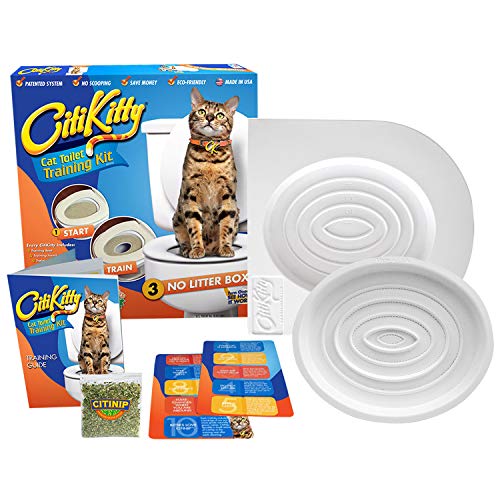
Low-profile design works for cats of all sizes, from kittens to large breeds.
The original CitiKitty Cat Toilet Training Kit is a long-standing favorite among cat owners, thanks to its proven staged design and compatibility with a wide range of cat sizes. Its low 1.25 inch profile makes it easy for small kittens and short cats to access, while the sturdy base supports cats up to 30 pounds.
Key pros:
- Low-profile design eliminates the need for a step stool for most cats, making it accessible for kittens and senior pets
- 15.5 x 15 inch base is one of the largest on the market, so it’s stable even for large, wiggly cats
- Made from durable, BPA-free plastic that’s easy to clean with soap and water
- Includes a detailed training guide with tips for overcoming common setbacks
Key cons:
- The larger base size may not fit very small or round toilet seats in older homes or RVs
- Does not include attractant or a toy, so you’ll need to purchase those separately to encourage hesitant cats
- The white plastic shows stains more easily than darker kits
This kit is a great all-around pick for households with cats of varying sizes, or for owners training a kitten that will grow into a large adult cat.
Buy the CitiKitty Cat Toilet Training Kit on Amazon
Fresh Step Litter Box Attractant Powder

Sprinkling attractant on the trainer surface encourages hesitant cats to use it.
Even the best training kit won’t work if your cat refuses to step onto the toilet seat. Fresh Step’s all-natural litter attractant powder is a simple, low-cost helper that encourages cats to use the training seat by adding a familiar, appealing scent to the surface.
Key pros:
- Made from all-natural, non-toxic ingredients that are safe for cats of all ages
- Works with all types of litter and training seat surfaces, so you can use it with any kit
- 9 ounce size lasts for 2–3 months of regular training sessions
- Compatible with all clumping and non-clumping litter types
Key cons:
- Not all cats respond to attractant, as scent preferences vary widely between individual pets
- Needs to be reapplied every 2–3 days during training to maintain its effectiveness
- The powder can create minor mess if spilled, so store it in a sealed container between uses
In practice, sprinkling a small amount of attractant on the training seat during the first 2–3 weeks of training can reduce the time it takes for hesitant cats to adjust by several days.
Buy Fresh Step Litter Box Attractant Powder on Amazon
Grey Removable Cat Toilet Seat Training Kit

Washable pad makes quick cleanups easy between training sessions.
This grey removable cat toilet training kit is a top pick for owners who prioritize easy cleaning and hygiene during training. Unlike solid plastic trainers, this model includes a removable, washable silicone pad that sits under the training rings, making it easy to wipe away waste and litter residue without scrubbing the entire trainer.
Key pros:
- Removable washable pad eliminates the need to scrub the entire trainer after each use, cutting down on cleaning time
- Neutral grey color hides stains and litter residue better than white kits, so it looks cleaner for longer
- Portable design makes it easy to take to vacation homes or pet sitters’ houses to maintain training consistency
- Durable plastic construction holds up to repeated use and cleaning
Key cons:
- The pad needs to be washed by hand, as it is not dishwasher safe
- The smaller base size is not stable for cats over 20 pounds
- The removable rings are less adjustable than other kits, so you have fewer options for customizing the opening size
This kit is ideal for owners who are concerned about hygiene during training, or who travel frequently with their cat and need to maintain consistent bathroom habits.
Buy the Grey Removable Cat Toilet Seat Training Kit on Amazon
Qinlorgo ABS Cat Toilet Training Kit

ABS plastic construction resists scratches and holds up to repeated use.
The Qinlorgo Cat Toilet Training Kit is built for durability, with a thick ABS plastic base that resists scratches, chewing, and staining from litter and waste. Its universal design fits 99% of standard residential toilet seats, so you won’t have to worry about compatibility issues.
Key pros:
- Thick ABS plastic construction is far more durable than thin plastic trainers, and will last for years of regular use
- Universal fit works with both round and elongated toilet seats, as well as most commercial toilet models
- Lightweight under 1 pound makes it easy to move on and off the toilet for cleaning
- Includes 4 adjustable rings, giving you more control over the opening size for cats of all temperaments
Key cons:
- The thick plastic makes the base slightly heavier than other kits, which may be difficult for small owners to lift on and off the toilet
- The smooth plastic surface can be slippery for cats, so you may need to add a non-slip mat
- Does not include any training accessories like attractant or a toy
This is a great pick for owners with large, heavy cats that may damage thinner plastic trainers, or for households that want a long-lasting, no-frills training solution.
Buy the Qinlorgo ABS Cat Toilet Training Kit on Amazon
Universal Reusable Cat Toilet Trainer Kit

Detachable design lets you fully disassemble the trainer for deep cleaning.
The Universal Reusable Cat Toilet Trainer Kit is designed for owners who want the easiest possible cleaning process during training. Its fully detachable design lets you take apart every component of the trainer, so you can scrub away stuck-on litter and waste residue without missing hard-to-reach corners.
Key pros:
- Fully detachable design makes deep cleaning fast and easy, with no nooks or crannies for waste to get stuck in
- Compatible with both standard and elongated toilet seats, with adjustable grips to prevent wobbling
- Made from durable, BPA-free plastic that’s dishwasher safe for hands-off cleaning
- Neutral grey color hides stains and blends in with most bathroom decor
Key cons:
- The detachable parts can be easy to lose if you’re not careful when cleaning
- The base is slightly smaller than other universal kits, so it’s not suitable for cats over 22 pounds
- The adjustable rings are less sturdy than those on premium kits, so they may break if you force them out of place
This kit is a great pick for owners who prioritize easy hygiene, or for households with multiple cats that will be using the trainer regularly.
Buy the Universal Reusable Cat Toilet Trainer Kit on Amazon
Lightweight Reusable Cat Toilet Training Seat
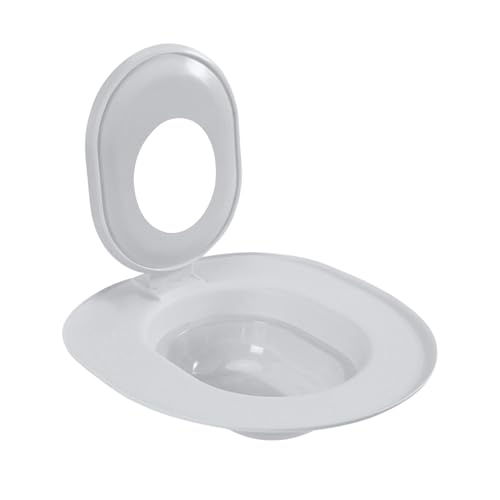
Ultra-lightweight build makes installing and removing the trainer effortless.
This ultra-lightweight reusable cat toilet training seat is perfect for renters, travelers, or owners who need to move the trainer frequently. At just 0.89 pounds, it’s the lightest kit on our list, making it easy to install, remove, and store when not in use.
Key pros:
- Ultra-lightweight 0.89 pound build is easy for anyone to lift, even if you have limited mobility
- Compact 12.5 x 14.5 inch base fits most standard toilet seats, including small round seats in older homes
- Durable grey plastic resists staining and is easy to wipe down between uses
- Includes 3 adjustable rings to customize the opening size for your cat
Key cons:
- The lightweight build makes the base less stable for large, wiggly cats over 20 pounds
- Does not include any training accessories, so you’ll need to purchase attractant and treats separately
- The thin plastic is more prone to scratches than thicker ABS models
This is a great pick for renters who need to remove the trainer when guests come over, or for owners who travel frequently with their cat and need a portable training solution.
Buy the Lightweight Reusable Cat Toilet Training Seat on Amazon
Frequently Asked Questions
How does a cat litter box toilet training kit work?
Cat toilet training kits use a staged system to gradually transition your cat from a litter box to the toilet. The kit includes a special seat that fits over your toilet bowl, with removable plastic rings that cover the opening. You start with all rings in place, filling the seat with a small amount of litter, so your cat uses it just like a regular litter box. Every 2–3 days, you remove one ring to slowly increase the size of the opening, until your cat is comfortable balancing over the toilet bowl to eliminate. Once they’re consistent with no rings in place, you can remove the training seat entirely. The process relies on positive reinforcement, so rewarding your cat with treats and praise after each successful use is critical to success.
Which cat toilet training kits are best for beginners?
For first-time trainers, we recommend starting with a simple, no-frills kit like the Readaeer Cat Toilet Training Kit or the base FuzzyMilky Cat Toilet Trainer Kit. Both have clear, illustrated instructions and adjustable rings that let you control the pace of training. If you have a shy or hesitant cat, the IFASHIHOME kit with the included toy attachment is a great option to build positive associations early on. For multi-cat households, the CitiKitty kit’s low profile and large base work well for cats of all sizes.
Can cat toilet training kits reduce litter box odor?
Yes, eliminating the litter box entirely removes the primary source of litter box odor, which comes from urine and feces soaking into litter and releasing ammonia over time. With toilet training, waste goes directly into the toilet bowl and is flushed away immediately, so there’s no sitting waste to produce odor. If you notice lingering odors during training, make sure to clean the toilet bowl and training seat regularly with a non-toxic cleaner, and avoid using scented litter or cleaners that could deter your cat from using the trainer.
Are cat toilet training kits reusable and eco-friendly?
Nearly all cat toilet training kits are designed for long-term reuse, made from durable plastic that lasts for years with proper care. This eliminates the need to purchase disposable litter, which reduces both your household waste and the environmental impact of clay and silica litter mining. The average cat owner goes through 200–300 pounds of litter per year, so switching to toilet training can cut hundreds of pounds of waste from landfills annually. Most kits are also recyclable at the end of their lifespan, making them a sustainable long-term solution.
How long does toilet training a cat usually take?
Most cats complete the full toilet training process in 4–8 weeks with consistent daily sessions, though some confident cats may learn in as little as 3 weeks, while shy or older cats may take 10 weeks or longer. The key to speeding up the process is sticking to the gradual ring removal schedule, rewarding every successful use with treats, and never rushing your cat if they seem hesitant. If your cat has multiple accidents in a row, go back one step in the training process to rebuild their confidence.
Can kittens use cat toilet training kits effectively?
Kittens can start toilet training as early as 4 months old, once they are consistently using a litter box and are large enough to jump onto a standard toilet seat (or a step stool if needed). Kits with low profiles like the CitiKitty model are ideal for kittens, as they don’t require jumping high to access the trainer. Use small, soft treats as rewards, and avoid rushing the process, as kittens can be more skittish than adult cats.
What if my cat refuses to use the training seat?
If your cat avoids the training seat, first rule out any physical barriers: make sure the seat is stable (no wobbling), add a step if the height is too high, and clean the seat thoroughly to remove any harsh chemical odors. You can also sprinkle a small amount of litter attractant on the seat to make it more appealing. If your cat still refuses, go back to the previous stage of training (e.g., put the litter box back on the toilet seat) for a few more days before trying to advance again. Never force your cat to use the trainer, as this will create negative associations that are hard to undo.
Will toilet training make my cat constipated?
There is no evidence that toilet training causes constipation in cats, as long as you follow the gradual training process and don’t rush your cat. Some owners worry that the open toilet bowl will make their cat feel unstable, but most cats adjust quickly to the new surface. If you notice your cat straining to use the toilet or avoiding the trainer, go back a step in the training process and consult your veterinarian to rule out underlying health issues.
Final Thoughts
Cat litter box toilet training is a rewarding, low-waste alternative to traditional litter box care for the right cat, but it’s not a one-size-fits-all solution. If you have a confident, healthy adult cat that adapts well to change, the gradual training process can eliminate litter mess, reduce ongoing costs, and create a more hygienic home for you and your pet.
If you’re just starting out, we recommend picking a simple, adjustable kit like the Readaeer or base FuzzyMilky model, and pairing it with high-value treats to reinforce positive behavior. For shy cats or multi-cat households, the CitiKitty or dual-pan FuzzyMilky kits offer more flexibility to tailor training to each pet’s pace.
If you find that your cat isn’t a good fit for toilet training, there are plenty of other excellent options to keep your home clean and your cat happy: explore our guides to top-rated training systems, standard litter box setups, and low-maintenance waste solutions to find the perfect fit for your household.
With patience, consistency, and the right tools, you can transform your cat’s bathroom habits and say goodbye to litter scooping for good.