
Most cat owners never consider brushing their feline’s teeth — after all, cats don’t need twice-daily dental care like humans do, right? Wrong. Dental disease is the most common chronic condition in cats over 3 years old, per veterinary dental health organizations, and neglecting oral hygiene can lead to painful infections, life-threatening systemic illness, and thousands of dollars in veterinary bills. The short answer to the core question is yes: brushing your cat’s teeth is the gold standard for at-home dental care, but it’s not the only option, and success depends on your cat’s temperament, your consistency, and pairing at-home care with regular veterinary check-ups. Below, we break down expert-backed guidance to make feline dental care as low-stress and effective as possible, whether you’re starting with a kitten or a senior cat who’s never had their teeth brushed before. Many owners also worry about how their cat’s diet impacts oral health, including common myths about wet food and feline dental health that can lead to unnecessary feeding changes.
Why Brushing Your Cat’s Teeth Is Non-Negotiable for Long-Term Health
The Hidden Link Between Feline Oral Health and Systemic Disease
Plaque builds up on cats’ teeth within hours of eating, and if not removed, hardens into tartar within 24 to 48 hours. Tartar buildup irritates gums, leading to gingivitis, which can progress to periodontal disease — a condition that destroys the bone and tissue supporting the teeth. Worse, the bacteria from these infections can enter the bloodstream and travel to the kidneys, heart, and liver, causing chronic damage or organ failure. Per guidance from the Cornell Feline Health Center, periodontal disease has been linked to chronic kidney disease and cardiac issues in cats, making at-home prevention critical. Consistent dental care pairs with regular at-home grooming routines to support your cat’s overall well-being. You can also read our guide on is wet food bad for cats teeth.
Common Feline Dental Conditions Brushing Prevents
Brushing removes plaque before it can cause painful, expensive dental conditions, including:
- Periodontal disease: The most common feline dental issue, affecting the majority of cats over 3 years old. It causes gum recession, bone loss, and eventual tooth loss if untreated.
- Tooth resorption: A painful condition where the tooth breaks down from the inside out, affecting up to 50% of cats over 5 years old. It often requires full tooth extraction to resolve pain.
- Gingivitis: Inflammation of the gums, often reversible with early intervention and regular brushing.
- Feline stomatitis: Severe, widespread mouth inflammation that makes eating painful, often requiring full tooth extraction and long-term medication.
Answering the Core Question: Is Brushing Actually Required?
While brushing is the single most effective at-home dental care method recommended by the American Veterinary Dental College (AVDC), it’s not a one-size-fits-all requirement. Some cats have severe anxiety or oral sensitivities that make brushing impossible without extreme stress, and in those cases, alternatives paired with regular professional cleanings can still support oral health. The goal is to reduce plaque and tartar buildup as much as possible, regardless of the method you use. For cats with chronic conditions like kidney disease, your vet may recommend specialized kidney-friendly wet food options alongside their dental care plan to avoid exacerbating existing health issues.
How to Introduce Teeth Brushing to Even the Most Resistant Cat
Prep Work Before You Even Pick Up a Toothbrush
Desensitization is the key to success with reluctant cats. Start 2 to 4 weeks before your first full brushing session: let your cat sniff the toothbrush, touch it to their paws and legs, then gently touch their lips and gums with your finger. Let them lick a small amount of cat toothpaste off your finger to get used to the flavor, no brushing yet. In practice, cats who are gradually introduced to the tools and process are far more likely to tolerate full brushing sessions long-term, compared to owners who jump straight to brushing without prep. Following low-stress grooming best practices when introducing brushing helps your cat feel safe and comfortable with the process. You can also read our guide on oral tick medication for cats.
Step-by-Step Brushing Guide for First-Timers
- Pick a calm, low-stress time: ideally right after a meal, when your cat is sleepy and relaxed, not during playtime or when they’re hungry.
- Start with a tiny smear of cat toothpaste on your finger, let them lick it off. Repeat this for a few days until they associate the flavor with a reward.
- Gently lift your cat’s lip, and touch the toothbrush to their teeth without applying pressure. Let them sniff and investigate it.
- Once they’re comfortable with the brush, place it at a 45-degree angle against the gum line, and use small, gentle circular motions to brush the outer surfaces of the teeth. You don’t need to brush every tooth — focus on the canines and premolars, where the majority of plaque builds up.
- Keep sessions under 2 minutes: cats have short attention spans, and a quick positive session is better than a long, stressful one that makes them fear brushing.
- Immediately reward your cat with high-value training rewards after each session to build positive associations with brushing.
Pro Tips for Stubborn Cats
- Use a finger brush first if a full-sized brush feels intimidating: it fits over your fingertip, giving you more control and feeling less bulky in your cat’s mouth.
- Wrap your cat in a soft towel (the "cat burrito" method) with only their head exposed if they tend to squirm or scratch during sessions. This keeps them secure without feeling restrained.
- Use the same positive reinforcement training methods you’d use to teach your cat tricks or harness training to make brushing feel like a fun, rewarding game.
- If your cat shows signs of extreme stress (hissing, swatting, panting, trying to escape), stop immediately. Forcing the process will create a lasting negative association with dental care, and will make future sessions far more difficult. Try again the next day, or stick to alternatives until they’re more comfortable.

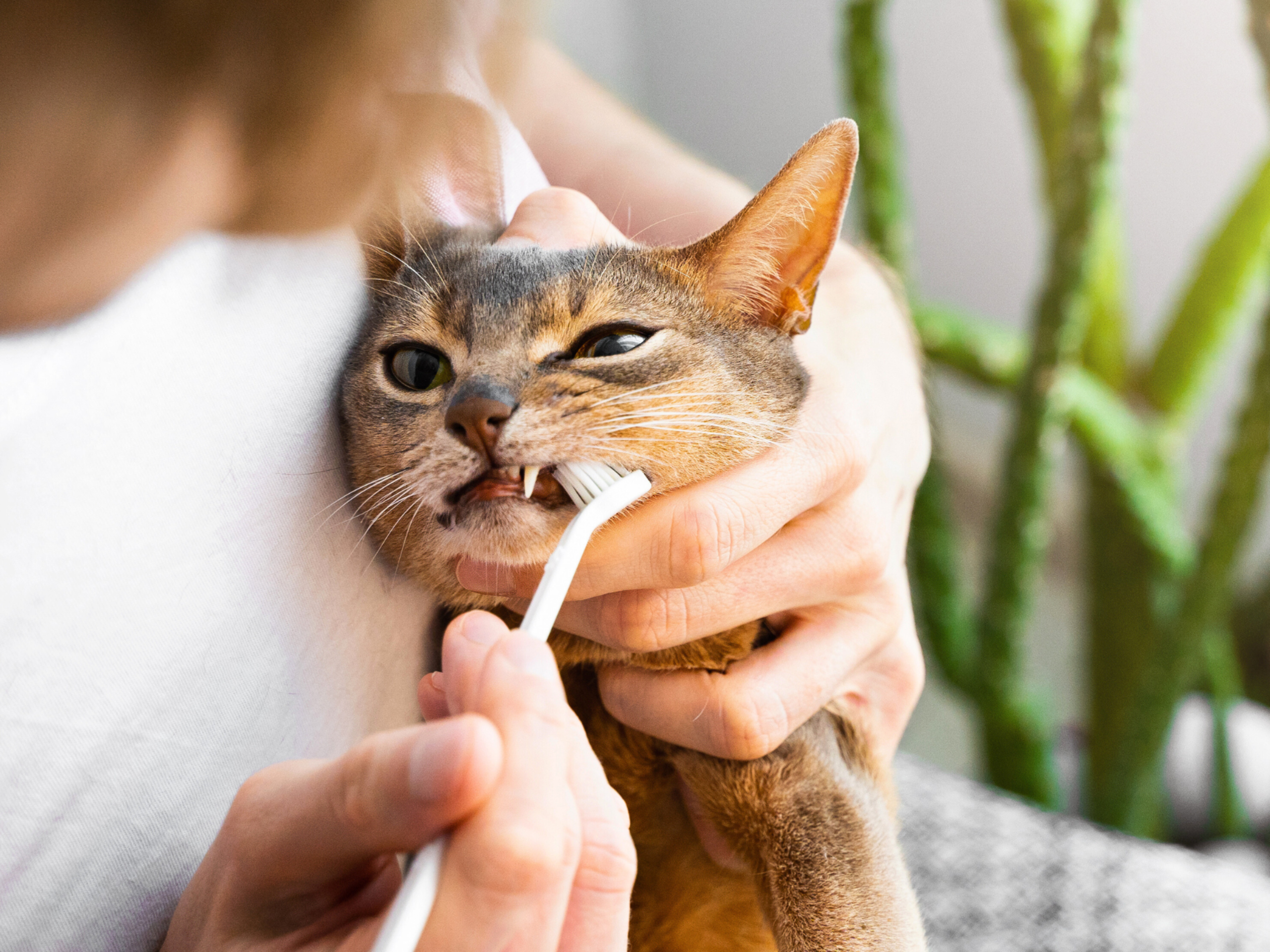
A calm, positive introduction to brushing makes the process low-stress for both you and your cat.
Image source: www.thesprucepets.com
Choosing the Right Tools: Toothbrushes and Toothpaste for Cats
Toothbrush Options Compared
The right brush makes all the difference between a quick, easy session and a stressful struggle. Use the table below to pick the best option for your cat:
| Brush Type | Best For | Pros | Cons |
|---|---|---|---|
| Finger brush | Kittens, senior cats, cats new to brushing, highly anxious cats | Easy to control, less intimidating, allows you to feel gum texture to check for issues | Struggles to reach back molars, may not be suitable for cats with very small mouths |
| Dual-head cat brush | Most adult cats | Fits standard feline mouth shape, two brush sizes reach both front teeth and back molars | Can feel bulky to very small or skittish cats |
| Electric pet toothbrush | Cats that tolerate vibrations, cats with heavy tartar buildup | Removes plaque more effectively than manual brushes with less effort | Noisy vibrations may scare anxious cats, higher upfront cost |
What to Look for in Cat Toothpaste (and What to Avoid At All Costs)
Human toothpaste is never safe for cats: it contains fluoride, xylitol, and high levels of sodium that are toxic if swallowed, even in small amounts. Cat-specific toothpaste is enzymatic, meaning it breaks down plaque and bacteria even if you don’t rinse thoroughly, and it’s safe to swallow. Look for flavors cats naturally enjoy: poultry, seafood, and malt are the most popular, while mint or minty flavors are almost universally rejected by cats. Avoid products with artificial sweeteners, alcohol, or unnecessary additives. If you’re unsure which brand to choose, ask your vet for a recommendation — many clinics sell vet-approved options.
Cat-specific enzymatic toothpaste is safe to swallow and comes in flavors cats enjoy, unlike toxic human toothpaste.
Image source: www.yahoo.com

How Often Should You Actually Brush Your Cat’s Teeth?
The AVDC recommends daily brushing for optimal plaque removal, as plaque hardens into tartar within 48 hours of forming, and tartar can only be removed by a professional veterinary cleaning. If daily brushing isn’t feasible, aim for at least 3 to 4 sessions per week to significantly reduce tartar buildup and lower the risk of gum disease. For cats with existing dental issues, senior cats, or cats on special diets, your vet may recommend a more frequent schedule tailored to their needs. Consistency matters far more than perfection: even 1 minute of brushing 3 times a week is better than no brushing at all. You can also read our guide on cat oral flea and tick prevention.
If Brushing Is a No-Go: Evidence-Based Alternative Dental Care Options
No at-home alternative is as effective as brushing, but they can meaningfully reduce plaque and tartar when used consistently:
VOHC-Approved Dental Treats and Chews
Only choose treats that carry the Veterinary Oral Health Council (VOHC) seal of approval, which certifies the product has been independently tested to reduce plaque and tartar by at least 20%. Hard, crunchy treats work better than soft ones, as the rough texture scrubs teeth as your cat chews. Limit treats to 10% of your cat’s daily calorie intake to avoid weight gain.
Prescription Dental Diets
Many veterinary clinics sell specially formulated dental diets with large, fibrous kibbles designed to scrub teeth as cats chew. These are often prescription-only, as they’re tailored to cats with specific dental or health needs, and they’re proven to reduce tartar buildup more effectively than standard kibble. For cats with food sensitivities or chronic conditions like kidney disease, your vet may recommend nutritionally balanced dental-formula foods that meet their unique dietary requirements. You can also read our guide on cat grooming how to keep your cat clean and comfortable.
Water Additives and Oral Gels
Water additives contain enzymes or antibacterial agents that reduce plaque, bad breath, and bacteria in the mouth. They’re easy to use — just add the recommended dosage to your cat’s daily drinking water — but not all cats like the taste, so test a small amount first to ensure they’ll still drink enough water. Oral gels can be applied directly to the gums and teeth once a day, and many cats tolerate them better than brushing, especially if they have mouth sensitivity.
Professional Veterinary Dental Cleanings
Annual professional dental cleanings under anesthesia are the only way to remove tartar and plaque below the gum line, which you cannot reach with at-home care. While many owners worry about anesthesia safety, modern veterinary protocols are extremely safe for healthy cats, and the benefits of preventing advanced dental disease far outweigh the small risk. Senior cats or those with chronic health conditions may need more frequent cleanings, per your vet’s recommendation. Pairing consistent dental care with integrated parasite and oral health prevention supports your cat’s overall immune function and reduces long-term health risks. You can also read our guide on fleatick prevention for cats.
Common Cat Teeth Brushing Mistakes That Do More Harm Than Good
Using Human Toothpaste or Brushes
Human toothpaste contains fluoride and xylitol, both of which are toxic to cats, even in small amounts. Human toothbrushes also have bristles that are too stiff and heads that are too large for a cat’s mouth, which can damage gums and cause pain.
Brushing Too Aggressively
Cats have sensitive gum tissue, so rough scrubbing can cause irritation, bleeding, and pain, making them resistant to future brushing. Use the same gentle circular motions you’d use for your own teeth, and apply only light pressure along the gum line.
Forcing the Session
If your cat is hissing, swatting, panting, or trying to escape, stop immediately. Forcing brushing creates a lasting negative association with dental care, and will make future sessions far more difficult. A 10-second positive session is far more effective than a 5-minute stressful one that leaves your cat fearful of you near their mouth.
Skipping the Gum Line
The majority of plaque builds up right where the teeth meet the gums, not on the flat surface of the tooth. Brushing only the tips of the teeth does very little to prevent tartar buildup and gum disease.
Neglecting Regular Vet Check-ups
At-home care is only one part of dental health. Your vet will examine your cat’s mouth during annual check-ups to catch early signs of dental disease that you can’t see, such as early-stage tooth resorption or gum disease below the gum line.
When to Skip Brushing and Call Your Vet Immediately
If your cat shows any of the following signs, stop all at-home dental care and book a vet appointment immediately — these are signs of advanced dental disease that require professional treatment, not just more brushing:
- Persistent bad breath that doesn’t go away after brushing
- Bleeding, red, or swollen gums
- Excessive drooling
- Dropping food while eating, chewing only on one side of the mouth, or refusing to eat hard food
- Pawing at the mouth or face frequently
- Weight loss or changes in mood (increased irritability, hiding, lethargy)
Annual professional dental exams catch early signs of disease that at-home care can miss.
Image source: m.facebook.com
Frequently Asked Questions
Is it okay if I never brush my cat's teeth?
While brushing is the most effective at-home dental care method, it’s not the only way to support your cat’s oral health. If your cat absolutely cannot tolerate brushing even after weeks of desensitization, you can use VOHC-approved dental treats, water additives, and prescription dental diets to reduce plaque buildup, paired with annual professional dental cleanings. The key is consistency: skipping all dental care significantly increases the risk of painful, expensive dental disease later in life.
Do indoor cats need their teeth brushed?
Yes, indoor cats are actually at higher risk for dental disease than outdoor cats in many cases. Outdoor cats chew on grass, bones, and other natural items that help scrub their teeth, while indoor cats often eat only soft wet food or soft treats that leave more plaque on their teeth. Without regular brushing or alternative care, indoor cats are more likely to develop tartar buildup and gum disease at a younger age.
Is it necessary to clean a cat's teeth if they're young?
Absolutely. Dental disease can start as early as 2 to 3 years old, so starting a dental care routine when your cat is a kitten makes it far easier to build a habit they tolerate for life. Kittens also have baby teeth that fall out by 6 months old, so you can start desensitizing them to brushing as early as 8 weeks, even before their adult teeth come in.
What can I use instead of brushing my cat's teeth?
If brushing is not an option, the next best options are VOHC-approved dental treats, prescription dental diets, and daily water additives formulated for cats. These methods are less effective than brushing at removing plaque along the gum line, but they can still reduce tartar buildup by 20 to 30% when used consistently. For cats with severe dental anxiety, your vet may recommend more frequent professional cleanings under anesthesia to keep their mouth healthy.
Conclusion
Brushing your cat’s teeth is the most effective way to prevent painful, expensive dental disease and support their long-term overall health. While it can take time and patience to get your cat comfortable with the process, the effort pays off in fewer vet bills, no oral pain for your pet, and more years of comfortable, happy life together. If brushing isn’t feasible for your cat, evidence-based alternatives paired with annual professional cleanings can still make a meaningful difference. Pairing consistent dental care with comprehensive parasite prevention protocols and annual vet check-ups is the easiest way to add years to your cat’s life. If you’re struggling to start a dental routine with your cat, talk to your veterinarian at your next wellness visit to build a personalized plan that works for your pet’s temperament and health needs. Your cat’s comfortable, pain-free smile is worth the small effort of regular care.