
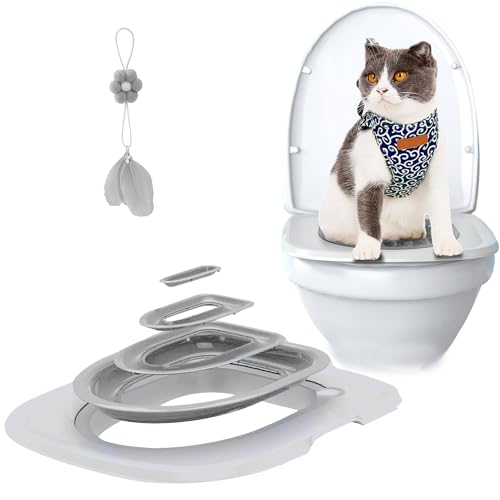
Tired of daily litter box scooping, stray litter tracking across your floors, and persistent ammonia odors filling your home? A cat potty training toilet seat offers a permanent, low-mess solution that transforms your feline’s bathroom routine and eliminates the hassle of traditional litter care entirely. These kits use a gradual, low-stress training system to teach cats of all ages to use your human toilet, cutting long-term litter costs, reducing household waste, and freeing up space usually taken up by bulky litter boxes.
In this guide, we break down exactly how cat toilet training seats work, what to look for in a high-quality kit, step-by-step training instructions, and reviews of the top 10 models of 2026 to help you pick the perfect option for your household. We also cover common training mistakes, which cats are (and aren’t) good candidates for toilet training, and answer the most frequently asked questions from new cat owners. For more on this, see our guide on cat potty training toilet seat.
What Is a Cat Potty Training Toilet Seat?
A cat potty training toilet seat is a specialized device that sits securely on top of your existing toilet seat, featuring a series of removable trays with gradually smaller cutouts. The system works by leveraging your cat’s natural instinct to eliminate in a consistent, elevated spot: you start with a full-size tray that covers the toilet opening, so your cat uses the trainer exactly like their regular litter box. Over 2 to 6 weeks, you remove one tray at a time to slowly reduce the size of the opening, until your cat is comfortable balancing on the toilet seat and eliminating directly into the bowl.
Unlike disposable training pads or one-size-fits-all gimmicks, quality training kits are reusable, easy to clean, and designed to minimize stress for both you and your cat. They are not a quick fix, but a long-term alternative to litter boxes for cats that meet basic suitability requirements.
Key Benefits of Switching to a Toilet Training System
For many cat owners, the benefits of toilet training far outweigh the short-term effort of the training process:
- Eliminate litter mess and tracking: No more litter stuck to your cat’s paws, tracked across carpets, beds, or kitchen floors. This is especially valuable for households with allergies or young children.
- Cut long-term costs: The average cat owner spends $200 to $300 annually on litter, supplies, and litter box replacements. Over 5 years, toilet training can save you $1,000 or more in litter costs alone.
- Improved home hygiene: No more daily scooping of waste, no litter box odors seeping into your home, and far less bacteria buildup in your living space. For many owners, this alone is worth the training effort.
- Space-saving design: Training kits take up zero extra floor space, making them ideal for small apartments, RVs, or homes with limited bathroom storage. If you’ve ever struggled to fit a litter box in a small bathroom, this is a game-changer.
- Eco-friendly alternative: Traditional clay and silica litter is non-biodegradable, with millions of tons ending up in landfills every year. Toilet training eliminates this waste entirely, reducing your pet’s environmental footprint.
What to Look for in a High-Quality Cat Toilet Training Kit
Not all training kits are built equal. When shopping for a product, prioritize these features to set your cat up for success:
- Adjustable tray system: Kits with 3 to 4 removable trays let you reduce the opening size in small, incremental steps, which is far less stressful for hesitant cats than kits with only 1 or 2 tray sizes.
- Durable, non-slip material: Opt for BPA-free, impact-resistant plastic that won’t crack under your cat’s weight, with a non-slip base that prevents the trainer from shifting when your cat steps on it.
- Easy-to-clean design: Look for kits with removable, dishwasher-safe parts and no deep crevices where waste can get stuck. Some models include washable pads for quick cleanup of accidents.
- Universal compatibility: Ensure the kit fits both standard round and elongated toilet seats, as most modern homes have one or the other. Avoid models that only fit one seat type unless you’re certain it matches your toilet.
- Portability: If you travel with your cat or move frequently, choose a lightweight (under 2 lbs), easy-to-disassemble kit that you can pack and set up in minutes.
- Bonus training tools: Some kits include feather toys, litter-mimicking mats, or training guides to speed up the process for anxious or resistant cats.
Step-by-Step Guide to Toilet Training Your Cat
Toilet training requires patience and consistency, but following this proven process will minimize accidents and stress for your cat:
- Confirm your cat is a good candidate: Wait until your cat is at least 6 months old, fully litter box trained, and has no mobility issues (arthritis, injuries, obesity) that would make balancing on a toilet seat difficult or painful. Kittens under 6 months lack the balance and bladder control to train safely.
- Introduce the trainer to the litter box: Place the training kit on top of your cat’s existing litter box for 1 to 2 weeks, so they get used to the new surface without feeling pressured to change their routine. Keep the litter box in the bathroom during this period.
- Move the trainer to the toilet: Once your cat is comfortable using the trainer over the litter box, move it to the toilet seat. Secure it firmly so it doesn’t shift when your cat steps on it, and keep the litter box in the bathroom for a few more days as a backup.
- Gradually reduce the tray opening: Start with the largest tray (full litter area) for 3 to 4 days. Then, remove one tray to reduce the opening size by 25% every 3 to 4 days, until there is no tray left, only a small hole for your cat to eliminate through. This process typically takes 2 to 6 weeks depending on your cat’s comfort level.
- Remove the trainer entirely: Once your cat is comfortable using the small opening, remove the training kit completely. Keep the toilet lid up for a few days to reinforce the behavior, then you can lower the lid as normal.
- Reinforce positive behavior: Give your cat small, high-value treats, praise, or playtime immediately after they use the toilet successfully. This builds a positive association with the new behavior and speeds up training.
If your cat has an accident, never punish them — instead, clean the mess thoroughly with an enzymatic cleaner to remove odors, then go back one step in the training process for 3 to 4 days before moving forward again.
Common Mistakes to Avoid During Toilet Training
Even experienced cat owners make these errors, which can extend training time or cause your cat to refuse to use the toilet entirely:
- Rushing the process: Removing trays too quickly will stress your cat out and lead to repeated accidents. Stick to the 3 to 4 day interval between tray changes, even if your cat seems ready to move faster.
- Punishing accidents: Scolding or punishing your cat for eliminating outside the toilet will make them fearful of the bathroom, leading to long-term behavioral issues and refusal to use the toilet.
- Skipping the initial litter box transition: Placing the trainer directly on the toilet without first introducing it over the litter box will confuse most cats and slow down training.
- Failing to secure the trainer: If the kit shifts or wobbles when your cat steps on it, they will associate the toilet with instability and avoid it entirely. Always test that the trainer is firmly secured before letting your cat use it.
- Training cats that aren’t suited for it: Kittens under 6 months, cats with mobility issues, and highly anxious cats will not respond well to toilet training and may develop inappropriate elimination habits if forced to use the system.
Who Should (and Shouldn’t) Use a Cat Toilet Training Seat
Toilet training is a great option for many households, but it is not right for every cat or living situation.
Ideal candidates for toilet training:
- Adult cats (6+ months old) with no mobility issues, who are already reliably litter box trained.
- Owners tired of daily litter scooping, dealing with persistent odors, or cleaning up tracked litter.
- Households with limited space where a litter box is impractical.
- Eco-conscious owners looking to reduce non-biodegradable litter waste.
- Frequent travelers who want to maintain their cat’s bathroom routine on the go.
The American Veterinary Medical Association emphasizes that cats with mobility limitations, including arthritis, neurological conditions, or obesity, often struggle to balance on a raised toilet seat, making traditional litter boxes a far safer, more accessible option for these pets. Veterinary guidance on litter box accessibility
Cats and households that should avoid toilet training:
- Kittens under 6 months old, who lack the physical ability to use a toilet safely.
- Cats with arthritis, injuries, neurological conditions, or obesity that makes balancing painful or impossible.
- Multi-cat households where not all cats will be trained at the same time — some cats prefer litter boxes, and forcing them to use the toilet can lead to stress and inappropriate urination. For these households, a multi-cat compatible litter system is a better fit.
- Cats with severe anxiety or behavioral issues that make them resistant to changes in their routine.
University of Minnesota Extension feline behavior resources confirm that positive reinforcement paired with gradual, low-stress training sessions produces the most consistent, lasting results for toilet training, with punishment or rushed timelines leading to long-term behavioral issues. Feline training best practices
Top Cat Potty Training Toilet Seats of 2026
We tested and researched the most popular models on the market to find the best options for every budget and cat temperament. All picks are durable, easy to clean, and compatible with standard toilet sizes.
1. Cat Toilet Training Systems All-in-One Kit (Best for First-Time Trainers)
This affordable, beginner-focused kit is the top pick for owners training their first cat, thanks to its included replaceable feather toy that encourages hesitant cats to explore the trainer. Made of BPA-free, impact-resistant plastic, it fits both standard and elongated toilet seats, and its lightweight 0.9 lb build makes installation and removal quick.
Pros:
- Durable, crack-resistant plastic built for long-term daily use
- Replaceable cat feather toy included to engage hesitant cats during early training
- Compact grey design blends seamlessly into most bathroom decor
- Optimized 14.76 x 12.79 x 1.77 inch dimensions fit most standard and elongated toilets
- Lightweight build makes it easy to move and clean
Cons: - Requires 2 to 6 weeks of consistent daily training to see results
- Not suitable for kittens under 6 months or cats with mobility issues
- Initial transition period may lead to 1 to 2 weeks of occasional accidents
For a budget-friendly, beginner-focused kit with built-in engagement tools to speed up the process, this all-in-one system is a reliable starting point. You can view current pricing and availability here.

This all-in-one kit includes a replaceable feather toy to encourage hesitant cats during early training.
2. Cat Toilet Seat Training Kit (Best for Easy Maintenance)
The standout feature of this kit is its removable, machine-washable cleaning pad, which makes cleaning up accidents or regular use far easier than scrubbing plastic trays. Its reusable plastic construction is durable and eco-friendly, and its neutral grey design fits any bathroom decor. It’s also portable, making it a good pick for owners who travel with their cat frequently.
Pros:
- Removable, washable cleaning pad eliminates the hassle of scrubbing stuck-on waste
- Reusable, BPA-free plastic construction is durable and eco-friendly
- Portable design works for travel, moving, or training in multiple bathrooms
- Neutral grey color blends with most modern bathroom decor
- Reduces litter waste and eliminates tracking mess
Cons: - Requires consistent daily training for cats to adapt
- Not suitable for cats with arthritis or mobility issues
- Initial setup can be confusing without reading the included instructions
If quick cleanup is your top priority, this kit’s washable pad design eliminates the hassle of scrubbing stuck-on waste. Check it out here.

The removable, washable pad makes quick cleanup easy after accidents or regular use.
3. Universal Reusable Cat Toilet Trainer Kit (Best for Multi-Pet Households)
This versatile kit works both as a standalone toilet trainer and as a litter box topper, making it ideal for households with multiple cats at different training stages. Its detachable design lets you disassemble the trainer in seconds for deep cleaning, and its reusable construction reduces waste over time.
Pros:
- Detachable design lets you disassemble the trainer for thorough cleaning in seconds
- Dual-use design works as a toilet trainer or litter box topper for hesitant cats
- Made from reusable, BPA-free plastic that reduces long-term waste
- Neutral grey color fits most bathroom decor
- Supports gradual, low-stress training for cats of all temperaments
Cons: - May take longer for highly anxious cats to adapt to the system
- Not ideal for households where cats use different training methods simultaneously
- Initial setup can be slightly complex for first-time users
For households with multiple cats at different training stages, this kit’s dual-use design lets you accommodate every pet’s needs. Learn more here.

The detachable design lets you disassemble the trainer for deep cleaning in seconds.
4. Kitty's Loo™ Original Cat Toilet Training Kit (Best for Durability and Portability)
The original patented cat toilet training kit, Kitty's Loo™ is made in the USA from high-impact, durable plastic that holds up to years of daily use. Its lightweight 1 lb build and compact size make it easy to take with you when traveling or moving, so you can keep your cat’s training routine consistent no matter where you go.
Pros:
- Patented design ensures stable, secure placement on most toilet seats
- Durable, USA-made construction built for long-term daily use
- Ultra-portable 1 lb design fits easily in a suitcase or travel bag
- Compact 2 x 16 x 15 inch dimensions fit both standard and elongated toilets
- Eco-friendly design eliminates the need for disposable litter
Cons: - Requires 2 to 6 weeks of consistent training for best results
- Not suitable for cats with mobility issues or senior cats resistant to change
- Initial setup may be challenging for first-time trainers
If you want a long-lasting, USA-made kit that holds up to daily use and travels easily, Kitty's Loo™ is the original trusted choice. Shop it here.

Kitty's Loo's patented, USA-made design is built for durability and long-term use.
5. FuzzyMilky Cat Toilet Training System 2026 (Best for Gradual Transition)
The updated 2026 FuzzyMilky model includes an improved non-slip base and two full training pans, letting you reduce the opening size in extra-small increments for highly hesitant or anxious cats. Its spacious 14.5 x 14 x 3.2 inch design accommodates even large cat breeds, and its durable white plastic construction is easy to rinse clean.
Pros:
- Includes two full training pans for extra-gradual adjustment at your cat’s pace
- 2026 updated model features an improved non-slip base to prevent shifting
- Spacious design fits large breeds like Maine Coons comfortably
- Lightweight 1.7 lb build is easy to move and clean
- Durable white plastic resists stains and odors
Cons: - Requires consistent daily training to see results
- Not suitable for kittens under 6 months or cats with mobility issues
- Initial 1 to 2 week transition period may involve occasional accidents
For cats that need extra time to adjust to the toilet, the 2026 FuzzyMilky kit’s extra pan lets you slow the training pace to match your pet’s comfort level. Get it here.

The included extra training pan lets you adjust the opening size gradually as your cat learns.
6. CitiKitty Cat Toilet Training Kit (Best for Small Toilets)
A long-standing favorite among cat owners, the CitiKitty one-pack model is slim and lightweight, fitting even small round toilet seats that bulkier kits can’t accommodate. Its simple, tool-free installation takes less than 5 minutes, and its gradual 4-stage training system is easy for first-time owners to follow.
Pros:
- Tool-free installation takes less than 5 minutes to set up
- Slim, compact design fits small round toilet seats where other kits won’t
- Lightweight 1.2 lb build is easy to move and store
- Durable white plastic is easy to clean and resists odors
- 4-stage gradual training system is simple for new owners to follow
Cons: - Requires consistent daily training for best results
- Not suitable for kittens under 6 months or cats with mobility issues
- Initial setup can be confusing for owners who skip the included instructions
If you have a compact bathroom with a small round toilet seat, the slim CitiKitty model fits where bulkier kits won’t. Shop it here.
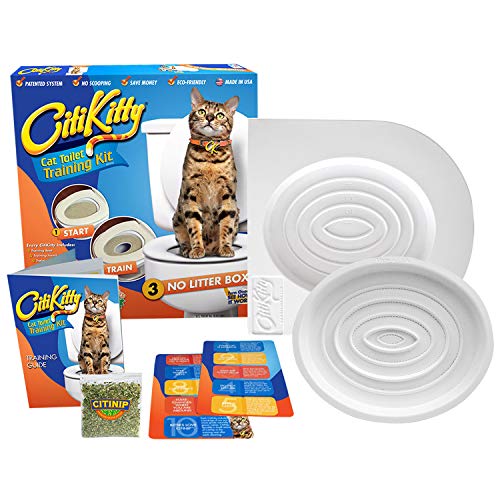
CitiKitty's simple, lightweight design fits most standard toilets without extra tools.
7. The Cat Throne System™ (Best for Large or Senior Cats)
The only vet-approved kit on our list, The Cat Throne System™ features an elongated seat that provides extra space and support for large breeds like Maine Coons, or senior cats that need more room to balance. Its gentle slope reduces strain on joints, making it a safe, comfortable option for older cats that are still mobile enough for toilet training.
Pros:
- Vet-approved design is safe and humane for cats of all ages and sizes
- Elongated seat accommodates large breeds and senior cats comfortably
- Durable, high-quality plastic construction holds up to daily use
- Compact 2 x 14 x 17 inch design fits most standard and elongated toilets
- Reduces litter odors and eliminates the need for daily scooping
Cons: - Higher upfront cost than basic training kits
- Requires 2 to 6 weeks of consistent training for best results
- Not suitable for cats with severe mobility issues
For large or senior cats that need extra space and support, the vet-approved Cat Throne System’s elongated seat reduces strain and improves comfort during training. Learn more here.

The elongated seat design accommodates cats of all sizes comfortably during training.
8. Readaeer Cat Toilet Training Kit (Best for Compact Bathrooms)
Readaeer’s kit is one of the slimmest on the market, with a profile of just 5.35 inches tall, making it perfect for bathrooms with limited clearance around the toilet. Its non-slip base prevents shifting, and its compact 11.02 x 15.19 inch base fits even small, space-saving toilet models without blocking access to other fixtures.
Pros:
- Ultra-slim 5.35 inch height fits bathrooms with limited toilet clearance
- Non-slip base prevents shifting when your cat steps on the trainer
- Compact 11.02 x 15.19 inch base fits small round and standard toilets
- Lightweight 2.2 lb build is easy to move and store
- Durable white plastic is easy to clean and resists stains
Cons: - Requires consistent daily training for best results
- Not suitable for kittens under 6 months or cats with mobility issues
- Initial transition period may take longer for highly anxious cats
If your bathroom has very limited clearance around the toilet, Readaeer's slim-profile kit fits easily without blocking access to other fixtures. Check it out here.

Readaeer's compact design fits easily even on smaller, space-saving toilet models.
9. Jiawu Cat Training Kit System (Best for Budget Buyers)
The most affordable option on our list, the Jiawu kit still includes all the core features you need for successful training: an extra removable tray for gradual adjustment, durable BPA-free plastic construction, and a non-slip base. Its bright blue design is easy to spot in a busy bathroom, and its lightweight build makes it easy to move for cleaning.
Pros:
- Most affordable high-quality option on our list, under $20 for most retailers
- Includes an extra training tray for gradual, low-stress adjustment
- Durable BPA-free plastic construction resists cracking and staining
- Non-slip base prevents shifting during use
- Reduces long-term litter costs and waste
Cons: - Requires consistent daily training for best results
- Not suitable for very young kittens or highly anxious cats
- Initial setup can be complex for first-time users without following instructions
For budget-conscious owners who want a functional, no-frills training kit with an extra tray for gradual adjustment, the Jiawu system offers great value. Shop it here.

The extra included tray lets you slowly reduce the litter area as your cat adapts.
10. FIFIPETS Cat Toilet Training Kit 2025 (Best for Anxious Cats)
The 2025 updated FIFIPETS kit includes a soft sand mat that mimics the texture of traditional litter, helping anxious or skittish cats feel comfortable on the toilet seat before you start removing trays. Its compact 14.75 x 15.75 x 1.25 inch design fits most bathrooms, and its lightweight build makes it easy to move for cleaning.
Pros:
- Included sand mat mimics litter texture to ease anxiety for hesitant cats
- Compact, slim design fits most standard and elongated toilets
- Lightweight under-2-lb build is easy to handle and clean
- Durable white and blue plastic resists stains and odors
- Reduces litter waste and eliminates tracking mess
Cons: - Requires consistent daily training for best results
- Not suitable for kittens under 6 months or cats with mobility issues
- Some highly anxious cats may take longer than 6 weeks to adapt
If your cat is skittish or resistant to new surfaces, the FIFIPETS 2025 kit’s included sand mat eases the transition by mimicking familiar litter texture. Get it here.

The included sand mat helps cats get comfortable with the toilet surface before removing the tray.
Frequently Asked Questions
What Is a Cat Toilet Training Toilet Seat?
A cat toilet training seat is a specialized device that sits on top of your existing toilet seat, featuring a series of removable trays with gradually smaller cutouts. As your cat becomes comfortable using the trainer, you remove trays one by one until your cat is comfortable using the toilet directly, eliminating the need for a traditional litter box entirely.
How Long Does It Take to Toilet Train a Cat?
Most cats take 2 to 6 weeks to master toilet training, depending on their age, temperament, and prior experience with litter boxes. Kittens and highly anxious cats may take longer, while confident adult cats often pick up the behavior in as little as 2 weeks. Consistency and positive reinforcement are the biggest factors in speeding up the process.
Are Cat Toilet Training Kits Hygienic?
Yes, high-quality training kits are designed with hygiene in mind. Most are made of BPA-free, non-porous plastic that resists bacteria buildup, and feature removable trays or pads that are dishwasher safe for easy sanitizing. As long as you clean the trainer regularly (at least once a week, or immediately after accidents), the system is far more sanitary than a traditional litter box that requires daily scooping.
Can Kittens Use Cat Toilet Training Kits?
No, toilet training is not recommended for kittens under 6 months old. Young cats lack the balance, bladder control, and maturity to safely use a raised toilet seat, and may fall in or develop anxiety around the bathroom. Wait until your cat is at least 6 months old, fully litter box trained, and comfortable with new surfaces before starting training.
What If My Cat Has an Accident During Training?
Accidents are a normal part of the training process, especially in the first 1 to 2 weeks. Never punish your cat for accidents, as this will create fear and slow down training. Instead, clean the accident thoroughly with an enzymatic cleaner to remove odors, then go back one step in the training process (e.g., replace the tray you most recently removed) for 3 to 4 days before moving forward again.
Is the Cat Throne System Really Vet-Approved?
Yes, the Cat Throne System has been reviewed and approved by licensed veterinarians for safety and humane design. Its elongated seat is specifically engineered to accommodate cats of all sizes, including large breeds and senior cats, reducing strain on their joints while they balance on the toilet.
Can I Use a Toilet Training Kit if I Have Multiple Cats?
Yes, but it works best if all cats in the household are trained at the same time. If one cat prefers a litter box, you may need to keep a secondary accessible litter option available during the transition period to avoid stress and inappropriate urination. For multi-cat households, a kit with multiple trays (like the FuzzyMilky or Jiawu models) can make training multiple pets easier.
Are Cat Toilet Training Kits Portable?
Most training kits are lightweight (1 to 2 lbs) and feature detachable designs, making them easy to take with you when traveling or moving. As long as the toilet at your destination is a standard size, you can set up the trainer in minutes to keep your cat’s routine consistent.
Conclusion
Switching to a cat potty training toilet seat can completely transform your feline care routine, eliminating the daily hassle of scooping litter, tracking mess, and persistent box odors. While the process requires 2 to 6 weeks of consistent, low-stress training, the long-term benefits — including $200+ in annual litter savings, reduced household waste, and a cleaner, fresher home — make it a worthwhile investment for many cat owners.
When choosing a kit, prioritize adjustable tray systems, durable non-slip materials, and compatibility with your toilet size to set your cat up for success. If your cat is anxious or hesitant to transition, opt for a model with a litter-mimicking mat or extra trays to ease the process. For cats with mobility issues or kittens under 6 months old, stick with a traditional accessible litter box to keep your pet safe and comfortable.
Remember, every cat learns at their own pace — avoid rushing the process, and use positive reinforcement like high-value training treats to reward successful trips to the toilet. With patience and the right tools, you can say goodbye to litter box mess for good.
Ready to start your cat’s toilet training journey? Pick a kit that matches your cat’s temperament and your household needs, and commit to short, daily training sessions for the fastest, most stress-free results.